Close Menu
TechCentralTechCentral

    Subscribe to the newsletter

    Get the best South African technology news and analysis delivered to your e-mail inbox every morning.

    Facebook X (Twitter) YouTube LinkedIn
    WhatsApp Facebook X (Twitter) LinkedIn YouTube
    TechCentralTechCentral
    • News
      Political war erupts over BEE in the ICT sector - Solly Malatsi

      Political war erupts over BEE in the ICT sector

      13 December 2025
      Icasa told to align on BEE in move that will favour Starlink - Solly Malatsi

      Icasa told to align on BEE in move that will favour Starlink

      12 December 2025
      South African solar industry faces a reality check

      South African solar industry faces a reality check

      12 December 2025
      OpenAI launches GPT-5.2 after 'code red' push to counter Google. Shelby Tauber/Reuters

      OpenAI launches GPT-5.2 after ‘code red’ push to counter Google

      12 December 2025

      A leaner BCX positions itself as market consolidator

      11 December 2025
    • World
      Oracle’s AI ambitions face scrutiny on earnings miss

      Oracle’s AI ambitions face scrutiny on earnings miss

      11 December 2025
      China will get Nvidia H200 chips - but not without paying Washington first

      China will get Nvidia H200 chips – but not without paying Washington first

      9 December 2025
      IBM reportedly close to $11-billion deal to buy Confluent - Arvind Krishna

      IBM reportedly close to $11-billion deal to buy Confluent

      8 December 2025
      Amazon and Google launch multi-cloud service for faster connectivity

      Amazon and Google launch multi-cloud service for faster connectivity

      1 December 2025
      Google makes final court plea to stop US breakup

      Google makes final court plea to stop US breakup

      21 November 2025
    • In-depth
      Black Friday goes digital in South Africa as online spending surges to record high

      Black Friday goes digital in South Africa as online spending surges to record high

      4 December 2025
      Canal+ plays hardball - and DStv viewers feel the pain

      Canal+ plays hardball – and DStv viewers feel the pain

      3 December 2025
      Jensen Huang Nvidia

      So, will China really win the AI race?

      14 November 2025
      Valve's Linux console takes aim at Microsoft's gaming empire

      Valve’s Linux console takes aim at Microsoft’s gaming empire

      13 November 2025
      iOCO's extraordinary comeback plan - Rhys Summerton

      iOCO’s extraordinary comeback plan

      28 October 2025
    • TCS
      TCS+ | Africa's digital transformation - unlocking AI through cloud and culture - Cliff de Wit Accelera Digital Group

      TCS+ | Cloud without culture won’t deliver AI: Accelera’s Cliff de Wit

      12 December 2025
      TCS+ | How Cloud on Demand helps partners thrive in the AWS ecosystem - Odwa Ndyaluvane and Xenia Rhode

      TCS+ | How Cloud On Demand helps partners thrive in the AWS ecosystem

      4 December 2025
      TCS | MTN Group CEO Ralph Mupita on competition, AI and the future of mobile

      TCS | Ralph Mupita on competition, AI and the future of mobile

      28 November 2025
      TCS | Dominic Cull on fixing South Africa's ICT policy bottlenecks

      TCS | Dominic Cull on fixing South Africa’s ICT policy bottlenecks

      21 November 2025
      TCS | BMW CEO Peter van Binsbergen on the future of South Africa's automotive industry

      TCS | BMW CEO Peter van Binsbergen on the future of South Africa’s automotive industry

      6 November 2025
    • Opinion
      Netflix, Warner Bros deal raises fresh headaches for MultiChoice - Duncan McLeod

      Netflix, Warner Bros deal raises fresh headaches for MultiChoice

      5 December 2025
      BIN scans, DDoS and the next cybercrime wave hitting South Africa's banks - Entersekt Gerhard Oosthuizen

      BIN scans, DDoS and the next cybercrime wave hitting South Africa’s banks

      3 December 2025
      Your data, your hardware: the DIY AI revolution is coming - Duncan McLeod

      Your data, your hardware: the DIY AI revolution is coming

      20 November 2025
      Zero Carbon Charge founder Joubert Roux

      The energy revolution South Africa can’t afford to miss

      20 November 2025
      It's time for a new approach to government IT spend in South Africa - Richard Firth

      It’s time for a new approach to government IT spend in South Africa

      19 November 2025
    • Company Hubs
      • Africa Data Centres
      • AfriGIS
      • Altron Digital Business
      • Altron Document Solutions
      • Altron Group
      • Arctic Wolf
      • AvertITD
      • Braintree
      • CallMiner
      • CambriLearn
      • CYBER1 Solutions
      • Digicloud Africa
      • Digimune
      • Domains.co.za
      • ESET
      • Euphoria Telecom
      • Incredible Business
      • iONLINE
      • IQbusiness
      • Iris Network Systems
      • LSD Open
      • NEC XON
      • Netstar
      • Network Platforms
      • Next DLP
      • Ovations
      • Paracon
      • Paratus
      • Q-KON
      • SevenC
      • SkyWire
      • Solid8 Technologies
      • Telit Cinterion
      • Tenable
      • Vertiv
      • Videri Digital
      • Vodacom Business
      • Wipro
      • Workday
      • XLink
    • Sections
      • AI and machine learning
      • Banking
      • Broadcasting and Media
      • Cloud services
      • Contact centres and CX
      • Cryptocurrencies
      • Education and skills
      • Electronics and hardware
      • Energy and sustainability
      • Enterprise software
      • Financial services
      • Information security
      • Internet and connectivity
      • Internet of Things
      • Investment
      • IT services
      • Lifestyle
      • Motoring
      • Public sector
      • Retail and e-commerce
      • Satellite communications
      • Science
      • SMEs and start-ups
      • Social media
      • Talent and leadership
      • Telecoms
    • Events
    • Advertise
    TechCentralTechCentral
    Home » In-depth » Will AI ever understand human emotions?

    Will AI ever understand human emotions?

    By The Conversation11 January 2017
    Twitter LinkedIn Facebook WhatsApp Email Telegram Copy Link
    News Alerts
    WhatsApp

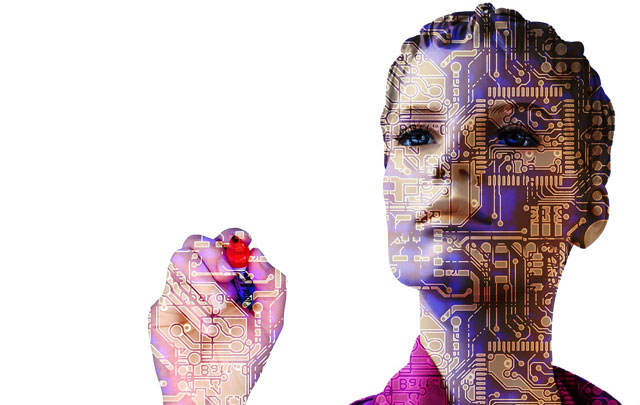
    How would you feel about getting therapy from a robot? Emotionally intelligent machines may not be as far away as they seem. Over the last few decades, artificial intelligence (AI) has got increasingly good at reading emotional reactions in humans.

    But reading is not the same as understanding. If AI cannot experience emotions itself, can it ever truly understand us? And, if not, is there a risk that we ascribe to robots properties they don’t have?

    The latest generation of AI has come about thanks to an increase in data available for computers to learn from, as well as their improved processing power. These machines are increasingly competitive in tasks that have always been perceived as human.

    AI can now, among other things, recognise faces, turn face sketches into photos, recognise speech and play Go.

    Recently, researchers have developed an AI that is able to tell whether a person is a criminal just by looking at their facial features. The system was evaluated using a database of Chinese ID photos and the results are jaw dropping. The AI mistakenly categorised innocents as criminals in only around 6% of the cases, while it could successfully identify around 83% of the criminals. This leads to a staggering overall accuracy of almost 90%.

    The system is based on an approach called “deep learning”, which has been successful in perceptive tasks such as face recognition. Here, deep learning combined with a “face rotation model” allows the AI to verify whether two facial photos represent the same individual even if the lighting or angle changes between the photos.

    Deep learning builds a “neural network”, loosely modelled on the human brain. This is composed of hundreds of thousands of neurons organised in different layers. Each layer transforms the input, for example a facial image, into a higher level of abstraction, such as a set of edges at certain orientations and locations. This automatically emphasises the features that are most relevant to performing a given task.

    Given the success of deep learning, it is not surprising that artificial neural networks can distinguish criminals from non-criminals — if there really are facial features that can discriminate between them. The research suggests there are three. One is the angle between the tip of the nose and the corners of the mouth, which was on average 19,6% smaller for criminals. The upper lip curvature was also on average 23,4% larger for criminals, while the distance between the inner corners of the eyes was on average 5,6% narrower.

    At first glance, this analysis seems to suggest that outdated views that criminals can be identified by physical attributes are not entirely wrong. However, it may not be the full story. It is interesting that two of the most relevant features are related to the lips, which are our most expressive facial features. ID photos such as the ones used in the study are required to have neutral facial expression, but it could be that the AI managed to find hidden emotions in those photos. These may be so minor that humans might have struggled to notice them.

    It is difficult to resist the temptation to look at the sample photos displayed in the paper, which is yet to be peer reviewed. Indeed, a careful look reveals a slight smile in the photos of non-criminals — see for yourself. But only a few sample photos are available so we cannot generalise our conclusions to the whole database.

    The power of affective computing

    This would not be the first time that a computer was able to recognise human emotions. The so-called field of “affective computing” has been around for several years. It is argued that, if we are to comfortably live and interact with robots, these machines should be able to understand and appropriately react to human emotions. There is much work in the area, and the possibilities are vast.

    For example, researchers have used facial analysis to spot struggling students in computer tutoring sessions. The AI was trained to recognise different levels of engagement and frustration, so that the system could know when the students were finding the work too easy or too difficult. This technology could be useful to improve the learning experience in online platforms.

    AI has also been used to detect emotions based on the sound of our voice by a company called BeyondVerbal. They have produced software which analyses voice modulation and seeks specific patterns in the way people talk. The company claims to be able to correctly identify emotions with 80% accuracy. In the future, this type of technology might, for instance, help autistic individuals to identify emotions.

    Sony is even trying to develop a robot able to form emotional bonds with people. There is not much information about how they intend to achieve that, or what exactly the robot will do. However, they mention that they seek to “integrate hardware and services to provide emotionally compelling experiences”.

    An emotionally intelligent AI has several potential benefits, be it to give someone a companion or to help us performing certain tasks — ranging from criminal interrogation to talking therapy.

    But there are also ethical problems and risks involved. Is it right to let a patient with dementia rely on an AI companion and believe it has an emotional life when it doesn’t? And can you convict a person based on an AI that classifies them as guilty? Clearly not. Instead, once a system like this is further improved and fully evaluated, a less harmful and potentially helpful use might be to trigger further checks on individuals considered “suspicious” by the AI.

    So, what should we expect from AI in future? Subjective topics such as emotions and sentiment are still difficult for AI to learn, partly because the AI may not have access to enough good data to analyse them objectively. For instance, could AI ever understand sarcasm? A given sentence may be sarcastic when spoken in one context but not in another.

    Yet the amount of data and processing power continues to grow. So, with a few exceptions, AI may well be able to match humans in recognising different types of emotions in the next few decades. But whether an AI could ever experience emotions is a controversial subject. Even if they could, there may certainly be emotions they could never experience — making it difficult to ever truly understand them.The Conversation

    • Leandro Minku is lecturer in computer science, University of Leicester
    • This article was originally published on The Conversation


    Subscribe to TechCentral Subscribe to TechCentral
    Share. Facebook Twitter LinkedIn WhatsApp Telegram Email Copy Link
    Previous ArticleLooking back at 10 years of iPhone
    Next Article Facebook pledges stronger media ties

    Related Posts

    Political war erupts over BEE in the ICT sector - Solly Malatsi

    Political war erupts over BEE in the ICT sector

    13 December 2025
    Icasa told to align on BEE in move that will favour Starlink - Solly Malatsi

    Icasa told to align on BEE in move that will favour Starlink

    12 December 2025
    South African solar industry faces a reality check

    South African solar industry faces a reality check

    12 December 2025
    Company News
    When the physical world goes online: the new front line of cyber risk - Snode Technologies

    When the physical world goes online: the new front line of cyber risk

    12 December 2025
    Endless possibilities with Adapt IT Telecoms' unified VAS platform - Matthew Seabrook

    Endless possibilities with Adapt IT Telecoms’ unified VAS platform

    11 December 2025
    Securing IoT connectivity: how MSB Micro Systems keeps devices in check

    Securing IoT connectivity: how MSB Micro Systems keeps devices in check

    11 December 2025
    Opinion
    Netflix, Warner Bros deal raises fresh headaches for MultiChoice - Duncan McLeod

    Netflix, Warner Bros deal raises fresh headaches for MultiChoice

    5 December 2025
    BIN scans, DDoS and the next cybercrime wave hitting South Africa's banks - Entersekt Gerhard Oosthuizen

    BIN scans, DDoS and the next cybercrime wave hitting South Africa’s banks

    3 December 2025
    Your data, your hardware: the DIY AI revolution is coming - Duncan McLeod

    Your data, your hardware: the DIY AI revolution is coming

    20 November 2025

    Subscribe to Updates

    Get the best South African technology news and analysis delivered to your e-mail inbox every morning.

    Latest Posts
    Political war erupts over BEE in the ICT sector - Solly Malatsi

    Political war erupts over BEE in the ICT sector

    13 December 2025
    Icasa told to align on BEE in move that will favour Starlink - Solly Malatsi

    Icasa told to align on BEE in move that will favour Starlink

    12 December 2025
    South African solar industry faces a reality check

    South African solar industry faces a reality check

    12 December 2025
    TCS+ | Africa's digital transformation - unlocking AI through cloud and culture - Cliff de Wit Accelera Digital Group

    TCS+ | Cloud without culture won’t deliver AI: Accelera’s Cliff de Wit

    12 December 2025
    © 2009 - 2025 NewsCentral Media
    • Cookie policy (ZA)
    • TechCentral – privacy and Popia

    Type above and press Enter to search. Press Esc to cancel.

    Manage consent

    TechCentral uses cookies to enhance its offerings. Consenting to these technologies allows us to serve you better. Not consenting or withdrawing consent may adversely affect certain features and functions of the website.

    Functional Always active
    The technical storage or access is strictly necessary for the legitimate purpose of enabling the use of a specific service explicitly requested by the subscriber or user, or for the sole purpose of carrying out the transmission of a communication over an electronic communications network.
    Preferences
    The technical storage or access is necessary for the legitimate purpose of storing preferences that are not requested by the subscriber or user.
    Statistics
    The technical storage or access that is used exclusively for statistical purposes. The technical storage or access that is used exclusively for anonymous statistical purposes. Without a subpoena, voluntary compliance on the part of your Internet Service Provider, or additional records from a third party, information stored or retrieved for this purpose alone cannot usually be used to identify you.
    Marketing
    The technical storage or access is required to create user profiles to send advertising, or to track the user on a website or across several websites for similar marketing purposes.
    • Manage options
    • Manage services
    • Manage {vendor_count} vendors
    • Read more about these purposes
    View preferences
    • {title}
    • {title}
    • {title}