Close Menu
TechCentralTechCentral

    Subscribe to the newsletter

    Get the best South African technology news and analysis delivered to your e-mail inbox every morning.

    Facebook X (Twitter) YouTube LinkedIn
    WhatsApp Facebook X (Twitter) LinkedIn YouTube
    TechCentralTechCentral
    • News
      Icasa told to align on BEE in move that will favour Starlink - Solly Malatsi

      Icasa told to align on BEE in move that will favour Starlink

      12 December 2025
      South African solar industry faces a reality check

      South African solar industry faces a reality check

      12 December 2025
      OpenAI launches GPT-5.2 after 'code red' push to counter Google. Shelby Tauber/Reuters

      OpenAI launches GPT-5.2 after ‘code red’ push to counter Google

      12 December 2025

      A leaner BCX positions itself as market consolidator

      11 December 2025
      Australia has banned kids from social media. Should South Africa follow suit?

      Australia has banned kids from social media. Should South Africa follow suit?

      11 December 2025
    • World
      Oracle’s AI ambitions face scrutiny on earnings miss

      Oracle’s AI ambitions face scrutiny on earnings miss

      11 December 2025
      China will get Nvidia H200 chips - but not without paying Washington first

      China will get Nvidia H200 chips – but not without paying Washington first

      9 December 2025
      IBM reportedly close to $11-billion deal to buy Confluent - Arvind Krishna

      IBM reportedly close to $11-billion deal to buy Confluent

      8 December 2025
      Amazon and Google launch multi-cloud service for faster connectivity

      Amazon and Google launch multi-cloud service for faster connectivity

      1 December 2025
      Google makes final court plea to stop US breakup

      Google makes final court plea to stop US breakup

      21 November 2025
    • In-depth
      Black Friday goes digital in South Africa as online spending surges to record high

      Black Friday goes digital in South Africa as online spending surges to record high

      4 December 2025
      Canal+ plays hardball - and DStv viewers feel the pain

      Canal+ plays hardball – and DStv viewers feel the pain

      3 December 2025
      Jensen Huang Nvidia

      So, will China really win the AI race?

      14 November 2025
      Valve's Linux console takes aim at Microsoft's gaming empire

      Valve’s Linux console takes aim at Microsoft’s gaming empire

      13 November 2025
      iOCO's extraordinary comeback plan - Rhys Summerton

      iOCO’s extraordinary comeback plan

      28 October 2025
    • TCS
      TCS+ | Africa's digital transformation - unlocking AI through cloud and culture - Cliff de Wit Accelera Digital Group

      TCS+ | Cloud without culture won’t deliver AI: Accelera’s Cliff de Wit

      12 December 2025
      TCS+ | How Cloud on Demand helps partners thrive in the AWS ecosystem - Odwa Ndyaluvane and Xenia Rhode

      TCS+ | How Cloud On Demand helps partners thrive in the AWS ecosystem

      4 December 2025
      TCS | MTN Group CEO Ralph Mupita on competition, AI and the future of mobile

      TCS | Ralph Mupita on competition, AI and the future of mobile

      28 November 2025
      TCS | Dominic Cull on fixing South Africa's ICT policy bottlenecks

      TCS | Dominic Cull on fixing South Africa’s ICT policy bottlenecks

      21 November 2025
      TCS | BMW CEO Peter van Binsbergen on the future of South Africa's automotive industry

      TCS | BMW CEO Peter van Binsbergen on the future of South Africa’s automotive industry

      6 November 2025
    • Opinion
      Netflix, Warner Bros deal raises fresh headaches for MultiChoice - Duncan McLeod

      Netflix, Warner Bros deal raises fresh headaches for MultiChoice

      5 December 2025
      BIN scans, DDoS and the next cybercrime wave hitting South Africa's banks - Entersekt Gerhard Oosthuizen

      BIN scans, DDoS and the next cybercrime wave hitting South Africa’s banks

      3 December 2025
      Your data, your hardware: the DIY AI revolution is coming - Duncan McLeod

      Your data, your hardware: the DIY AI revolution is coming

      20 November 2025
      Zero Carbon Charge founder Joubert Roux

      The energy revolution South Africa can’t afford to miss

      20 November 2025
      It's time for a new approach to government IT spend in South Africa - Richard Firth

      It’s time for a new approach to government IT spend in South Africa

      19 November 2025
    • Company Hubs
      • Africa Data Centres
      • AfriGIS
      • Altron Digital Business
      • Altron Document Solutions
      • Altron Group
      • Arctic Wolf
      • AvertITD
      • Braintree
      • CallMiner
      • CambriLearn
      • CYBER1 Solutions
      • Digicloud Africa
      • Digimune
      • Domains.co.za
      • ESET
      • Euphoria Telecom
      • Incredible Business
      • iONLINE
      • IQbusiness
      • Iris Network Systems
      • LSD Open
      • NEC XON
      • Netstar
      • Network Platforms
      • Next DLP
      • Ovations
      • Paracon
      • Paratus
      • Q-KON
      • SevenC
      • SkyWire
      • Solid8 Technologies
      • Telit Cinterion
      • Tenable
      • Vertiv
      • Videri Digital
      • Vodacom Business
      • Wipro
      • Workday
      • XLink
    • Sections
      • AI and machine learning
      • Banking
      • Broadcasting and Media
      • Cloud services
      • Contact centres and CX
      • Cryptocurrencies
      • Education and skills
      • Electronics and hardware
      • Energy and sustainability
      • Enterprise software
      • Financial services
      • Information security
      • Internet and connectivity
      • Internet of Things
      • Investment
      • IT services
      • Lifestyle
      • Motoring
      • Public sector
      • Retail and e-commerce
      • Satellite communications
      • Science
      • SMEs and start-ups
      • Social media
      • Talent and leadership
      • Telecoms
    • Events
    • Advertise
    TechCentralTechCentral
    Home » In-depth » Why less tech may soon be more

    Why less tech may soon be more

    By Editor22 March 2017
    Twitter LinkedIn Facebook WhatsApp Email Telegram Copy Link
    News Alerts
    WhatsApp
    The Light Phone is “designed to be used as little as possible”

    Research on the so-called productivity paradox — declining productivity despite the ongoing technological revolution — abounds in explanations ranging from statistical error to theories predicting that a productivity leap is just around the corner. One possibility is conspicuously missing: any positive effect digital innovation is having on productivity is offset by how counter-productively distracting and energy-draining its fruits have become.

    Perhaps the paradox will disappear, and productivity will start rising again, once we learn to opt out of unnecessary tech in our lives without getting a sense that we’re missing out on something.

    In 2016, the average American spent a total of five hours and 43 minutes a day interacting with media on digital connected devices, according to one estimate. That’s an hour and a half more than in 2012. Some of this is mere displacement of traditional media — print publications, radio and TV. But the total time spent on media consumption has increased by about 30 minutes a day since 2012. The tech industry’s arms race is pushing more and more digital content on us, and more and more devices to serve it up.

    If you get notifications on your smartwatch, you’ll take out your phone more often. If your smart lightbulbs are run from an app, you’ll check Facebook and Twitter every time you’ve decided to hit the dimmer. The app economy keeps growing, pumping out slicker and slicker content. In 2016, consumers spent US$52bn on mobile app stores and saw $77bn worth of mobile ads, and App Annie expects those numbers to rise to $65bn and $101bn this year. Even though eMarketer predicts that our screen time will grow more slowly in the next few years, that’s largely because we’re running out of minutes in the day.

    There is, of course, an easy way to get out of the rat race: replace the smartphone with a dumb one. It only costs $20 at the nearest store. That, however, is not an option for me and for many others. I don’t want to deny technological progress or riot against it. But I do want to reclaim control of my time — and my productivity, too — by finding the willpower to spend less time refreshing apps. If I were a millennial, I’d also want to make a visible statement to my peers that I’m not backward or reactionary, just mindful.

    I described a possible option in a recent column — a switch from a smartphone to the revived Nokia 3310, which is not just a feature phone but a tech legend (and besides, it does have a Web browser — only it’s a little too hard to use when you really need it). This won’t work for everyone, though: the statement will be lost on my kids’ generation, and the only kind of messaging the Nokia 3310 does is traditional SMS, not always the best solution when you need to be connected for work.

    Unsurprisingly, tech minds have wrangled with these issues and come up with more options. They are, however, generally unavailable to the consumer.

    There’s the Light Phone, a beautiful credit card-sized device that was crowdfunded on Kickstarter in 2015. It was advertised as “your phone away from phone” that is “designed to be used as little as possible”. All it does is make calls — you can’t even send an SMS. It’s a device to help wean yourself off your smartphone: You’re reachable while not using it, so some of the anxiety of disconnectedness is taken care of. There’s also the design, which makes the device a conversation piece among tech-minded friends. But while the Light Phone’s makers promised to make it available by May 2016, they haven’t done so yet. Even now, the phone can only be pre-ordered, though production has started in China.

    Then there’s the Runcible, a round device that looks like a makeup compact that was funded on Indiegogo last year. Its developers marketed it as the “anti-smartphone,, though it runs smartphone-type software (its operating system is an offshoot of Android), has a camera (a rather weak one), and allows Web browsing. A small round screen, however, is far from ideal for most apps, and Facebook and Twitter apps don’t exist for the BuniOS, so the Runcible provides only the essential smartphone functions in a surprising and strangely satisfying form factor. But, like the Light Phone — and like most independent hardware projects — it has been hit with production delays. It’s available for pre-order, long past the previously promised delivery deadlines.

    The latest crowdfunded project aimed at giving phone owners their lives back is called Siempo. Its marketing slogan is “The Phone for Humans”.

    “Many have tried to accomplish what Siempo does, but as thousands of phone users have told us, apps and willpower alone don’t lead to lasting behavior change,” the project’s founders write. “And those who downgraded to a dumb phone find that it takes away too much that they rely on.”

    The phone’s interface is designed to keep use to a minimum — not by being inconvenient but by gently prodding the user about her intentions. The device is supposed to have a browser and an e-mail app (which will be developed if the crowdfunding campaign succeeds), so again, the basic needs will be covered. But no checking Facebook every 20 minutes. It’s too early to say whether the Siempo will ever be made, let alone on time.

    There is a clear reason teams keep making these attempts: they know many people who want an elegant way to opt out of technology uses that are increasingly exploitative, burdensome and addictive. They’re like smokers who don’t want to quit completely — just to stop buying three packs a day. For them, a paucity of features is a major, attractive feature.
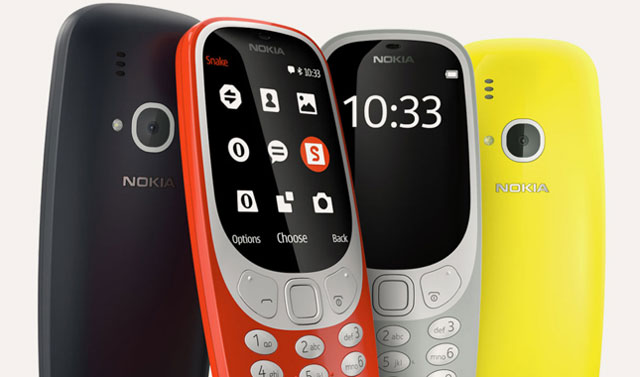
    The new Nokia 3310

    This target audience doesn’t just exist in the developers’ imagination; both the Light Phone and the Runcible overshot their funding targets.

    Big players, however, aren’t looking to engage with this audience because their goal is to push more clutter, not less. Apple has built an app ecosystem that’s a growing revenue source for a company that doesn’t have many growth options. Google is an advertising company, and the reason it keeps working on Android is to increase the audience for ads.

    Digital clutter reduction is a big idea, not just in phones, but also in cars and various household items that are getting to be too tech-heavy and feature-rich for many people. Those who want a simple car, not a permanently connected, self-driving spaceship, and a simple fridge, not one that automatically orders missing items, will soon have as few good options as phone owners do today. This community will need businesses to cater to them — and they will emerge as soon as serious investors discover the opportunity.  — (c) 2017 Bloomberg LP


    Google Leonid Bershidsky Light Phone Nokia Runcible Siempo
    Subscribe to TechCentral Subscribe to TechCentral
    Share. Facebook Twitter LinkedIn WhatsApp Telegram Email Copy Link
    Previous ArticleUber in renewed vow to fix its culture
    Next Article Four mobile networks in SA makes no sense

    Related Posts

    OpenAI launches GPT-5.2 after 'code red' push to counter Google. Shelby Tauber/Reuters

    OpenAI launches GPT-5.2 after ‘code red’ push to counter Google

    12 December 2025
    What South Africans searched for most in 2025

    What South Africans searched for most in 2025, according to Google

    4 December 2025
    Amazon and Google launch multi-cloud service for faster connectivity

    Amazon and Google launch multi-cloud service for faster connectivity

    1 December 2025
    Company News
    When the physical world goes online: the new front line of cyber risk - Snode Technologies

    When the physical world goes online: the new front line of cyber risk

    12 December 2025
    Endless possibilities with Adapt IT Telecoms' unified VAS platform - Matthew Seabrook

    Endless possibilities with Adapt IT Telecoms’ unified VAS platform

    11 December 2025
    Securing IoT connectivity: how MSB Micro Systems keeps devices in check

    Securing IoT connectivity: how MSB Micro Systems keeps devices in check

    11 December 2025
    Opinion
    Netflix, Warner Bros deal raises fresh headaches for MultiChoice - Duncan McLeod

    Netflix, Warner Bros deal raises fresh headaches for MultiChoice

    5 December 2025
    BIN scans, DDoS and the next cybercrime wave hitting South Africa's banks - Entersekt Gerhard Oosthuizen

    BIN scans, DDoS and the next cybercrime wave hitting South Africa’s banks

    3 December 2025
    Your data, your hardware: the DIY AI revolution is coming - Duncan McLeod

    Your data, your hardware: the DIY AI revolution is coming

    20 November 2025

    Subscribe to Updates

    Get the best South African technology news and analysis delivered to your e-mail inbox every morning.

    Latest Posts
    Icasa told to align on BEE in move that will favour Starlink - Solly Malatsi

    Icasa told to align on BEE in move that will favour Starlink

    12 December 2025
    South African solar industry faces a reality check

    South African solar industry faces a reality check

    12 December 2025
    TCS+ | Africa's digital transformation - unlocking AI through cloud and culture - Cliff de Wit Accelera Digital Group

    TCS+ | Cloud without culture won’t deliver AI: Accelera’s Cliff de Wit

    12 December 2025
    OpenAI launches GPT-5.2 after 'code red' push to counter Google. Shelby Tauber/Reuters

    OpenAI launches GPT-5.2 after ‘code red’ push to counter Google

    12 December 2025
    © 2009 - 2025 NewsCentral Media
    • Cookie policy (ZA)
    • TechCentral – privacy and Popia

    Type above and press Enter to search. Press Esc to cancel.

    Manage consent

    TechCentral uses cookies to enhance its offerings. Consenting to these technologies allows us to serve you better. Not consenting or withdrawing consent may adversely affect certain features and functions of the website.

    Functional Always active
    The technical storage or access is strictly necessary for the legitimate purpose of enabling the use of a specific service explicitly requested by the subscriber or user, or for the sole purpose of carrying out the transmission of a communication over an electronic communications network.
    Preferences
    The technical storage or access is necessary for the legitimate purpose of storing preferences that are not requested by the subscriber or user.
    Statistics
    The technical storage or access that is used exclusively for statistical purposes. The technical storage or access that is used exclusively for anonymous statistical purposes. Without a subpoena, voluntary compliance on the part of your Internet Service Provider, or additional records from a third party, information stored or retrieved for this purpose alone cannot usually be used to identify you.
    Marketing
    The technical storage or access is required to create user profiles to send advertising, or to track the user on a website or across several websites for similar marketing purposes.
    • Manage options
    • Manage services
    • Manage {vendor_count} vendors
    • Read more about these purposes
    View preferences
    • {title}
    • {title}
    • {title}