Close Menu
TechCentralTechCentral

    Subscribe to the newsletter

    Get the best South African technology news and analysis delivered to your e-mail inbox every morning.

    Facebook X (Twitter) YouTube LinkedIn
    WhatsApp Facebook X (Twitter) LinkedIn YouTube
    TechCentralTechCentral
    • News
      Rural South Africa does not need six towers to have a choice - Nomvuyiso Batyi, CEO of the Association of Comms & Technology

      Rural South Africa does not need six towers to have a choice

      4 September 2026
      icasa

      Icasa to investigate what South Africans pay to communicate

      4 September 2026
      Warren Wheatley, CEO of Africa Bitcoin Corporation

      Share manipulation behind Africa Bitcoin debarments, FSCA says

      4 September 2026
      OpenAI logo signage, illustrating the launch of the GPT-6 Astra model

      OpenAI chases Anthropic’s enterprise lead with GPT-6 Astra

      4 September 2026
      Uber retreats from key African markets

      Uber retreats from key African markets

      3 September 2026
    • World
      'This is not circular': Jensen Huang defends $3.5-billion MediaTek deal

      ‘This is not circular’: Jensen Huang defends $3.5-billion MediaTek deal

      2 September 2026
      AI-generated music banned from Australian charts

      AI-generated music banned from Australian charts

      26 August 2026
      Traders brace for a R4.5-trillion swing in Nvidia's value

      Traders brace for a R4.5-trillion swing in Nvidia’s value

      25 August 2026
      Russia building its own Starlink - and faster than expected - Vadym Skibitskyi

      Russia building its own Starlink – and faster than expected

      11 August 2026
      Meta AI will now tell parents if their teen is in crisis

      Meta AI will now tell parents if their teen is in crisis

      17 July 2026
    • In-depth
      Google DeepMind CEO Demis Hassabis. Image: John Sears

      The plan to stop AI from breaking the world

      16 July 2026
      The internet has a Strait of Hormuz problem

      The internet has a Strait of Hormuz problem

      15 July 2026
      AI boom sparks rally, frenzy and fear

      AI boom sparks rally, frenzy and fear

      11 June 2026
      Every plug-in hybrid on sale in South Africa, ranked by price - Lamborghini Temerario

      Every plug-in hybrid on sale in South Africa, ranked by price

      7 June 2026
      What Wi-Fi 8 will mean for wireless networks

      What Wi-Fi 8 will mean for wireless networks

      1 June 2026
    • TCS
      Winstone Jordaan on building a national EV charging network

      Winstone Jordaan on building a national EV charging network

      2 September 2026
      Watts & Wheels S1E8: 'Tesla lands in Africa, just not here'

      Watts & Wheels S1E8: ‘Tesla lands in Africa, just not here’

      24 August 2026
      TCS | Herotel CEO Van Zyl Botha on beating Starlink to South Africa

      TCS | Herotel CEO Van Zyl Botha on beating Starlink to South Africa

      14 August 2026
      Meet the CIO | Discovery's Derek Wilcocks on AI, guardrails and growth

      Meet the CIO | Derek Wilcocks on how AI personalised Vitality

      13 August 2026
      TCS | Money just became native to the internet - Steven Boykey Sidley

      TCS | Money just became native to the internet – Steven Boykey Sidley

      12 August 2026
    • Opinion
      The fragile joint in the Capitec machine - Pambos Soteriades

      The R197-billion market the banks can’t reach

      25 August 2026
      South African tech's compounding debt problem - Jannie van Zyl

      Management consulting as we know it is over

      21 August 2026
      South African tech's compounding debt problem - Jannie van Zyl

      The most dangerous customer is the quiet one

      10 August 2026
      South African tech's compounding debt problem - Jannie van Zyl

      South African tech’s compounding debt problem

      29 July 2026
      The fragile joint in the Capitec machine - Pambos Soteriades

      Best network, worst vibes: the puzzle of SA telecoms

      20 July 2026
    • Company Hubs
      • 1Stream
      • Africa Data Centres
      • AfriGIS
      • Altron Digital Business
      • Altron Document Solutions
      • Altron Group
      • Arctic Wolf
      • Ascent Technology
      • AvertITD
      • BBD
      • Braintree
      • CallMiner
      • CambriLearn
      • CM.com
      • Contactable
      • CYBER1 Solutions
      • Digicloud Africa
      • Digimune
      • Domains.co.za
      • ESET
      • Euphoria Telecom
      • HOSTAFRICA
      • Incredible Business
      • iONLINE
      • IQbusiness
      • Iris Network Systems
      • Kaspersky
      • LSD Open
      • Mitel
      • NEC XON
      • Netstar
      • Network Platforms
      • Next DLP
      • Ovations
      • Paracon
      • Paratus
      • Q-KON
      • SevenC
      • SkyWire
      • Solid8 Technologies
      • Telit Cinterion
      • Telviva
      • Tenable
      • Vertiv
      • Videri Digital
      • Vodacom Business
      • Vox
      • Wipro
      • Workday
      • XLink
    • Sections
      • AI and machine learning
      • Banking
      • Broadcasting and Media
      • Cloud services
      • Contact centres and CX
      • Cryptocurrencies
      • Education and skills
      • Electronics and hardware
      • Energy and sustainability
      • Enterprise software
      • Financial services
      • HealthTech
      • Information security
      • Internet and connectivity
      • Internet of Things
      • Investment
      • IT services
      • Lifestyle
      • Policy and regulation
      • Public sector
      • Retail and e-commerce
      • Satellite communications
      • Science
      • SMEs and start-ups
      • Social media
      • Talent and leadership
      • Telecoms
      • Watts & Wheels
    • Events
    • Advertise
    TechCentralTechCentral
    Home » In-depth » Why Apple is building an AI chip

    Why Apple is building an AI chip

    By David Glance31 May 2017
    Twitter LinkedIn Facebook WhatsApp Email Telegram Copy Link
    News Alerts
    WhatsApp

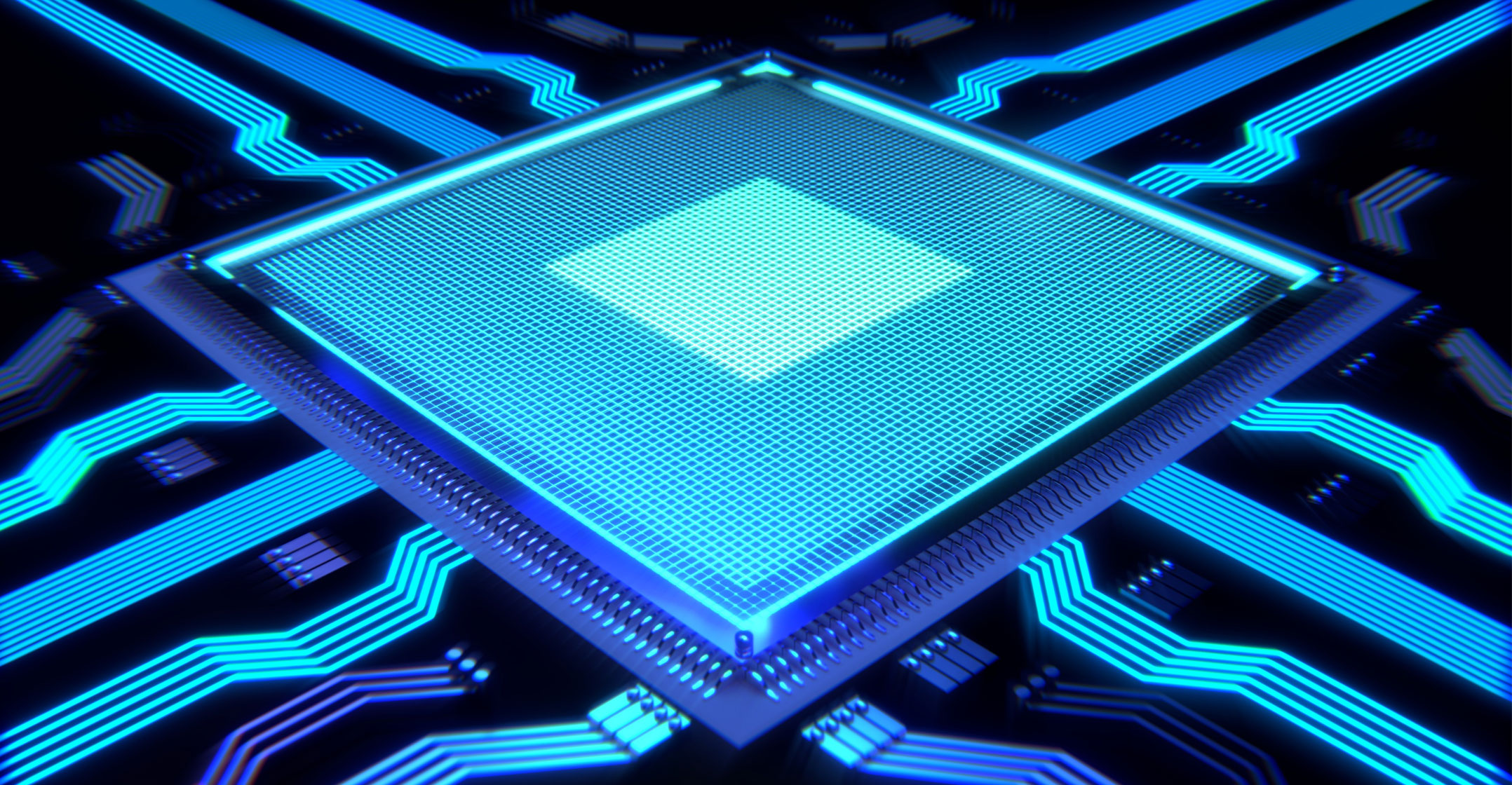
    Apple is reportedly working on a chip called the Apple Neural Engine, which would be dedicated to carrying out artificial intelligence (AI) processing on its mobile devices.

    The addition of this type of capability would catalyse the use of AI on mobile devices. Although it is already being used extensively to power digital assistants like Siri and Google Assistant, these technologies rely on computer servers to process data sent to them rather than the processing happening on the mobile device itself.

    Augmented reality and digital assistants are not the only applications of AI that will become important on mobile devices. Once the capability is made available to all mobile application developers, it will bring new types of capabilities to mobile devices.

    Health applications, for example, will be able to tell when body readings from sensors on the phone or associated wearable devices are abnormal and need acting on. But the uses are potentially limitless and will bring about a new phase in how we rely on applications and our mobile devices in everyday life. And they will work, even when the device is not connected to the Internet.

    Strictly speaking, a specific processor is not an essential requirement for using AI on a mobile phone. Chip maker Qualcomm, for example, has provided a software-based approach, called the Snapdragon Neural Processing Engine, to allow developers using their chips to incorporate AI into their software. An example of this is a car that monitors the driver using a camera and warns when they are using their smartphone or driving erratically.

    The phone would be part of a self-directed ecosystem of intelligent and autonomous machines, including cars

    Specific AI hardware, however, greatly speeds up the process called “machine learning” and allows for more sophisticated types of AI to be used. Google’s AI hardware, called the Tensor Processing Unit, is 15 to 30 times faster than the fastest computer processors (CPUs) and graphic processors (GPUs) that power computers today. These TPUs were what gave Google’s DeepMind its ability to beat the world champions of the Chinese game of Go. These TPUs also have vastly improved Google’s automated language translation software, Google Translate.

    The inclusion of AI in mobile software is going to increase the potential usefulness of that software massively and through that, how much we come to depend on the mobile phone. Our state of health, for example, is really about how we are doing relative to how we normally feel. Changes in behaviour can signal changes in mental health, including conditions like dementia and Parkinson’s. They can also be precursors of illnesses such as diabetes as well as respiratory and cardiovascular diseases. Our phones could monitor patterns of activity and even how we walk. This ability would be based on the software learning our normal patterns and once having detected a change, decide what to do about it.

    AI will essentially be able to fill in and apply the understanding and knowledge that not everyone possesses

    The phone would be part of a self-directed ecosystem of intelligent and autonomous machines, including cars. Not only is the driving of autonomous cars completely dependent on AI to function, it is likely that people will eventually share the use of these cars when needed, rather than owning one themselves. AI will again be essential for managing how this sharing functions to manage the most efficient distribution of cars, directing which cars need to pick up which clients. To do this, the scheduling AI service will need to liaise with AI software on everyone’s phones to determine where and when they will be at a given location and where they need to get to.

     

    AI on a mobile device will also increasingly be used to keep the device protected, checking if applications and communications are secure or likely to be a threat. This technology is already being implemented in smart home appliances, but as software. The addition of special AI chips will allow them to be much faster and to do more. Researchers are also looking at analysing the way we move as a means of uniquely identifying the wearer of a device.

    AI will essentially be able to fill in and apply the understanding and knowledge that not everyone possesses. Even if they do, remembering to do something, even when it is in your own best interest, is sometimes hard.

    There is a counterargument to the benefits of increasing the intelligence of mobile devices, however. This is the fear that as we come to rely on devices to do things, we will lose the ability to maintain that skill and that this will eventually impact on a person’s overall cognitive ability, or at least on their ability to operate without the AI.The Conversation

    The successful outcome of having an AI assisting depends on the user following its advice, and this is something that people may not be that good at doing.

    • David Glance is director of the UWA Centre for Software Practice, University of Western Australia
    • This article was originally published on The Conversation

    Follow TechCentral on Google News Add TechCentral as your preferred source on Google


    Apple David Glance Google Qualcomm top
    WhatsApp YouTube
    Share. Facebook Twitter LinkedIn WhatsApp Telegram Email Copy Link
    Previous ArticleIs bitcoin a legitimate asset class?
    Next Article Local solar PV industry looks to self-regulate

    Related Posts

    Adrian Gore sets an October date for Discovery's 'super bank'

    Adrian Gore sets an October date for Discovery’s ‘super bank’

    3 September 2026
    China is rewriting the rules of open-source software

    China is rewriting the rules of open-source software

    1 September 2026
    The John Ternus era begins at Apple - Tim Cook

    The John Ternus era begins at Apple

    1 September 2026
    Company News
    How to build a security operations centre that actually works - Kaspersky

    How to build a security operations centre that actually works

    3 September 2026
    Paratus Uganda first to market with Starlink service

    Paratus Uganda first to market with Starlink service

    2 September 2026
    Solid8 brings AlgoSec Horizon to Southern Africa - Simone Santana

    Solid8 brings AlgoSec Horizon to Southern Africa

    1 September 2026
    Opinion
    The fragile joint in the Capitec machine - Pambos Soteriades

    The R197-billion market the banks can’t reach

    25 August 2026
    South African tech's compounding debt problem - Jannie van Zyl

    Management consulting as we know it is over

    21 August 2026
    South African tech's compounding debt problem - Jannie van Zyl

    The most dangerous customer is the quiet one

    10 August 2026

    Subscribe to Updates

    Get the best South African technology news and analysis delivered to your e-mail inbox every morning.

    Latest Posts
    Rural South Africa does not need six towers to have a choice - Nomvuyiso Batyi, CEO of the Association of Comms & Technology

    Rural South Africa does not need six towers to have a choice

    4 September 2026
    icasa

    Icasa to investigate what South Africans pay to communicate

    4 September 2026
    Warren Wheatley, CEO of Africa Bitcoin Corporation

    Share manipulation behind Africa Bitcoin debarments, FSCA says

    4 September 2026
    OpenAI logo signage, illustrating the launch of the GPT-6 Astra model

    OpenAI chases Anthropic’s enterprise lead with GPT-6 Astra

    4 September 2026
    © 2009 - 2026 NewsCentral Media
    Built and maintained by Chronon
    • Cookie policy (ZA)
    • TechCentral – privacy and Popia

    Type above and press Enter to search. Press Esc to cancel.

    Manage consent

    TechCentral uses cookies to enhance its offerings. Consenting to these technologies allows us to serve you better. Not consenting or withdrawing consent may adversely affect certain features and functions of the website.

    Functional Always active
    The technical storage or access is strictly necessary for the legitimate purpose of enabling the use of a specific service explicitly requested by the subscriber or user, or for the sole purpose of carrying out the transmission of a communication over an electronic communications network.
    Preferences
    The technical storage or access is necessary for the legitimate purpose of storing preferences that are not requested by the subscriber or user.
    Statistics
    The technical storage or access that is used exclusively for statistical purposes. The technical storage or access that is used exclusively for anonymous statistical purposes. Without a subpoena, voluntary compliance on the part of your Internet Service Provider, or additional records from a third party, information stored or retrieved for this purpose alone cannot usually be used to identify you.
    Marketing
    The technical storage or access is required to create user profiles to send advertising, or to track the user on a website or across several websites for similar marketing purposes.
    • Manage options
    • Manage services
    • Manage {vendor_count} vendors
    • Read more about these purposes
    View preferences
    • {title}
    • {title}
    • {title}