
Close Menu
TechCentralTechCentral

    Subscribe to the newsletter

    Get the best South African technology news and analysis delivered to your e-mail inbox every morning.

    Facebook X (Twitter) YouTube LinkedIn
    WhatsApp Facebook X (Twitter) LinkedIn YouTube
    TechCentralTechCentral
    • News
      Sars to give every taxpayer a digital identity in sweeping tech overhaul

      Sars to give every taxpayer a digital identity in sweeping tech overhaul

      1 April 2026
      R12.1-billion wasted as government IT projects collapse - Sita

      R12.1-billion wasted as government IT projects collapse

      1 April 2026
      DStv 4K streaming launch is not imminent

      R99 DStv deal to keep Showmax subscribers from bolting

      1 April 2026
      The biggest untapped EV market on Earth is hiding in plain sight

      The biggest untapped EV market on Earth is hiding in plain sight

      1 April 2026
      US-listed data centre operator Equinix doubles down on South Africa - Sandile Dube

      US-listed data centre operator Equinix doubles down on South Africa

      1 April 2026
    • World

      Apple plans to open Siri to rival AI services

      27 March 2026
      It's official: ads are coming to ChatGPT

      It’s official: ads are coming to ChatGPT

      23 March 2026
      Mystery Chinese AI model revealed to be Xiaomi's

      Mystery Chinese AI model revealed to be Xiaomi’s

      19 March 2026
      A mystery AI model has developers buzzing

      A mystery AI model has developers buzzing

      18 March 2026
      Samsung's trifold gamble ends in retreat

      Samsung’s trifold gamble ends in retreat

      17 March 2026
    • In-depth
      The R18-billion tech giant hiding in plain sight - Jens Montanana

      The R16-billion tech giant hiding in plain sight

      26 March 2026
      The last generation of coders

      The last generation of coders

      18 February 2026
      Sentech is in dire straits

      Sentech is in dire straits

      10 February 2026
      How liberalisation is rewiring South Africa's power sector

      How liberalisation is rewiring South Africa’s power sector

      21 January 2026
      The top-performing South African tech shares of 2025

      The top-performing South African tech shares of 2025

      12 January 2026
    • TCS
      Anoosh Rooplal

      TCS | Anoosh Rooplal on the Post Office’s last stand

      27 March 2026
      Meet the CIO | HealthBridge CTO Anton Fatti on the future of digital health

      Meet the CIO | Healthbridge CTO Anton Fatti on the future of digital health

      23 March 2026
      TCS+ | Arctic Wolf unpacks the evolving threat landscape for SA businesses - Clare Loveridge and Jason Oehley

      TCS+ | Arctic Wolf unpacks the evolving threat landscape for SA businesses

      19 March 2026
      TCS+ | Vox Kiwi: a wireless solution promising a fibre-like experience - Theo van Zyl

      TCS+ | Vox Kiwi: a wireless solution promising a fibre-like experience

      13 March 2026
      TCS+ | Flipping the narrative on AI in the Global South - Josefin Rosén

      TCS+ | Flipping the narrative on AI in the Global South

      13 March 2026
    • Opinion
      The conflict of interest at the heart of PayShap's slow adoption - Cheslyn Jacobs

      The conflict of interest at the heart of PayShap’s slow adoption

      26 March 2026
      South Africa's energy future hinges on getting wheeling right - Aishah Gire

      South Africa’s energy future hinges on getting wheeling right

      10 March 2026
      Hold the doom: the case for a South African comeback - Duncan McLeod

      Apple just dropped a bomb on the Windows world

      5 March 2026
      VC's centre of gravity is shifting - and South Africa is in the frame - Alison Collier

      VC’s centre of gravity is shifting – and South Africa is in the frame

      3 March 2026
      Hold the doom: the case for a South African comeback - Duncan McLeod

      Hold the doom: the case for a South African comeback

      26 February 2026
    • Company Hubs
      • 1Stream
      • Africa Data Centres
      • AfriGIS
      • Altron Digital Business
      • Altron Document Solutions
      • Altron Group
      • Arctic Wolf
      • Ascent Technology
      • AvertITD
      • BBD
      • Braintree
      • CallMiner
      • CambriLearn
      • CYBER1 Solutions
      • Digicloud Africa
      • Digimune
      • Domains.co.za
      • ESET
      • Euphoria Telecom
      • HOSTAFRICA
      • Incredible Business
      • iONLINE
      • IQbusiness
      • Iris Network Systems
      • Kaspersky
      • LSD Open
      • Mitel
      • NEC XON
      • Netstar
      • Network Platforms
      • Next DLP
      • Ovations
      • Paracon
      • Paratus
      • Q-KON
      • SevenC
      • SkyWire
      • Solid8 Technologies
      • Telit Cinterion
      • Telviva
      • Tenable
      • Vertiv
      • Videri Digital
      • Vodacom Business
      • Wipro
      • Workday
      • XLink
    • Sections
      • AI and machine learning
      • Banking
      • Broadcasting and Media
      • Cloud services
      • Contact centres and CX
      • Cryptocurrencies
      • Education and skills
      • Electronics and hardware
      • Energy and sustainability
      • Enterprise software
      • Financial services
      • HealthTech
      • Information security
      • Internet and connectivity
      • Internet of Things
      • Investment
      • IT services
      • Lifestyle
      • Motoring
      • Policy and regulation
      • Public sector
      • Retail and e-commerce
      • Satellite communications
      • Science
      • SMEs and start-ups
      • Social media
      • Talent and leadership
      • Telecoms
    • Events
    • Advertise
    TechCentralTechCentral
    Home » Opinion » Alistair Fairweather » Uber: heading for a crash

    Uber: heading for a crash

    By Alistair Fairweather6 March 2017
    Twitter LinkedIn Facebook WhatsApp Email Telegram Copy Link
    News Alerts
    WhatsApp

    It’s been a tough few months for Uber. Already this year, it has been hit by a massive boycott followed swiftly by serious allegations of institutional sexism and sexual harassment. Now the most serious scandal in the ride-hailing company’s tumultuous history has broken: it appears that Uber has used its technology to evade and thwart law enforcement and other officials in contentious markets.

    The New York Times broke the story on Friday, based on information received from four current and former Uber employees. The technology, called Greyball, was originally created to prevent disruption to Uber’s services by people using it in bad faith, such as competitors seeking to harass drivers, or thieves hoping to rob them. But at some point, Uber began to use the system to deceive law enforcement officials.

    Uber has a bad habit of entering new cities without taking the time to comply with local laws and regulations. Authorities in those cities would normally respond by fining drivers and Uber for breaking these laws. But Greyball has made it difficult, if not impossible, for law enforcers to catch drivers in the act.

    Greyball gives Uber’s operational teams in cities the ability to detect, track and avoid authorities. Once the phone of a would-be rider is flagged (or “greyballed”) they will be shown “phantom” cars whenever they open the app, and will be unable to find a driver willing to pick them up. This makes effective enforcement of local laws almost impossible. Uber cars are unmarked — catching them by random stops or normal surveillance is just not practical.

    The root of these issues is obvious: the company’s leaders are drunk on their own success and have lost touch with reality

    This technology has proved particularly useful in markets where regulators and vested interests have tried to prevent Uber from gaining a foothold. By effectively locking authorities out of their service, Uber has been able to more easily gain de facto acceptance in heavily regulated cities like Paris and Boston.

    This information, assuming it is true, could not have emerged at a worse time. Uber is already reeling from damning accusations by several female employees — both former and current. They depict the company as toxic, performance-obsessed and deeply misogynistic. At least three women are already suing the company for sexual harassment or verbal abuse.

    On top of this, the company faced a large scale revolt by its customers when CEO Travis Kalanick agreed to join US President Donald Trump’s economic advisory council. Sources within the company suggest that the ensuing grassroots social media campaign resulted in over 200 000 people deleting the app in less than a week. Kalanick hastily resigned from the council in response.

    All of this must be deeply troubling to Uber’s investors, who have ploughed over US$13bn into the company. Because the company is still privately held, valuations are somewhat opaque, but the company is generally accepted to be worth around $70bn. Should public opinion turn against Uber, it will struggle to live up to that lofty valuation.
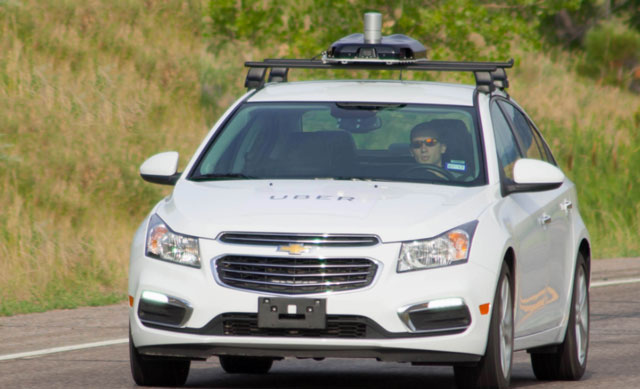
    Uber is a victim of its own spectacular success. Tens of millions of people around the globe use its service daily, and most praise it effusively. In most cities, it is cheaper, faster and better than incumbent taxi services. This has made the company a target for everyone from competitors to regulators to left-wing activists, and has drawn increasing scrutiny from the media.

    From that perspective, Greyball is a vital tool for the company. Without it a few dozen determined vandals, each armed with several mobile phones, could easily disrupt an entire city’s Uber service. Around the world, including in South Africa, Uber drivers are regularly harassed, attacked and even killed.

    But in its quest to disrupt an industry, the company has nurtured a culture that rewards performance at all costs. The unintended consequences of this culture are now painfully obvious. The radically libertarian mindset of Uber’s founders has allowed the company to flourish, but may also have sown the seeds of its downfall.

    These scandals are a gift to Uber’s critics and enemies. Anti-capitalist commentators are particularly smug, seeing this as more evidence of the company’s predatory and exploitative business practices.

    Even if public opinion does not turn against it, the company’s current culture will steer it off a cliff

    I’m deeply suspicious of Uber’s more hysterical detractors. Casting it as the cartoon villain serves the purposes of too many vested interests for it to be credible. The armchair Marxists expect us to believe that all the incumbents in the industry are ideal employers, and that Uber is systematically crushing steady, well-paid jobs in order to set up a global monopoly.

    The reality is far more nuanced and complex. Too many taxi industries around the world have existed in cosy symbiosis with regulators. Supply has been intentionally limited to ensure prices remain high. Exhibit A is the licensing system for yellow cabs in New York City. Until recently these were selling for as much as $1m.

    To imagine that any ordinary taxi driver could afford to enter such a market is laughable. In large cities like New York, taxi firms are typically tightly controlled by a small number of operators. These owners collude on price, if it is not already set by their tame regulators. This means that taxi trips cost significantly more than they should. Try catching a black cab in London to see this in action.

    Uber CEO Travis Kalanick speaks at TechCrunch Disrupt in San Francisco, California (Photo by Steve Jennings/Getty Images for TechCrunch)

    I don’t accept that Uber is inherently evil or unethical, but these scandals are a sign that radical changes are required within the company. Even if public opinion does not turn against it, the company’s current culture will steer it off a cliff.

    For example, if the European Union were to turn against Uber the way it has against Google and Microsoft, the consequences would be ruinous. Europe is one of Uber’s most important markets, and nothing annoys Eurocrats like a company that behaves as though it is above the law.

    The root of these issues is obvious: the company’s leaders are drunk on their own success and have lost touch with reality. This is the only explanation for their self-defeating behaviour. How else could they expect to get away with systematically protecting sexual harassers? Or cosying up to Donald “Cheeto Benito” Trump?

    The ability to roll out a programme like Greyball reveals a spectacular lack of self-reflection. Any company that intentionally disrupts the enforcement of a law — even where the law is petty or unclear — is putting itself in the same category as Enron. It takes a special kind of hubris to rationalise such reckless tactics.

    So now, Uber is down, and its detractors are lining up to kick it in the face. The company’s future depends on its leaders’ actions over the next few months. Either it reforms and rises to new heights, or it collapses under the weight of its own success. It’s time for Kalanick and his team to grow up and lead.

    • Alistair Fairweather is the founder of PlainSpeak, a consultancy focused on helping businesses and people to get the most out of technology

    Follow TechCentral on Google News Add TechCentral as your preferred source on Google


    Alistair Fairweather Travis Kalanick Uber
    WhatsApp YouTube
    Share. Facebook Twitter LinkedIn WhatsApp Telegram Email Copy Link
    Previous ArticleSA sees new welfare system by 2019
    Next Article Samsung scandal a sign of ‘chronic corruption’

    Related Posts

    Uber commits R5-billion to South Africa amid licensing woes - Deepesh Thomas

    Uber commits R5-billion to South Africa amid licensing woes

    31 March 2026
    South African tech start-ups that sold big on the world stage

    South African tech start-ups that sold big on the world stage

    3 February 2026
    Why South Africa should extend the e-hailing compliance deadline

    Why South Africa should extend the e-hailing compliance deadline

    7 January 2026
    Company News
    Mining's problem isn't output, it's execution - Workday

    Mining’s problem isn’t output, it’s execution – Workday

    1 April 2026
    Paratus launches Starlink-powered connectivity for Africa's essential services - Paratus Essential Access

    Paratus launches Starlink-powered connectivity for Africa’s essential services

    1 April 2026
    How consumers can identify a true QLED TV

    How consumers can identify a true QLED TV

    30 March 2026
    Opinion
    The conflict of interest at the heart of PayShap's slow adoption - Cheslyn Jacobs

    The conflict of interest at the heart of PayShap’s slow adoption

    26 March 2026
    South Africa's energy future hinges on getting wheeling right - Aishah Gire

    South Africa’s energy future hinges on getting wheeling right

    10 March 2026
    Hold the doom: the case for a South African comeback - Duncan McLeod

    Apple just dropped a bomb on the Windows world

    5 March 2026

    Subscribe to Updates

    Get the best South African technology news and analysis delivered to your e-mail inbox every morning.

    Latest Posts
    Sars to give every taxpayer a digital identity in sweeping tech overhaul

    Sars to give every taxpayer a digital identity in sweeping tech overhaul

    1 April 2026
    R12.1-billion wasted as government IT projects collapse - Sita

    R12.1-billion wasted as government IT projects collapse

    1 April 2026
    DStv 4K streaming launch is not imminent

    R99 DStv deal to keep Showmax subscribers from bolting

    1 April 2026
    The biggest untapped EV market on Earth is hiding in plain sight

    The biggest untapped EV market on Earth is hiding in plain sight

    1 April 2026
    © 2009 - 2026 NewsCentral Media
    • Cookie policy (ZA)
    • TechCentral – privacy and Popia

    Type above and press Enter to search. Press Esc to cancel.

    Manage consent

    TechCentral uses cookies to enhance its offerings. Consenting to these technologies allows us to serve you better. Not consenting or withdrawing consent may adversely affect certain features and functions of the website.

    Functional Always active
    The technical storage or access is strictly necessary for the legitimate purpose of enabling the use of a specific service explicitly requested by the subscriber or user, or for the sole purpose of carrying out the transmission of a communication over an electronic communications network.
    Preferences
    The technical storage or access is necessary for the legitimate purpose of storing preferences that are not requested by the subscriber or user.
    Statistics
    The technical storage or access that is used exclusively for statistical purposes. The technical storage or access that is used exclusively for anonymous statistical purposes. Without a subpoena, voluntary compliance on the part of your Internet Service Provider, or additional records from a third party, information stored or retrieved for this purpose alone cannot usually be used to identify you.
    Marketing
    The technical storage or access is required to create user profiles to send advertising, or to track the user on a website or across several websites for similar marketing purposes.
    • Manage options
    • Manage services
    • Manage {vendor_count} vendors
    • Read more about these purposes
    View preferences
    • {title}
    • {title}
    • {title}