


Close Menu
TechCentralTechCentral

    Subscribe to the newsletter

    Get the best South African technology news and analysis delivered to your e-mail inbox every morning.

    Facebook X (Twitter) YouTube LinkedIn
    WhatsApp Facebook X (Twitter) LinkedIn YouTube
    TechCentralTechCentral
    • News
      Icasa told to align on BEE in move that will favour Starlink - Solly Malatsi

      Icasa told to align on BEE in move that will favour Starlink

      12 December 2025
      South African solar industry faces a reality check

      South African solar industry faces a reality check

      12 December 2025
      OpenAI launches GPT-5.2 after 'code red' push to counter Google. Shelby Tauber/Reuters

      OpenAI launches GPT-5.2 after ‘code red’ push to counter Google

      12 December 2025

      A leaner BCX positions itself as market consolidator

      11 December 2025
      Australia has banned kids from social media. Should South Africa follow suit?

      Australia has banned kids from social media. Should South Africa follow suit?

      11 December 2025
    • World
      Oracle’s AI ambitions face scrutiny on earnings miss

      Oracle’s AI ambitions face scrutiny on earnings miss

      11 December 2025
      China will get Nvidia H200 chips - but not without paying Washington first

      China will get Nvidia H200 chips – but not without paying Washington first

      9 December 2025
      IBM reportedly close to $11-billion deal to buy Confluent - Arvind Krishna

      IBM reportedly close to $11-billion deal to buy Confluent

      8 December 2025
      Amazon and Google launch multi-cloud service for faster connectivity

      Amazon and Google launch multi-cloud service for faster connectivity

      1 December 2025
      Google makes final court plea to stop US breakup

      Google makes final court plea to stop US breakup

      21 November 2025
    • In-depth
      Black Friday goes digital in South Africa as online spending surges to record high

      Black Friday goes digital in South Africa as online spending surges to record high

      4 December 2025
      Canal+ plays hardball - and DStv viewers feel the pain

      Canal+ plays hardball – and DStv viewers feel the pain

      3 December 2025
      Jensen Huang Nvidia

      So, will China really win the AI race?

      14 November 2025
      Valve's Linux console takes aim at Microsoft's gaming empire

      Valve’s Linux console takes aim at Microsoft’s gaming empire

      13 November 2025
      iOCO's extraordinary comeback plan - Rhys Summerton

      iOCO’s extraordinary comeback plan

      28 October 2025
    • TCS
      TCS+ | Africa's digital transformation - unlocking AI through cloud and culture - Cliff de Wit Accelera Digital Group

      TCS+ | Cloud without culture won’t deliver AI: Accelera’s Cliff de Wit

      12 December 2025
      TCS+ | How Cloud on Demand helps partners thrive in the AWS ecosystem - Odwa Ndyaluvane and Xenia Rhode

      TCS+ | How Cloud On Demand helps partners thrive in the AWS ecosystem

      4 December 2025
      TCS | MTN Group CEO Ralph Mupita on competition, AI and the future of mobile

      TCS | Ralph Mupita on competition, AI and the future of mobile

      28 November 2025
      TCS | Dominic Cull on fixing South Africa's ICT policy bottlenecks

      TCS | Dominic Cull on fixing South Africa’s ICT policy bottlenecks

      21 November 2025
      TCS | BMW CEO Peter van Binsbergen on the future of South Africa's automotive industry

      TCS | BMW CEO Peter van Binsbergen on the future of South Africa’s automotive industry

      6 November 2025
    • Opinion
      Netflix, Warner Bros deal raises fresh headaches for MultiChoice - Duncan McLeod

      Netflix, Warner Bros deal raises fresh headaches for MultiChoice

      5 December 2025
      BIN scans, DDoS and the next cybercrime wave hitting South Africa's banks - Entersekt Gerhard Oosthuizen

      BIN scans, DDoS and the next cybercrime wave hitting South Africa’s banks

      3 December 2025
      Your data, your hardware: the DIY AI revolution is coming - Duncan McLeod

      Your data, your hardware: the DIY AI revolution is coming

      20 November 2025
      Zero Carbon Charge founder Joubert Roux

      The energy revolution South Africa can’t afford to miss

      20 November 2025
      It's time for a new approach to government IT spend in South Africa - Richard Firth

      It’s time for a new approach to government IT spend in South Africa

      19 November 2025
    • Company Hubs
      • Africa Data Centres
      • AfriGIS
      • Altron Digital Business
      • Altron Document Solutions
      • Altron Group
      • Arctic Wolf
      • AvertITD
      • Braintree
      • CallMiner
      • CambriLearn
      • CYBER1 Solutions
      • Digicloud Africa
      • Digimune
      • Domains.co.za
      • ESET
      • Euphoria Telecom
      • Incredible Business
      • iONLINE
      • IQbusiness
      • Iris Network Systems
      • LSD Open
      • NEC XON
      • Netstar
      • Network Platforms
      • Next DLP
      • Ovations
      • Paracon
      • Paratus
      • Q-KON
      • SevenC
      • SkyWire
      • Solid8 Technologies
      • Telit Cinterion
      • Tenable
      • Vertiv
      • Videri Digital
      • Vodacom Business
      • Wipro
      • Workday
      • XLink
    • Sections
      • AI and machine learning
      • Banking
      • Broadcasting and Media
      • Cloud services
      • Contact centres and CX
      • Cryptocurrencies
      • Education and skills
      • Electronics and hardware
      • Energy and sustainability
      • Enterprise software
      • Financial services
      • Information security
      • Internet and connectivity
      • Internet of Things
      • Investment
      • IT services
      • Lifestyle
      • Motoring
      • Public sector
      • Retail and e-commerce
      • Satellite communications
      • Science
      • SMEs and start-ups
      • Social media
      • Talent and leadership
      • Telecoms
    • Events
    • Advertise
    TechCentralTechCentral
    Home » Opinion » James Francis » Hello, computer

    Hello, computer

    By James Francis12 January 2017
    Twitter LinkedIn Facebook WhatsApp Email Telegram Copy Link
    News Alerts
    WhatsApp

    I never get tired of this: hold down the button and tell Siri to set a timer. It has, at the very least, made me a better cook. As Marco Pierre White said, cooking is part art and part exact chemistry, so measure and time precisely.

    I’m not alone, at least as far as timers are concerned. Many people use voice commands on their devices to set them. I know this because a gripe about Amazon’s Echo and Google Home is the inability to name multiple timers on those devices.

    Ever since the mid-1980s, when Star Trek flaunted a computer that responded to natural voice commands, there has been a concerted effort to create such technology. The idea has been around for longer, but even the creators of Watson — IBM’s talkative genius — credit Star Trek for the idea.

    Regardless of origins, voice assistants are on the verge of explosive growth (or at least many bets are hedged towards that). Watson is a standalone machine with a lot of reach into information. But the newer breeds of virtual personal assistants — let’s call them VPAs — live on the banks of distributed computing and high-speed connectivity we now call “the cloud”, communicating with us through our smartphones and, more recently, through “intelligent” speakers.

    Amazon Echo was the first such speaker, released two years ago without much fanfare. Last year, Amazon made the Echo more widely available. The hubbub was enough to prompt Google into launching a competing product, Google Home. Predictably, many people are now looking at Apple to release its own version to “validate” the trend.

    But who needs Apple? This year’s CES made two things abundantly clear: first, many companies are hoping that VPAs will differentiate their products, and second, most are using Alexa (the AI behind Echo) to do it. How we got here is not hard to trace: Amazon was ahead of everyone to open up developer access to its platform.

    Alexa’s dominance of CES surprised even Amazon, which had no official presence at the trade show. Admittedly, a lot of the implementations seem dodgy. Even though Alexa has the talent, you still need good hardware (especially microphones) and decent integration.

    But it is clear Amazon wants the market to sort itself out and isn’t imposing strict quality control for Alexa releases. This is contrary to rivals Microsoft, Apple and Google, which keep a tight lid on their systems (despite having developer tools). For example, Google’s latest VPA incarnation, Google Assistant, mainly only works on its new Pixel phones (and Google Home). Samsung is apparently so annoyed by this that it is prepping its own VPA.

    So, game over? Not quite. Here it becomes a bit complicated. First, there is the distinction of whether Alexa and its peers are platforms or services. In cars, they are the latter: BMW is one of several brands to introduce Cortana (Microsoft’s VPA) into its cars. But BMW specifically has created a proprietary and tightly controlled platform for its connected cars. Likewise, even the more open car brands that are adopting Alexa, Cortana, Now (Google) and Siri (Apple) into their vehicles already have technology foundations.
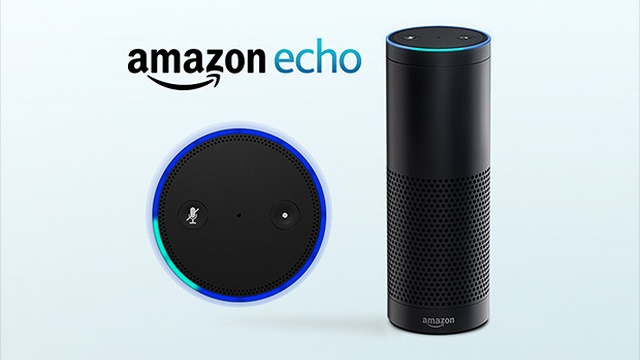
    In contrast, the VPA is potentially the platform of future smart homes. Currently, smart home technology is a motley array of unrelated smart devices, with no cooperation. They are crying out for unification, a Qin Shi Huang of the smart home. VPA speakers are perfect for this, and Amazon Echo is leading the charge.

    But Apple is better established as a lifestyle brand and may be able to edge ahead if it can get a competitor out of the door. Google, meanwhile, has a huge advantage: data. The ubiquity of its services in our digital lives ensures Google of ample data to mine for our preferences, plus it is more inclined to follow us wherever we go — because it already does.

    That said, data isn’t absolute. There are several new VPAs coming out that argue big data is not as important as good, nuanced “small” data. Newcomers such as x.ai and Ozlo are part of this school. Yet these are specialised VPAs, geared to specific tasks (x.ai schedules meetings over e-mail for you). The big guys are all fighting for the general-purpose VPA, the digital girl Friday.

    Outside of the data and use-case arguments, there also remains the issue of voice recognition: just how good are these devices at understanding us? Results vary: the Echo fluctuates between being so bad that it thinks you want hunks of poo to so good it accidentally orders doll houses when a little girl asked it to play dolls with her (and subsequently a radio report on this triggered the Echos of listeners to order more doll houses). Google Home is apparently a little better at this, while Siri is lagging (a pity, since it was the first of the modern VPAs). But none has mastered long-form or follow-up questions.

    A Google video showing off the capabilities of its smart speaker:

    Yet the idea of talking to our devices is now becoming entrenched. There are televisions, air conditioning units, fridges, drones, lights, plugs, cars, routers smart hubs, banking apps… and that’s just Alexa.

    It is only a matter of time before we discuss the ethics of this: should you get a VPA when you are born, so it can learn all about you? Who owns that VPA? Should you be expected to pay to keep it going, even if not having it becomes a distinct social disadvantage?

    The VPA trend is still mostly hype and far from defined. The winners have not been declared yet, though we can see who the horses are that worth betting on. My money is on Amazon first, followed by Microsoft, with Google and Apple as the dark thoroughbreds. Amazon has the right mindset and developer support, while Microsoft holds the potential to do the same. Google has the data, but remains too distant to really comfort developers. Apple is so insular it might as well be a billionaire’s wine estate.

    But that is still simplistic, since we’re not even discussing Baidu, Samsung and Facebook, three more heavyweights with potential VPA platforms. This is a game in the making, still defined more by speculation than a score.

    Today I set timers; tomorrow I want to do more.

    • James Francis is a freelance writer whose work has appeared in several local and international publications



    Alexa Amazon Apple Baidu Facebook Google Google Now Microsoft Samsung Siri
    Subscribe to TechCentral Subscribe to TechCentral
    Share. Facebook Twitter LinkedIn WhatsApp Telegram Email Copy Link
    Previous ArticleWorldwide IT spending to top $3,5 trillion
    Next Article Apple Music to get … movies?

    Related Posts

    OpenAI launches GPT-5.2 after 'code red' push to counter Google. Shelby Tauber/Reuters

    OpenAI launches GPT-5.2 after ‘code red’ push to counter Google

    12 December 2025
    Australia has banned kids from social media. Should South Africa follow suit?

    Australia has banned kids from social media. Should South Africa follow suit?

    11 December 2025
    OpenAI warns new models pose high cybersecurity risk

    OpenAI warns new models pose high cybersecurity risk

    11 December 2025
    Company News
    When the physical world goes online: the new front line of cyber risk - Snode Technologies

    When the physical world goes online: the new front line of cyber risk

    12 December 2025
    Endless possibilities with Adapt IT Telecoms' unified VAS platform - Matthew Seabrook

    Endless possibilities with Adapt IT Telecoms’ unified VAS platform

    11 December 2025
    Securing IoT connectivity: how MSB Micro Systems keeps devices in check

    Securing IoT connectivity: how MSB Micro Systems keeps devices in check

    11 December 2025
    Opinion
    Netflix, Warner Bros deal raises fresh headaches for MultiChoice - Duncan McLeod

    Netflix, Warner Bros deal raises fresh headaches for MultiChoice

    5 December 2025
    BIN scans, DDoS and the next cybercrime wave hitting South Africa's banks - Entersekt Gerhard Oosthuizen

    BIN scans, DDoS and the next cybercrime wave hitting South Africa’s banks

    3 December 2025
    Your data, your hardware: the DIY AI revolution is coming - Duncan McLeod

    Your data, your hardware: the DIY AI revolution is coming

    20 November 2025

    Subscribe to Updates

    Get the best South African technology news and analysis delivered to your e-mail inbox every morning.

    Latest Posts
    Icasa told to align on BEE in move that will favour Starlink - Solly Malatsi

    Icasa told to align on BEE in move that will favour Starlink

    12 December 2025
    South African solar industry faces a reality check

    South African solar industry faces a reality check

    12 December 2025
    TCS+ | Africa's digital transformation - unlocking AI through cloud and culture - Cliff de Wit Accelera Digital Group

    TCS+ | Cloud without culture won’t deliver AI: Accelera’s Cliff de Wit

    12 December 2025
    OpenAI launches GPT-5.2 after 'code red' push to counter Google. Shelby Tauber/Reuters

    OpenAI launches GPT-5.2 after ‘code red’ push to counter Google

    12 December 2025
    © 2009 - 2025 NewsCentral Media
    • Cookie policy (ZA)
    • TechCentral – privacy and Popia

    Type above and press Enter to search. Press Esc to cancel.

    Manage consent

    TechCentral uses cookies to enhance its offerings. Consenting to these technologies allows us to serve you better. Not consenting or withdrawing consent may adversely affect certain features and functions of the website.

    Functional Always active
    The technical storage or access is strictly necessary for the legitimate purpose of enabling the use of a specific service explicitly requested by the subscriber or user, or for the sole purpose of carrying out the transmission of a communication over an electronic communications network.
    Preferences
    The technical storage or access is necessary for the legitimate purpose of storing preferences that are not requested by the subscriber or user.
    Statistics
    The technical storage or access that is used exclusively for statistical purposes. The technical storage or access that is used exclusively for anonymous statistical purposes. Without a subpoena, voluntary compliance on the part of your Internet Service Provider, or additional records from a third party, information stored or retrieved for this purpose alone cannot usually be used to identify you.
    Marketing
    The technical storage or access is required to create user profiles to send advertising, or to track the user on a website or across several websites for similar marketing purposes.
    • Manage options
    • Manage services
    • Manage {vendor_count} vendors
    • Read more about these purposes
    View preferences
    • {title}
    • {title}
    • {title}