Close Menu
TechCentralTechCentral

    Subscribe to the newsletter

    Get the best South African technology news and analysis delivered to your e-mail inbox every morning.

    Facebook X (Twitter) YouTube LinkedIn
    WhatsApp Facebook X (Twitter) LinkedIn YouTube
    TechCentralTechCentral
    • News
      Political war erupts over BEE in the ICT sector - Solly Malatsi

      Political war erupts over BEE in the ICT sector

      13 December 2025
      Icasa told to align on BEE in move that will favour Starlink - Solly Malatsi

      Icasa told to align on BEE in move that will favour Starlink

      12 December 2025
      South African solar industry faces a reality check

      South African solar industry faces a reality check

      12 December 2025
      OpenAI launches GPT-5.2 after 'code red' push to counter Google. Shelby Tauber/Reuters

      OpenAI launches GPT-5.2 after ‘code red’ push to counter Google

      12 December 2025

      A leaner BCX positions itself as market consolidator

      11 December 2025
    • World
      Oracle’s AI ambitions face scrutiny on earnings miss

      Oracle’s AI ambitions face scrutiny on earnings miss

      11 December 2025
      China will get Nvidia H200 chips - but not without paying Washington first

      China will get Nvidia H200 chips – but not without paying Washington first

      9 December 2025
      IBM reportedly close to $11-billion deal to buy Confluent - Arvind Krishna

      IBM reportedly close to $11-billion deal to buy Confluent

      8 December 2025
      Amazon and Google launch multi-cloud service for faster connectivity

      Amazon and Google launch multi-cloud service for faster connectivity

      1 December 2025
      Google makes final court plea to stop US breakup

      Google makes final court plea to stop US breakup

      21 November 2025
    • In-depth
      Black Friday goes digital in South Africa as online spending surges to record high

      Black Friday goes digital in South Africa as online spending surges to record high

      4 December 2025
      Canal+ plays hardball - and DStv viewers feel the pain

      Canal+ plays hardball – and DStv viewers feel the pain

      3 December 2025
      Jensen Huang Nvidia

      So, will China really win the AI race?

      14 November 2025
      Valve's Linux console takes aim at Microsoft's gaming empire

      Valve’s Linux console takes aim at Microsoft’s gaming empire

      13 November 2025
      iOCO's extraordinary comeback plan - Rhys Summerton

      iOCO’s extraordinary comeback plan

      28 October 2025
    • TCS
      TCS+ | Africa's digital transformation - unlocking AI through cloud and culture - Cliff de Wit Accelera Digital Group

      TCS+ | Cloud without culture won’t deliver AI: Accelera’s Cliff de Wit

      12 December 2025
      TCS+ | How Cloud on Demand helps partners thrive in the AWS ecosystem - Odwa Ndyaluvane and Xenia Rhode

      TCS+ | How Cloud On Demand helps partners thrive in the AWS ecosystem

      4 December 2025
      TCS | MTN Group CEO Ralph Mupita on competition, AI and the future of mobile

      TCS | Ralph Mupita on competition, AI and the future of mobile

      28 November 2025
      TCS | Dominic Cull on fixing South Africa's ICT policy bottlenecks

      TCS | Dominic Cull on fixing South Africa’s ICT policy bottlenecks

      21 November 2025
      TCS | BMW CEO Peter van Binsbergen on the future of South Africa's automotive industry

      TCS | BMW CEO Peter van Binsbergen on the future of South Africa’s automotive industry

      6 November 2025
    • Opinion
      Netflix, Warner Bros deal raises fresh headaches for MultiChoice - Duncan McLeod

      Netflix, Warner Bros deal raises fresh headaches for MultiChoice

      5 December 2025
      BIN scans, DDoS and the next cybercrime wave hitting South Africa's banks - Entersekt Gerhard Oosthuizen

      BIN scans, DDoS and the next cybercrime wave hitting South Africa’s banks

      3 December 2025
      Your data, your hardware: the DIY AI revolution is coming - Duncan McLeod

      Your data, your hardware: the DIY AI revolution is coming

      20 November 2025
      Zero Carbon Charge founder Joubert Roux

      The energy revolution South Africa can’t afford to miss

      20 November 2025
      It's time for a new approach to government IT spend in South Africa - Richard Firth

      It’s time for a new approach to government IT spend in South Africa

      19 November 2025
    • Company Hubs
      • Africa Data Centres
      • AfriGIS
      • Altron Digital Business
      • Altron Document Solutions
      • Altron Group
      • Arctic Wolf
      • AvertITD
      • Braintree
      • CallMiner
      • CambriLearn
      • CYBER1 Solutions
      • Digicloud Africa
      • Digimune
      • Domains.co.za
      • ESET
      • Euphoria Telecom
      • Incredible Business
      • iONLINE
      • IQbusiness
      • Iris Network Systems
      • LSD Open
      • NEC XON
      • Netstar
      • Network Platforms
      • Next DLP
      • Ovations
      • Paracon
      • Paratus
      • Q-KON
      • SevenC
      • SkyWire
      • Solid8 Technologies
      • Telit Cinterion
      • Tenable
      • Vertiv
      • Videri Digital
      • Vodacom Business
      • Wipro
      • Workday
      • XLink
    • Sections
      • AI and machine learning
      • Banking
      • Broadcasting and Media
      • Cloud services
      • Contact centres and CX
      • Cryptocurrencies
      • Education and skills
      • Electronics and hardware
      • Energy and sustainability
      • Enterprise software
      • Financial services
      • Information security
      • Internet and connectivity
      • Internet of Things
      • Investment
      • IT services
      • Lifestyle
      • Motoring
      • Public sector
      • Retail and e-commerce
      • Satellite communications
      • Science
      • SMEs and start-ups
      • Social media
      • Talent and leadership
      • Telecoms
    • Events
    • Advertise
    TechCentralTechCentral
    Home » Editor's pick » Eskom’s nuclear dream in tatters

    Eskom’s nuclear dream in tatters

    By The Conversation29 November 2016
    Twitter LinkedIn Facebook WhatsApp Email Telegram Copy Link
    News Alerts
    WhatsApp
    wind-farm-640
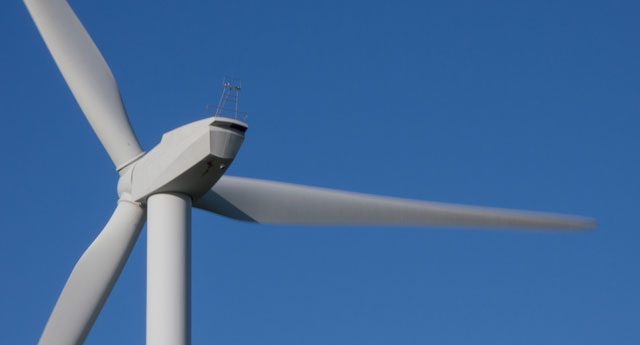
    The new Integrated Resource Plan will result in a greater reliance on gas, solar and especially wind power

    The much-awaited updated South African Integrated Resource Plan for electricity has been released for comment.

    The document makes far-reaching proposals about the target energy generation mix leading all the way to 2050. In particular, the plan pronounces on the future scale and role of nuclear energy and renewable energy technologies. The appropriateness of these has been debated a great deal in the country in the past few years.

    If adopted in its current form, it will lead to a 15-year delay in the construction of new nuclear power plants. But it will also result in a greater reliance on gas, solar and especially wind power than anticipated five years ago in the previous plan 2010-2030.

    The proposed plan has already been the subject of intensive scrutiny and debate, with those for and against lining up to make their points. The state utility Eskom is unhappy about the suggested delay in building a much bigger nuclear capability and has even threatened to ignore key recommendations. For their part, advocates of renewable energy argue that the plan underestimates how much less expensive these technologies will be in the next 20 to 30 years.

    An earlier version of the plan, released in 2011, envisaged that between 2010 and 2030 South Africa’s electricity demand would grow from 255TWh (terawatt-hours — a unit of energy) to 436TWh. This was to be achieved through the completion of two very large coal power plants, Medupi and Kusile, which would supply the bulk of the shortfall. Other contributors would be nuclear, for which new plants would need to be built, and the establishment of a new renewable energy generation network of wind power and solar power.

    But a great deal has changed since then.

    Firstly, the growth in energy demand has proved to be lower than projected. Secondly, the cost of renewable technologies has dropped faster than expected. In particular, the price of solar photovoltaic electricity allocated under the country’s renewable energy procurement programme fell by 75% between 2012 and 2015.

    These developments were captured in an updated version of the 2011 plan that was prepared in 2013. It recommended that, in view of these changing conditions, there was no longer a need to kick-start a nuclear build programme immediately. It also recommended that a decision on whether or not to embark on an expensive expansion of the nuclear reactor fleet could be delayed for several years.

    But this updated version of the plan was never promulgated. This left the door open for a fiercely pro-nuclear lobby which is in favour of a highly lucrative nuclear expansion programme. This issue has developed into a political hot potato. The central argument is that the push for nuclear goes against economic common sense and that it’s being pursued for the benefit of politically connected individuals.

    The nuclear build issue has come to feature prominently as one of the important drivers of what is referred to as “state capture” of some of the country’s large institutions.
    solar-640

    The latest version

    The draft update of the resources plan advocates the following most likely scenario, referred to as the “base case”.

    • Electricity demand between 310TWh and 355TWh in 2030 (about 100TWh lower than envisaged in the 2010-2030 plan) with demand rising to between 390TWh and 530TWh in 2050. This is based on projection models developed at the Council for Scientific and Industrial Research.
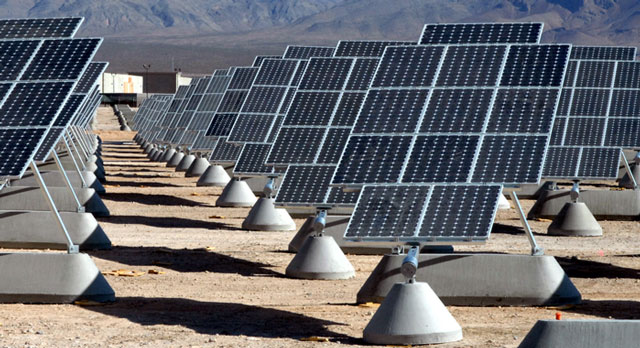
    • The construction of 37,4GW of wind capacity and 17,6GW of solar photovoltaic capacity between 2020 and 2050.
    • The gradual decommissioning of most existing coal power stations by 2050 in line with international carbon emission agreements.
    • A substantial increase (35,3GW) in electricity generation from gas. Due to the high cost of gas it is generally used only as a backup. It would in any case contribute only about 7% of total energy generation.
    • The construction of just over 20GW of nuclear power. But this would only gradually come on line between 2037 and 2050. Given that construction of the plants would take 10 years the decision to go ahead with the nuclear build could still be delayed for another decade.

    Unsurprisingly, the nuclear industry and its supporters have reacted very negatively to the new draft.

    Strong nuclear advocates in Eskom have gone so far as to defiantly declare that they will invite nuclear construction proposals before the end of the year.

    But Eskom’s defiance is unlikely to lead to anything substantial. This is because the state utility is facing both a credibility crisis and its finances are in poor shape.

    On the other hand, advocates of faster growth in renewables have criticised two fundamental assumptions underpinning the “base case” model.

    They argue that the model assumes renewable tariffs slightly higher than achieved in the last allocations made under the renewable energy procurement programme. Only by 2030 do these drop a further 20% for photovoltaics and 9% for wind. But given recent trends and projections, there’s a strong likelihood that future renewable energy costs will be lower than that.

    The “base case” also assumes a limit to how many solar and wind plants can be constructed annually. But based on past interest and delivery by private renewable power producers, far greater annual developments are possible.

    Several researchers have shown that by applying lower renewable tariffs and removing annual construction limits, renewables can make up a much greater proportion of the energy mix, and that new nuclear might not even be needed in 2050.

    Future energy demand

    The new energy plan is now subject to public input. It is due to be adopted by government in four months’ time after improvements and further scenario modelling has been added.

    Even after adoption, updates will need to be done regularly, ideally every two years since even current projections could be overestimating future energy demand considerably.

    This is particularly true given that energy consumption is declining in most developed countries because of advances in technology and energy-saving initiatives.

    If the energy sector is managed correctly, the current South African energy crisis may not be as far reaching as is often assumed.The Conversation

    • Hartmut Winkler is professor of physics, University of Johannesburg
    • This article was originally published on The Conversation


    Eskom Hartmut Winkler
    Subscribe to TechCentral Subscribe to TechCentral
    Share. Facebook Twitter LinkedIn WhatsApp Telegram Email Copy Link
    Previous ArticleZuma is staying right where he is: ANC NEC
    Next Article Blue Label to invest in start-ups

    Related Posts

    Eskom unveils four-subsidiary structure for future South African grid

    Eskom unveils four-subsidiary structure for future South African grid

    10 December 2025
    Nersa plan ushers in major shift in South Africa's electricity market

    Nersa plan ushers in major shift in South Africa’s electricity market

    8 December 2025
    Green shoots are breaking through South Africa's economic static

    Green shoots are breaking through South Africa’s economic static

    8 December 2025
    Company News
    When the physical world goes online: the new front line of cyber risk - Snode Technologies

    When the physical world goes online: the new front line of cyber risk

    12 December 2025
    Endless possibilities with Adapt IT Telecoms' unified VAS platform - Matthew Seabrook

    Endless possibilities with Adapt IT Telecoms’ unified VAS platform

    11 December 2025
    Securing IoT connectivity: how MSB Micro Systems keeps devices in check

    Securing IoT connectivity: how MSB Micro Systems keeps devices in check

    11 December 2025
    Opinion
    Netflix, Warner Bros deal raises fresh headaches for MultiChoice - Duncan McLeod

    Netflix, Warner Bros deal raises fresh headaches for MultiChoice

    5 December 2025
    BIN scans, DDoS and the next cybercrime wave hitting South Africa's banks - Entersekt Gerhard Oosthuizen

    BIN scans, DDoS and the next cybercrime wave hitting South Africa’s banks

    3 December 2025
    Your data, your hardware: the DIY AI revolution is coming - Duncan McLeod

    Your data, your hardware: the DIY AI revolution is coming

    20 November 2025

    Subscribe to Updates

    Get the best South African technology news and analysis delivered to your e-mail inbox every morning.

    Latest Posts
    Political war erupts over BEE in the ICT sector - Solly Malatsi

    Political war erupts over BEE in the ICT sector

    13 December 2025
    Icasa told to align on BEE in move that will favour Starlink - Solly Malatsi

    Icasa told to align on BEE in move that will favour Starlink

    12 December 2025
    South African solar industry faces a reality check

    South African solar industry faces a reality check

    12 December 2025
    TCS+ | Africa's digital transformation - unlocking AI through cloud and culture - Cliff de Wit Accelera Digital Group

    TCS+ | Cloud without culture won’t deliver AI: Accelera’s Cliff de Wit

    12 December 2025
    © 2009 - 2025 NewsCentral Media
    • Cookie policy (ZA)
    • TechCentral – privacy and Popia

    Type above and press Enter to search. Press Esc to cancel.

    Manage consent

    TechCentral uses cookies to enhance its offerings. Consenting to these technologies allows us to serve you better. Not consenting or withdrawing consent may adversely affect certain features and functions of the website.

    Functional Always active
    The technical storage or access is strictly necessary for the legitimate purpose of enabling the use of a specific service explicitly requested by the subscriber or user, or for the sole purpose of carrying out the transmission of a communication over an electronic communications network.
    Preferences
    The technical storage or access is necessary for the legitimate purpose of storing preferences that are not requested by the subscriber or user.
    Statistics
    The technical storage or access that is used exclusively for statistical purposes. The technical storage or access that is used exclusively for anonymous statistical purposes. Without a subpoena, voluntary compliance on the part of your Internet Service Provider, or additional records from a third party, information stored or retrieved for this purpose alone cannot usually be used to identify you.
    Marketing
    The technical storage or access is required to create user profiles to send advertising, or to track the user on a website or across several websites for similar marketing purposes.
    • Manage options
    • Manage services
    • Manage {vendor_count} vendors
    • Read more about these purposes
    View preferences
    • {title}
    • {title}
    • {title}