Why it pays to fail

Failure plays an important role in creating amazing software. By Kenny Inggs.

Kenny Inggs

Do you remember the first time you played a videogame? Do you remember spending hours trying to get the plumber to his damsel in distress? Or trying different timings on a jump to get to the other side over a ravine? Do you remember not making it?

I don’t remember not making it. I remember the feeling when the plumber and his lady friend are reunited. I remember the rush when I cleared a difficult jump. I even remember the physical steadying of my focus as I went on to the next level, but I don’t remember not making it.

There is no doubt that I spent more time trying to win the game than actually winning it. And yet this is not what defines my experience. I think it’s because really great games strike the perfect balance between reward and failure. It’s fun because the failures are small and the rapid-fire lessons lead to big, exciting successes.

In life, in business and certainly in software development, it’s harder to get this balance right. Failure is expensive and embarrassing when it’s big. This leads many businesses to actively and institutionally avoid it at all costs.

Companies, especially the big ones, tend to create vast and complicated processes to prevent failure. It works really well. Failure is rare in these systems – unfortunately, it’s just as rare as inventive thinking, leaps of faith and intuitive innovation.

Now, before you think I’m advocating a careless attitude to failure, let me be clear. Uncontained, unfocused, unconsidered action is not productive as little can be learnt from it.

What I am advocating is the creation of fail-friendly environments where a lot of thought has gone into creating opportunities to try, test, adapt and learn in pursuit of the big, epic win.

The hardest part is identifying the problem. It takes time to understand and identify fully what specifically needs to be solved. This is especially true when dealing with the complexity of really ambitious problems. (And aren’t the big problems the most beautiful ones.)

Once the core problem has been identified, you need to break it into really tiny pieces. The testing is easy, quick and cost effective when the tasks are small. The financial risk of failure is reduced, which means small and rapid failure can be normalised and integrated into the development cycle.

Lean Start-up’s Eric Reis has some great ideas on how to structurally endorse and internalise failure for a business. The build — measure — learn system puts the potential for failure in the centre and advocates as little time as possible between these three actions to reduce the team’s emotional investment in the build’s success.

His process removes the stigma of failure for a development team, but I caution people from elevating his process beyond its usefulness. Solving the problem must still be the objective, rather than following the process perfectly.

In my experience, it takes the following elements to create an atmosphere of productive failure.

The first is a culture that encourages small, rapid failure while still keeping an eye on the big ambition. It’s a balancing act. If we over-focus on the small, incremental bits of build, we will never solve the big, scary, ambitious problem.

The second is also a cultural element. The team must be driven by curiosity and the insatiable need to know. By choosing exceptional people who share the dream and see beauty in the complex problem, the team will be energised by finding solutions.

The third is celebration. Celebrate when you learn something, and celebrate when you get it right. Find something that gives the team the same feeling as when the damsel is saved, the dragon killed or the race won. Make sure you remember that, rather than the times you didn’t make it.

Finally, remember its all a game called “let’s solve this thing”. It should be incredibly playful, fun, interesting and inspiring, and sometimes you get to change the world.

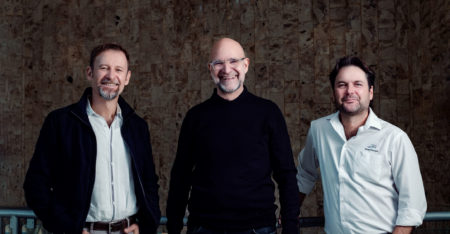
  • Kenny Inggs is head of technology at 22seven, an online money management service

Share this article

  • http://twitter.com/d4v3g Dave Gale

    Well written article. Well timed. Good principle to adopt.

  • He Reports Beers

    A well written article. The trouble I
    have with it is that it is full of opinion, but information free. There is no support
    for these opinions, and this is a problem for readers who do not readily agree
    with the thesis. The ideas may indeed by true, or at least partly true, but
    there is no way from the article of telling.

    Is it indeed harder
    to get the balance between small and rapid-fire lesson in software development
    and life than in games? And which way does the balance usually tip?

    Are the complicated
    processes companies have designed to prevent failure? Do the processes large
    companies have indeed work really well as reducing failure? Or are they designed
    to crate predictability? Or manage risk? Or possibly reduce operating costs?

    And what is meant by
    failure? I’d suggest the considered definition of failure should probably be something
    like making the same mistake repeatedly, as well as never, or seldom having a success.

    These things are all
    stated without any evidence to support them.

    No references.

    No citations.

    No explanations.

    I bring this up
    because these assertions seem to be false to me. I certainly remember the difficulty
    in solving computer games. I do not remember the solutions, nor do I remember
    the triumphs. I remember the visuals. I remember the sounds. I do not remember
    the game play. Of course, that may just be me. I am no game player. I usually
    feel oddly guilty having wasted several hours in front of a computer game when
    I could have better spent that time with family and friends, improved the lives
    of other by entertaining them, socializing, or other more direct forms of human
    caring.

    You have three elements
    for an “atmosphere of productive failure” (a disturbingly vague and weasel
    worded phrase if ever there was one). I have some comments on these ideas.

    1. Small
    rapid failure of the most important ideas. So before testing is the software
    works, check if the business model works.

    2. You
    definitely need the hippies who are the really smart people with ideas, but you
    get no results without the nerds, who are really smart people that can deliver.
    The dream and the beauty are great, but you get better results with a
    compromised dream and fair to middling attractiveness that is delivered, than
    you do with undelivered brilliance. Great ideas, inspiring thinking and life
    changing experiences are a dime a dozen. Delivery is extremely rare.

    3. Celebration
    is great to an extent, but it should be short, because there is little to learn
    from success. As you say, the thing to learn from is the failure.

    I agree that “let’s
    solve this thing” should be incredibly playful, fun, etc. The important word
    there is incredible, from the from Latin
    incredibilis “that cannot be believed,” from in-
    “not” + credibilis “worthy of belief”.

    Do not be seduced by
    the game. Most are. They get ideas, create start-ups, burn their investor’s
    money, and end up with nothing. The idea, while necessary, is the least
    valuable thing, the most replaceable thing. It is delivering a successful
    implementation of that idea, with all the compromise that means, that is the
    thing. If you’re a start-up you also have the fiduciary duty to your investor
    to make sure their belief in you is justified. It is not about fun. It is about
    integrity. Being successful is what matters in business. You may have fun doing
    it, or not, but all that matters is if you’re successful or not. If you deliver
    or not, and if what you deliver is successful in the market or not. This is
    what is usually meant by success. It is the vindication of your idea, the
    vindication of your belief that you can deliver, and that vindication comes
    from the market. Of course, if you define success as having fun, you’re likely
    to be successful in the short term. But if you don’t make a success of the
    business, you’re just another self-important charlatan or snake oil salesman, possibly
    even sure of his own ideas, but just wasting other people’s money and time.

Why TechCentral?

We know that as a prospective advertiser, you are spoilt for choice. Our job is to demonstrate why TechCentral delivers the best return for your advertising spend.

TechCentral is South Africa’s online technology news leader. We don’t say that lightly. We believe we produce the country’s best and most insightful online tech news aimed at industry professionals and those interested in the fast-changing world of technology.

We provide news, reviews and comment, without fear or favour, that is of direct relevance to our fast-expanding audience. Proportionately, we provide the largest local audience of all technology-focused online publishers.

We do not constantly regurgitate press releases to draw in search engine traffic — we believe websites that do so are doing their readers and advertisers a disservice. Nor do we sell “editorial features”, offer advertising “press offices” or rely on online bulletin-board forums of questionable value to advertisers to bolster our traffic.

TechCentral, which is edited and written by award-winning South African journalists, cares about delivering top-quality content to draw in the business and consumer readers that are of most interest to technology advertisers.

We’d like the opportunity to demonstrate the value of directing a portion of your advertising budget to TechCentral, whether your company is in the technology field or not. Numerous opportunities exist for companies interested in reaching our audience of key decision-makers in South Africa’s dynamic information and communications technology sector. We offer packages that will deliver among the best returns on investment available in the online technology news space.

For more information about advertising opportunities, and how your organisation can benefit by publicising itself on TechCentral, please call us on 011-792-0449 during office hours. Or send us an e-mail and ask for our latest rate card and brochure.