Close Menu
TechCentralTechCentral

    Subscribe to the newsletter

    Get the best South African technology news and analysis delivered to your e-mail inbox every morning.

    Facebook X (Twitter) YouTube LinkedIn
    WhatsApp Facebook X (Twitter) LinkedIn YouTube
    TechCentralTechCentral
    • News
      Political war erupts over BEE in the ICT sector - Solly Malatsi

      Political war erupts over BEE in the ICT sector

      13 December 2025
      Icasa told to align on BEE in move that will favour Starlink - Solly Malatsi

      Icasa told to align on BEE in move that will favour Starlink

      12 December 2025
      South African solar industry faces a reality check

      South African solar industry faces a reality check

      12 December 2025
      OpenAI launches GPT-5.2 after 'code red' push to counter Google. Shelby Tauber/Reuters

      OpenAI launches GPT-5.2 after ‘code red’ push to counter Google

      12 December 2025

      A leaner BCX positions itself as market consolidator

      11 December 2025
    • World
      Oracle’s AI ambitions face scrutiny on earnings miss

      Oracle’s AI ambitions face scrutiny on earnings miss

      11 December 2025
      China will get Nvidia H200 chips - but not without paying Washington first

      China will get Nvidia H200 chips – but not without paying Washington first

      9 December 2025
      IBM reportedly close to $11-billion deal to buy Confluent - Arvind Krishna

      IBM reportedly close to $11-billion deal to buy Confluent

      8 December 2025
      Amazon and Google launch multi-cloud service for faster connectivity

      Amazon and Google launch multi-cloud service for faster connectivity

      1 December 2025
      Google makes final court plea to stop US breakup

      Google makes final court plea to stop US breakup

      21 November 2025
    • In-depth
      Black Friday goes digital in South Africa as online spending surges to record high

      Black Friday goes digital in South Africa as online spending surges to record high

      4 December 2025
      Canal+ plays hardball - and DStv viewers feel the pain

      Canal+ plays hardball – and DStv viewers feel the pain

      3 December 2025
      Jensen Huang Nvidia

      So, will China really win the AI race?

      14 November 2025
      Valve's Linux console takes aim at Microsoft's gaming empire

      Valve’s Linux console takes aim at Microsoft’s gaming empire

      13 November 2025
      iOCO's extraordinary comeback plan - Rhys Summerton

      iOCO’s extraordinary comeback plan

      28 October 2025
    • TCS
      TCS+ | Africa's digital transformation - unlocking AI through cloud and culture - Cliff de Wit Accelera Digital Group

      TCS+ | Cloud without culture won’t deliver AI: Accelera’s Cliff de Wit

      12 December 2025
      TCS+ | How Cloud on Demand helps partners thrive in the AWS ecosystem - Odwa Ndyaluvane and Xenia Rhode

      TCS+ | How Cloud On Demand helps partners thrive in the AWS ecosystem

      4 December 2025
      TCS | MTN Group CEO Ralph Mupita on competition, AI and the future of mobile

      TCS | Ralph Mupita on competition, AI and the future of mobile

      28 November 2025
      TCS | Dominic Cull on fixing South Africa's ICT policy bottlenecks

      TCS | Dominic Cull on fixing South Africa’s ICT policy bottlenecks

      21 November 2025
      TCS | BMW CEO Peter van Binsbergen on the future of South Africa's automotive industry

      TCS | BMW CEO Peter van Binsbergen on the future of South Africa’s automotive industry

      6 November 2025
    • Opinion
      Netflix, Warner Bros deal raises fresh headaches for MultiChoice - Duncan McLeod

      Netflix, Warner Bros deal raises fresh headaches for MultiChoice

      5 December 2025
      BIN scans, DDoS and the next cybercrime wave hitting South Africa's banks - Entersekt Gerhard Oosthuizen

      BIN scans, DDoS and the next cybercrime wave hitting South Africa’s banks

      3 December 2025
      Your data, your hardware: the DIY AI revolution is coming - Duncan McLeod

      Your data, your hardware: the DIY AI revolution is coming

      20 November 2025
      Zero Carbon Charge founder Joubert Roux

      The energy revolution South Africa can’t afford to miss

      20 November 2025
      It's time for a new approach to government IT spend in South Africa - Richard Firth

      It’s time for a new approach to government IT spend in South Africa

      19 November 2025
    • Company Hubs
      • Africa Data Centres
      • AfriGIS
      • Altron Digital Business
      • Altron Document Solutions
      • Altron Group
      • Arctic Wolf
      • AvertITD
      • Braintree
      • CallMiner
      • CambriLearn
      • CYBER1 Solutions
      • Digicloud Africa
      • Digimune
      • Domains.co.za
      • ESET
      • Euphoria Telecom
      • Incredible Business
      • iONLINE
      • IQbusiness
      • Iris Network Systems
      • LSD Open
      • NEC XON
      • Netstar
      • Network Platforms
      • Next DLP
      • Ovations
      • Paracon
      • Paratus
      • Q-KON
      • SevenC
      • SkyWire
      • Solid8 Technologies
      • Telit Cinterion
      • Tenable
      • Vertiv
      • Videri Digital
      • Vodacom Business
      • Wipro
      • Workday
      • XLink
    • Sections
      • AI and machine learning
      • Banking
      • Broadcasting and Media
      • Cloud services
      • Contact centres and CX
      • Cryptocurrencies
      • Education and skills
      • Electronics and hardware
      • Energy and sustainability
      • Enterprise software
      • Financial services
      • Information security
      • Internet and connectivity
      • Internet of Things
      • Investment
      • IT services
      • Lifestyle
      • Motoring
      • Public sector
      • Retail and e-commerce
      • Satellite communications
      • Science
      • SMEs and start-ups
      • Social media
      • Talent and leadership
      • Telecoms
    • Events
    • Advertise
    TechCentralTechCentral
    Home » Opinion » Alistair Fairweather » We are destined to be cyborgs

    We are destined to be cyborgs

    By Alistair Fairweather24 November 2014
    Twitter LinkedIn Facebook WhatsApp Email Telegram Copy Link
    News Alerts
    WhatsApp

    Alistair-Fairweather-180-profileNeil Harbisson is an extraordinary person. Though he was born completely colour blind, he found a way to see colour using an electronic eye that is now permanently grafted to his skull. In 2004, he became the first person to be officially recognised by a government as a cyborg — a being that is part man and part machine. But in 10 or 20 more years, Harbisson will not be that unusual.

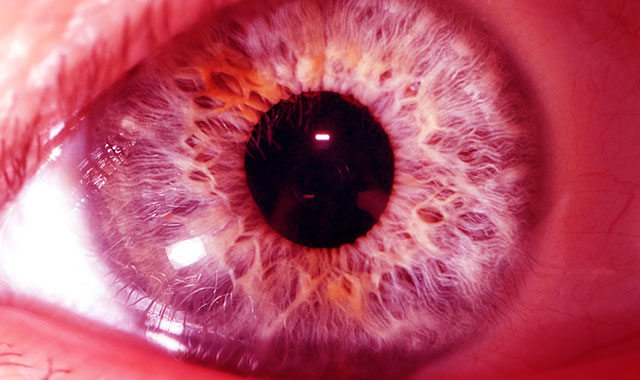
    Harbisson’s electronic eye or “eyeborg” works by translating the frequencies of the colours in front of him into a scale of electronic sounds. These sounds are then played by a chip implanted in the back of his head, and he “hears” the colours in front of him as tones conducted through his skull.

    If this already sounds like science fiction, consider the fact that Harbisson can now “see” and distinguish not only the 360 hues visible to the human eye, but infrared and ultraviolet as well. The eyeborg has allowed a completely colour blind man to become a successful visual artist, and to create a unique body of work that explores the boundaries of human senses.

    But Harbisson’s cybernetic sense relies on something far more fundamental than computer chips. The human brain is incredibly adaptable, even in adults. As Norman Doidge describes in The Brain That Changes Itself, the human brain can literally rewire itself to adapt to the loss of a limb or one of the senses.

    In other words, if we change our organic hardware, then our organic software adapts accordingly. This phenomenon is called neuroplasticity. It explains why people who lose their sight or hearing often describe their other senses becoming much more acute as a result. The brain remaps itself to use the now dormant visual or aural areas of the brain for the other senses.

    We can see neuroplasticity at work at a societal level thanks to the explosion in popularity of smartphones. Dinner party whingers and opinion columnists lament our collective obsession with the tiny screens in front of us. But our fixation is, to a certain degree, inevitable. Never before has a portable device extended our senses in such a profound way. We carry around in our pockets an electronic limb capable of touching anything (or anyone) on the planet.

    So, in a sense, anyone with a smartphone is already a cyborg. Although Harbisson is an extreme case, he is merely at one end of a continuum. And as the trend in wearable computers (such as the Apple Watch) gains momentum, society will gradually move further down that continuum. As these devices extend our senses, so we will change to integrate them into our lives and into our minds.

    If this seems implausible, consider this: almost no one under the age of 18 has ever had to remember a phone number. If you were born in 1996, by the time you entered primary school mobile phones were already ubiquitous. Why would you ever learn to memorise arbitrary 10 digit numbers when your phone could do it for you? And how many people of any age make exact plans about where and when they will meet a friend for drinks? We just WhatsApp or BBM them — planning is now optional.
    eye-640

    The idea that we are becoming a race of cyborgs will seem patently ridiculous to some people, and horrifying to others. But our tools are one of the things that make us human. The written word, for example, is a tool that has endured for millennia and shaped the entire planet. As a species we have evolved an effectively infinite collective memory, first using tools such as books and later computers and the Internet.

    When the written word first emerged it was seen as sorcery. How could scratches on a clay tablet or a flattened reed tell you when to plant your crops? The same will be true of the first wearable computers, and the first implanted devices. People will scoff at them the way they did at the telephone, the automobile and the television.

    Only one thing matters when it comes to technology: that we find it useful. If in 2035 we find that chips embedded in our bodies make it easier to get a job or move freely around the world, we will get them embedded. If we find that electronically heightening our senses is fun or profitable, then we will do so in droves.

    We are already cyborgs — our tools have given us powers well beyond the reach of any other organisms. Integrating those tools into our bodies is just a natural evolution of a process that has been in motion since man first learned how to use fire. As Mr Harbisson will tell you, we have so much more to gain than we have to lose.

    • Alistair Fairweather is chief technology officer for integrated advertising agency Machine
    • This column was first published in the Mail & Guardian Online, the smart news source


    Alistair Fairweather Alistair-Fairweather-180-profileNeil Harbisson Norman Doidge
    Subscribe to TechCentral Subscribe to TechCentral
    Share. Facebook Twitter LinkedIn WhatsApp Telegram Email Copy Link
    Previous ArticlePower supply tight all week
    Next Article The rise and rise of China’s Xiaomi

    Related Posts

    FNB backs down on password decision after backlash

    20 August 2019

    FNB’s new password policy makes its customers less secure

    20 August 2019

    Where to next for smartphones

    4 April 2017
    Company News
    When the physical world goes online: the new front line of cyber risk - Snode Technologies

    When the physical world goes online: the new front line of cyber risk

    12 December 2025
    Endless possibilities with Adapt IT Telecoms' unified VAS platform - Matthew Seabrook

    Endless possibilities with Adapt IT Telecoms’ unified VAS platform

    11 December 2025
    Securing IoT connectivity: how MSB Micro Systems keeps devices in check

    Securing IoT connectivity: how MSB Micro Systems keeps devices in check

    11 December 2025
    Opinion
    Netflix, Warner Bros deal raises fresh headaches for MultiChoice - Duncan McLeod

    Netflix, Warner Bros deal raises fresh headaches for MultiChoice

    5 December 2025
    BIN scans, DDoS and the next cybercrime wave hitting South Africa's banks - Entersekt Gerhard Oosthuizen

    BIN scans, DDoS and the next cybercrime wave hitting South Africa’s banks

    3 December 2025
    Your data, your hardware: the DIY AI revolution is coming - Duncan McLeod

    Your data, your hardware: the DIY AI revolution is coming

    20 November 2025

    Subscribe to Updates

    Get the best South African technology news and analysis delivered to your e-mail inbox every morning.

    Latest Posts
    Political war erupts over BEE in the ICT sector - Solly Malatsi

    Political war erupts over BEE in the ICT sector

    13 December 2025
    Icasa told to align on BEE in move that will favour Starlink - Solly Malatsi

    Icasa told to align on BEE in move that will favour Starlink

    12 December 2025
    South African solar industry faces a reality check

    South African solar industry faces a reality check

    12 December 2025
    TCS+ | Africa's digital transformation - unlocking AI through cloud and culture - Cliff de Wit Accelera Digital Group

    TCS+ | Cloud without culture won’t deliver AI: Accelera’s Cliff de Wit

    12 December 2025
    © 2009 - 2025 NewsCentral Media
    • Cookie policy (ZA)
    • TechCentral – privacy and Popia

    Type above and press Enter to search. Press Esc to cancel.

    Manage consent

    TechCentral uses cookies to enhance its offerings. Consenting to these technologies allows us to serve you better. Not consenting or withdrawing consent may adversely affect certain features and functions of the website.

    Functional Always active
    The technical storage or access is strictly necessary for the legitimate purpose of enabling the use of a specific service explicitly requested by the subscriber or user, or for the sole purpose of carrying out the transmission of a communication over an electronic communications network.
    Preferences
    The technical storage or access is necessary for the legitimate purpose of storing preferences that are not requested by the subscriber or user.
    Statistics
    The technical storage or access that is used exclusively for statistical purposes. The technical storage or access that is used exclusively for anonymous statistical purposes. Without a subpoena, voluntary compliance on the part of your Internet Service Provider, or additional records from a third party, information stored or retrieved for this purpose alone cannot usually be used to identify you.
    Marketing
    The technical storage or access is required to create user profiles to send advertising, or to track the user on a website or across several websites for similar marketing purposes.
    • Manage options
    • Manage services
    • Manage {vendor_count} vendors
    • Read more about these purposes
    View preferences
    • {title}
    • {title}
    • {title}