Close Menu
TechCentralTechCentral

    Subscribe to the newsletter

    Get the best South African technology news and analysis delivered to your e-mail inbox every morning.

    Facebook X (Twitter) YouTube LinkedIn
    WhatsApp Facebook X (Twitter) LinkedIn YouTube
    TechCentralTechCentral
    • News
      MTN's Iran problem: can't stay, can't leave

      MTN’s Iran problem: can’t stay, can’t leave

      17 March 2026

      Post Office limps on – for now

      17 March 2026
      AI chip boom is pushing up costs for telecoms operators

      AI chip boom is pushing up costs for telecoms operators

      17 March 2026
      Samsung's trifold gamble ends in retreat

      Samsung’s trifold gamble ends in retreat

      17 March 2026
      SA banks race to scale AI and cloud as challenger threat intensifies

      SA banks race to scale AI and cloud as challenger threat intensifies

      17 March 2026
    • World
      Peter Thiel's secretive Rome conference draws Church attention

      Peter Thiel’s secretive Rome conference draws Church attention

      16 March 2026
      Musk launches Macrohard in cheeky nod to Microsoft - Elon Musk

      Musk launches Macrohard in cheeky nod to Microsoft

      12 March 2026
      Europe is building an alternative to Microsoft Office

      Europe is building an alternative to Microsoft Office

      11 March 2026
      Microsoft bets on Anthropic as it loosens ties with OpenAI

      Microsoft bets on Anthropic as it loosens ties with OpenAI

      10 March 2026
      World hit by worst oil shock since the 1970s

      World hit by worst oil shock since the 1970s

      9 March 2026
    • In-depth
      The last generation of coders

      The last generation of coders

      18 February 2026
      Sentech is in dire straits

      Sentech is in dire straits

      10 February 2026
      How liberalisation is rewiring South Africa's power sector

      How liberalisation is rewiring South Africa’s power sector

      21 January 2026
      The top-performing South African tech shares of 2025

      The top-performing South African tech shares of 2025

      12 January 2026
      Digital authoritarianism grows as African states normalise internet blackouts

      Digital authoritarianism grows as African states normalise internet blackouts

      19 December 2025
    • TCS
      TCS+ | Vox Kiwi: a wireless solution promising a fibre-like experience - Theo van Zyl

      TCS+ | Vox Kiwi: a wireless solution promising a fibre-like experience

      13 March 2026
      TCS+ | Flipping the narrative on AI in the Global South - Josefin Rosén

      TCS+ | Flipping the narrative on AI in the Global South

      13 March 2026
      TCS | Sink or swim? Antony Makins on how AI is rewriting the rules of work

      TCS | Sink or swim? Antony Makins on how AI is rewriting the rules of work

      5 March 2026
      TCS+ | Bolt ups the ante on platform safety - Simo Kalajdzic

      TCS+ | Bolt ups the ante on platform safety

      4 March 2026
      Watts & Wheels S1E4: 'We drive an electric Uber'

      Watts & Wheels S1E4: ‘We drive an electric Uber’

      10 February 2026
    • Opinion
      South Africa's energy future hinges on getting wheeling right - Aishah Gire

      South Africa’s energy future hinges on getting wheeling right

      10 March 2026
      Hold the doom: the case for a South African comeback - Duncan McLeod

      Apple just dropped a bomb on the Windows world

      5 March 2026
      VC's centre of gravity is shifting - and South Africa is in the frame - Alison Collier

      VC’s centre of gravity is shifting – and South Africa is in the frame

      3 March 2026
      Hold the doom: the case for a South African comeback - Duncan McLeod

      Hold the doom: the case for a South African comeback

      26 February 2026
      The AI fraud crisis your bank is not ready for - Andries Maritz

      The AI fraud crisis your bank is not ready for

      18 February 2026
    • Company Hubs
      • 1Stream
      • Africa Data Centres
      • AfriGIS
      • Altron Digital Business
      • Altron Document Solutions
      • Altron Group
      • Arctic Wolf
      • AvertITD
      • Braintree
      • CallMiner
      • CambriLearn
      • CYBER1 Solutions
      • Digicloud Africa
      • Digimune
      • Domains.co.za
      • ESET
      • Euphoria Telecom
      • HOSTAFRICA
      • Incredible Business
      • iONLINE
      • IQbusiness
      • Iris Network Systems
      • LSD Open
      • Mitel
      • NEC XON
      • Netstar
      • Network Platforms
      • Next DLP
      • Ovations
      • Paracon
      • Paratus
      • Q-KON
      • SevenC
      • SkyWire
      • Solid8 Technologies
      • Telit Cinterion
      • Tenable
      • Vertiv
      • Videri Digital
      • Vodacom Business
      • Wipro
      • Workday
      • XLink
    • Sections
      • AI and machine learning
      • Banking
      • Broadcasting and Media
      • Cloud services
      • Contact centres and CX
      • Cryptocurrencies
      • Education and skills
      • Electronics and hardware
      • Energy and sustainability
      • Enterprise software
      • Financial services
      • HealthTech
      • Information security
      • Internet and connectivity
      • Internet of Things
      • Investment
      • IT services
      • Lifestyle
      • Motoring
      • Policy and regulation
      • Public sector
      • Retail and e-commerce
      • Satellite communications
      • Science
      • SMEs and start-ups
      • Social media
      • Talent and leadership
      • Telecoms
    • Events
    • Advertise
    TechCentralTechCentral
    Home » In-depth » The history, and future, of batteries

    The history, and future, of batteries

    By The Conversation30 April 2015
    Twitter LinkedIn Facebook WhatsApp Email Telegram Copy Link
    News Alerts
    WhatsApp

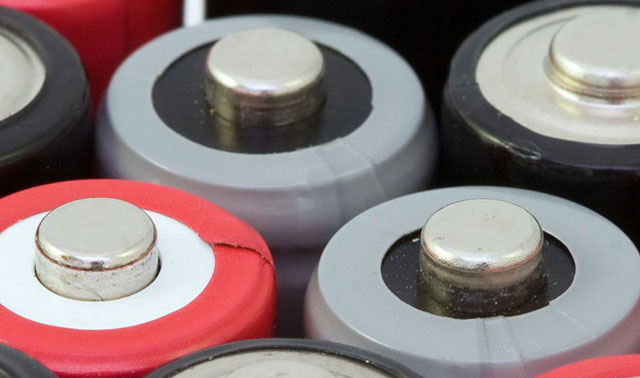
    batteries-640

    Batteries are so ubiquitous today that they’re almost invisible to us. Yet they are a remarkable invention with a long and storied history, and an equally exciting future.

    A battery is essentially a device that stores chemical energy that is converted into electricity. Basically, batteries are small chemical reactors, with the reaction producing energetic electrons, ready to flow through the external device.

    Batteries have been with us for a long time. In 1938, the director of the Baghdad Museum found what is now referred to as the “Baghdad Battery” in the basement of the museum. Analysis dated it at around 250BC and of Mesopotamian origin.

    Controversy surrounds this earliest example of a battery, but suggested uses include electroplating, pain relief or a religious tingle.

    American scientist and inventor Benjamin Franklin first used the term “battery” in 1749 when he was doing experiments with electricity using a set of linked capacitors.

    The first true battery was invented by the Italian physicist Alessandro Volta in 1800. Volta stacked discs of copper (Cu) and zinc (Zn) separated by cloth soaked in salty water.

    Wires connected to either end of the stack produced a continuous stable current. Each cell (a set of a Cu and a Zn disc and the brine) produces 0,76V. A multiple of this value is obtained given by the number of cells that are stacked together.

    One of the most enduring batteries, the lead-acid battery, was invented in 1859 and is still the technology used to start most internal combustion engine cars today. It is the oldest example of a rechargeable battery.

    Today, batteries come in a range of sizes from large megawatt sizes, which store the power from solar farms or substations to guarantee stable supply in entire villages or islands, down to tiny batteries like those used in electronic watches.

    Batteries are based on different chemistries, which generate basic cell voltages typically in the 1V to 3,6V range. The stacking of the cells in series increases the voltage, while their connection in parallel enhances the supply of current. This principle is used to add up to the required voltages and currents, all the way to the negawatt sizes.

    There is now much anticipation that battery technology is about to take another leap with new models being developed with enough capacity to store the power generated with domestic solar or wind systems and then power a home at more convenient (generally night) time for a few days.

    How do batteries work?
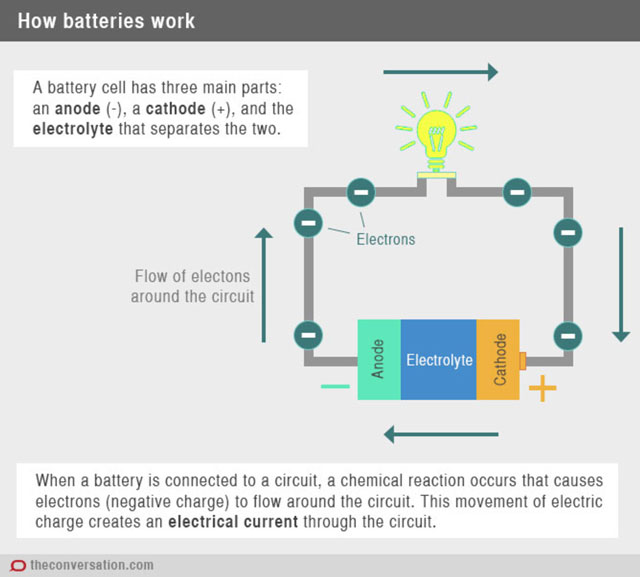
    When a battery is discharged, the chemical reaction produces some extra electrons as the reaction occurs. An example of a reaction that produces electrons is the oxidation of iron to produce rust. Iron reacts with oxygen and gives up electrons to the oxygen to produce iron oxide.

    The standard construction of a battery is to use two metals or compounds with different chemical potentials and separate them with a porous insulator. The chemical potential is the energy stored in the atoms and bonds of the compounds, which is then imparted to the moving electrons, when these are allowed to move through the connected external device.

    A conducting fluid such as salt and water is used to transfer soluble ions from one metal to the other during the reaction and is called the electrolyte.

    The metal or compound that loses the electrons during discharge is called the anode and the metal or compound that accepts the electrons is called the cathode. This flow of electrons from the anode to the cathode through the external connection is what we use to run our electronic devices.
    how-batteries-work-640

    When the reaction that produces the flow of electrons cannot be reversed, the battery is referred to as a primary battery. When one of the reactants is consumed, the battery is flat.

    The most common primary battery is the zinc-carbon battery. It was found that when the electrolyte is an alkali, the batteries lasted much longer. These are the alkali batteries we buy from the supermarket.

    The challenge of disposing with such primary batteries was to find a way to reuse them, by recharging the batteries. This becomes more essential as the batteries become larger, and frequently replacing them is not commercially viable.

    One of the earliest rechargeable batteries, the nickel-cadmium battery (NiCd), also uses an alkali as an electrolyte. In 1989 nickel-metal hydrogen batteries (NiMH) were developed, and had a longer life than NiCd batteries.

    These types of batteries are very sensitive to overcharging and overheating during charge, therefore the charge rate is controlled below a maximum rate. Sophisticated controllers can speed up the charge, without taking less than a few hours.

    In most other simpler chargers, the process typically takes overnight.

    Portable applications — such as mobile phones and laptop computers — are constantly looking for maximum, most compact stored energy. While this increases the risk of a violent discharge, it is manageable using current rate limiters in the mobile phone batteries because of the overall small format.

    But as larger applications of batteries are contemplated the safety in large format and large quantity of cells has become a more significant consideration.

    The first great leap forward
    New technologies often demand more compact, higher capacity, safe, rechargeable batteries.
    In 1980, the American physicist Professor John Goodenough invented a new type of lithium battery in which the lithium (Li) could migrate through the battery from one electrode to the other as a Li+ ion.

    Lithium is one of the lightest elements in the periodic table and it has one of the largest electrochemical potentials, therefore this combination produces some of the highest possible voltages in the most compact and lightest volumes.

    This is the basis for the lithium-ion battery. In this new battery, lithium is combined with a transition metal — such as cobalt, nickel, manganese or iron — and oxygen to form the cathode. During recharging when a voltage is applied, the positively charged lithium ion from the cathode migrates to the graphite anode and becomes lithium metal.

    Because lithium has a strong electrochemical driving force to be oxidised if allowed, it migrates back to the cathode to become a Li+ ion again and gives up its electron back to the cobalt ion. The movement of electrons in the circuit gives us a current that we can use.

    The second great leap forward
    Depending on the transition metal used in the lithium-ion battery, the cell can have a higher capacity but can be more reactive and susceptible to a phenomenon known as thermal runaway.

    In the case of lithium cobalt oxide (LiCoO2) batteries made by Sony in the 1990s, this led to many such batteries catching fire. The possibility of making battery cathodes from nano-scale material and hence more reactive was out of the question.

    But in the 1990s, Goodenough again made a huge leap in battery technology by introducing a stable lithium-ion cathode based on lithium iron and phosphate.

    This cathode is thermally stable. It also means that nano-scale lithium iron phosphate (LiFePO4) or lithium ferrophosphate (LFP) materials can now be made safely into large format cells that can be rapidly charged and discharged.
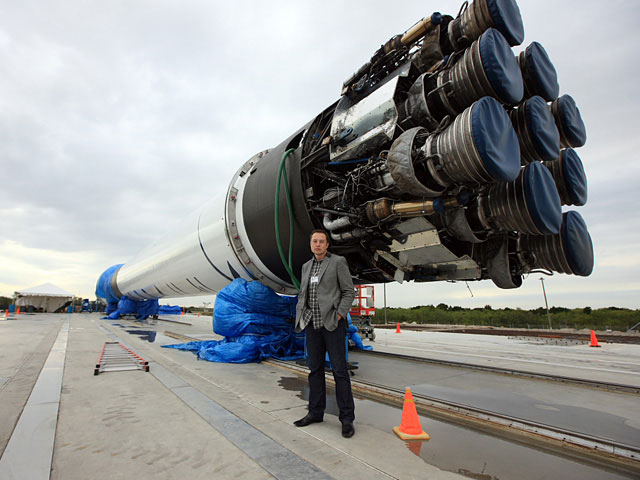
    Elon Musk
    Tesla founder Elon Musk

    Many new applications now exist for these new cells, from power tools to hybrid and electric vehicle. Perhaps the most important application will be the storage of domestic electric energy for households.

    The leader in manufacturing this new battery format for vehicles is the Tesla electric vehicle company, which has plans for building “Giga-plants” for production of these batteries.

    The size of the lithium battery pack for the Tesla Model S is an impressive 85kWh.

    This is also more than enough for domestic household needs, which is why there has been so much speculation as to what Tesla’s founder Elon Musk is preparing to reveal later this week.

    A modular battery design may create battery formats that are somewhat interchangeable and suited to both vehicle and domestic applications without need for redesign or reconstruction.

    Perhaps we are about to witness the next generational shift in energy generation and storage driven by the ever-improving capabilities of the humble battery.The Conversation

    • Jose Alarco and Peter Talbot are professorial fellows at Queensland University of Technology
    • This article was originally published on The Conversation

    Follow TechCentral on Google News Add TechCentral as your preferred source on Google


    Elon Musk Jose Alarco Peter Talbot Tesla
    WhatsApp YouTube
    Share. Facebook Twitter LinkedIn WhatsApp Telegram Email Copy Link
    Previous ArticleLoad shedding dominates SA Google searches
    Next Article More details emerge on Telkom restructuring

    Related Posts

    Musk launches Macrohard in cheeky nod to Microsoft - Elon Musk

    Musk launches Macrohard in cheeky nod to Microsoft

    12 March 2026
    Musk hits brakes on Mars mission

    Musk hits brakes on Mars mission

    9 February 2026
    Starlink considers building its own phone - Elon Musk

    Starlink considers building its own phone

    5 February 2026
    Company News
    SA's cybersecurity triple bind: more threats, less talent, tighter regulation - Vox

    SA’s cybersecurity triple bind: more threats, less talent, tighter regulation

    17 March 2026
    When CTEM, AI and a unified attack surface meet - RedRok, Solid8 Technologies

    When CTEM, AI and a unified attack surface meet

    17 March 2026
    Why finance's new KPI is decision speed

    Why finance’s new KPI is decision speed

    17 March 2026
    Opinion
    South Africa's energy future hinges on getting wheeling right - Aishah Gire

    South Africa’s energy future hinges on getting wheeling right

    10 March 2026
    Hold the doom: the case for a South African comeback - Duncan McLeod

    Apple just dropped a bomb on the Windows world

    5 March 2026
    VC's centre of gravity is shifting - and South Africa is in the frame - Alison Collier

    VC’s centre of gravity is shifting – and South Africa is in the frame

    3 March 2026

    Subscribe to Updates

    Get the best South African technology news and analysis delivered to your e-mail inbox every morning.

    Latest Posts
    MTN's Iran problem: can't stay, can't leave

    MTN’s Iran problem: can’t stay, can’t leave

    17 March 2026

    Post Office limps on – for now

    17 March 2026
    AI chip boom is pushing up costs for telecoms operators

    AI chip boom is pushing up costs for telecoms operators

    17 March 2026
    Samsung's trifold gamble ends in retreat

    Samsung’s trifold gamble ends in retreat

    17 March 2026
    © 2009 - 2026 NewsCentral Media
    • Cookie policy (ZA)
    • TechCentral – privacy and Popia

    Type above and press Enter to search. Press Esc to cancel.

    Manage consent

    TechCentral uses cookies to enhance its offerings. Consenting to these technologies allows us to serve you better. Not consenting or withdrawing consent may adversely affect certain features and functions of the website.

    Functional Always active
    The technical storage or access is strictly necessary for the legitimate purpose of enabling the use of a specific service explicitly requested by the subscriber or user, or for the sole purpose of carrying out the transmission of a communication over an electronic communications network.
    Preferences
    The technical storage or access is necessary for the legitimate purpose of storing preferences that are not requested by the subscriber or user.
    Statistics
    The technical storage or access that is used exclusively for statistical purposes. The technical storage or access that is used exclusively for anonymous statistical purposes. Without a subpoena, voluntary compliance on the part of your Internet Service Provider, or additional records from a third party, information stored or retrieved for this purpose alone cannot usually be used to identify you.
    Marketing
    The technical storage or access is required to create user profiles to send advertising, or to track the user on a website or across several websites for similar marketing purposes.
    • Manage options
    • Manage services
    • Manage {vendor_count} vendors
    • Read more about these purposes
    View preferences
    • {title}
    • {title}
    • {title}