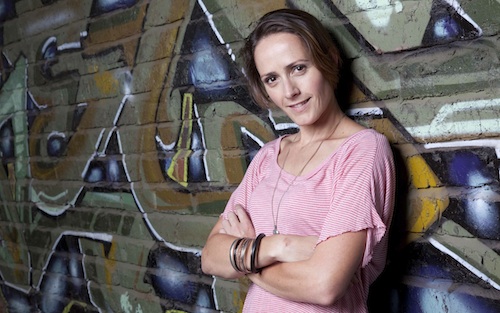
Even when she was a child, Barbara Mallinson knew that one day she would start her own business.
Schooled in Johannesburg, and armed with a business science degree from the University of Cape Town, Mallinson moved to the UK to gain international experience.
But after a short stint in marketing roles in big companies there, the idea of launching a start-up online business became too strong. So she quit the corporate world to launch Obami, then a generic social networking website like Facebook.
But with the rise of Facebook and other social networks, she realised she needed to find a niche in which she could compete. So, she began retooling Obami, which is Zulu for “mine” or “my” and has nothing to do with US President Barack Obama, as a closed social networking website for schools.
“I came back to SA on holiday and spoke to some schools here,” she says. “I went to St Marys [in Johannesburg] and spoke to them about their needs. I went back to the UK, started to redesign the website, and decided then to move back to SA.”
St Marys became the first school to go live with the system — last September — and Mallinson now has five private schools connected to Obami.
The website is designed to help school pupils interact with their teachers, and for teachers to interact with parents, and so on. The revenue model is largely based around advertising, at least for now.
But it’s not been easy getting schools on board, Mallinson, 29, admits. She says getting through the administrative red tape is not easy. And neither is convincing teachers, many of whom are reluctant to use new technology, that the system can be beneficial for them.
“Teachers are resistant to change,” she says. “They love [the Obami website] when they see it, but to get them to sit down and look at it is a big challenge.”
The website, which is closed to outsiders (like Facebook was originally, when it was a service for US university students), allows its users to create mini-blogs, post status updates, chat via instant messaging software, share photos and read news feeds, much like on Facebook.

But its selling proposition is that it’s a safe environment, especially for children. Obami’s application programming interface has not been opened to third-party developers in an effort to keep the service as safe as possible.
Schools can set flexible privacy controls and staff can be sure messages they send to each other will be confidential. There are swearword filters, too, and image filters may eventually be implemented to detect inappropriate images. “We haven’t had any problems with that yet, probably because people use real names and e-mail addresses.”
Teachers, parents and pupils are automatically loaded into the system, and relationships between them are also automatically generated in the software. So, when a pupil logs on for the first time, they’ll automatically have been “friended” with their teachers, parents and classmates.
“You can add other friends if they are not automatically added, and you can create friendships between schools as well,” Mallinson says.
She says she is continually working on new features and hopes to offer an application soon to support e-learning, helping with homework and tests. She has held discussions with the national department of education in this regard.
Conservatively, Mallinson wants 40 schools using the site by the end of the year. She admits she hasn’t sold the website aggressively to schools as she and her technical team first wanted to ensure its scaleability.
Mallinson initially funded Obami’s launch through her savings. She later received a small grant from the UK government and more recently has received “generous support from family and friends”.
The site is free of charge for its users, including the participating schools. In addition to display advertising, companies will be able to sponsor and/or produce content for the site. For example, a stationery company could upload videos of how to make arts and crafts. These companies will get logons to Obami, but will not be able to interact directly with children on the site. Also planned is a fee for schools wanting specific features.
For now, Obami is aimed at independent schools — “they tend to have Internet access at school and at home” — but Mallinson says she is not excluding private schools from the initiative.
Will the system remain closed, or eventually be opened up to the world like Facebook? “It’s hard to say. If it adds real value to e-learning, and opening it would jeopardise that, and the business model is working, then probably not.”
Mallinson, who lives in Knysna but who commutes regularly to Johannesburg and Cape Town, says user stickiness on the site is high. Obami has about 1 300 users now, with each logon lasting about 20 minutes on average.
Eventually, Mallinson wants to take Obami international, as SA is a relatively small market. She says she is already eyeing opportunities in the UK and in Australia. — Duncan McLeod, TechCentral
- This profile is the first in a new section on TechCentral focused on technology start-ups in SA. TechCentral’s purpose in launching the section is to profile what our start-up entrepreneurs are doing and to highlight some of the interesting technology ideas coming out of SA. Do you have an interesting tech start-up? Are you doing something out of the ordinary? Why not drop TechCentral’s editor a line and tell us about what you’re doing?
- Subscribe to our free daily newsletter
- Follow us on Twitter or on Facebook