Close Menu
TechCentralTechCentral

    Subscribe to the newsletter

    Get the best South African technology news and analysis delivered to your e-mail inbox every morning.

    Facebook X (Twitter) YouTube LinkedIn
    WhatsApp Facebook X (Twitter) LinkedIn YouTube
    TechCentralTechCentral
    • News
      Icasa told to align on BEE in move that will favour Starlink - Solly Malatsi

      Icasa told to align on BEE in move that will favour Starlink

      12 December 2025
      South African solar industry faces a reality check

      South African solar industry faces a reality check

      12 December 2025
      OpenAI launches GPT-5.2 after 'code red' push to counter Google. Shelby Tauber/Reuters

      OpenAI launches GPT-5.2 after ‘code red’ push to counter Google

      12 December 2025

      A leaner BCX positions itself as market consolidator

      11 December 2025
      Australia has banned kids from social media. Should South Africa follow suit?

      Australia has banned kids from social media. Should South Africa follow suit?

      11 December 2025
    • World
      Oracle’s AI ambitions face scrutiny on earnings miss

      Oracle’s AI ambitions face scrutiny on earnings miss

      11 December 2025
      China will get Nvidia H200 chips - but not without paying Washington first

      China will get Nvidia H200 chips – but not without paying Washington first

      9 December 2025
      IBM reportedly close to $11-billion deal to buy Confluent - Arvind Krishna

      IBM reportedly close to $11-billion deal to buy Confluent

      8 December 2025
      Amazon and Google launch multi-cloud service for faster connectivity

      Amazon and Google launch multi-cloud service for faster connectivity

      1 December 2025
      Google makes final court plea to stop US breakup

      Google makes final court plea to stop US breakup

      21 November 2025
    • In-depth
      Black Friday goes digital in South Africa as online spending surges to record high

      Black Friday goes digital in South Africa as online spending surges to record high

      4 December 2025
      Canal+ plays hardball - and DStv viewers feel the pain

      Canal+ plays hardball – and DStv viewers feel the pain

      3 December 2025
      Jensen Huang Nvidia

      So, will China really win the AI race?

      14 November 2025
      Valve's Linux console takes aim at Microsoft's gaming empire

      Valve’s Linux console takes aim at Microsoft’s gaming empire

      13 November 2025
      iOCO's extraordinary comeback plan - Rhys Summerton

      iOCO’s extraordinary comeback plan

      28 October 2025
    • TCS
      TCS+ | Africa's digital transformation - unlocking AI through cloud and culture - Cliff de Wit Accelera Digital Group

      TCS+ | Cloud without culture won’t deliver AI: Accelera’s Cliff de Wit

      12 December 2025
      TCS+ | How Cloud on Demand helps partners thrive in the AWS ecosystem - Odwa Ndyaluvane and Xenia Rhode

      TCS+ | How Cloud On Demand helps partners thrive in the AWS ecosystem

      4 December 2025
      TCS | MTN Group CEO Ralph Mupita on competition, AI and the future of mobile

      TCS | Ralph Mupita on competition, AI and the future of mobile

      28 November 2025
      TCS | Dominic Cull on fixing South Africa's ICT policy bottlenecks

      TCS | Dominic Cull on fixing South Africa’s ICT policy bottlenecks

      21 November 2025
      TCS | BMW CEO Peter van Binsbergen on the future of South Africa's automotive industry

      TCS | BMW CEO Peter van Binsbergen on the future of South Africa’s automotive industry

      6 November 2025
    • Opinion
      Netflix, Warner Bros deal raises fresh headaches for MultiChoice - Duncan McLeod

      Netflix, Warner Bros deal raises fresh headaches for MultiChoice

      5 December 2025
      BIN scans, DDoS and the next cybercrime wave hitting South Africa's banks - Entersekt Gerhard Oosthuizen

      BIN scans, DDoS and the next cybercrime wave hitting South Africa’s banks

      3 December 2025
      Your data, your hardware: the DIY AI revolution is coming - Duncan McLeod

      Your data, your hardware: the DIY AI revolution is coming

      20 November 2025
      Zero Carbon Charge founder Joubert Roux

      The energy revolution South Africa can’t afford to miss

      20 November 2025
      It's time for a new approach to government IT spend in South Africa - Richard Firth

      It’s time for a new approach to government IT spend in South Africa

      19 November 2025
    • Company Hubs
      • Africa Data Centres
      • AfriGIS
      • Altron Digital Business
      • Altron Document Solutions
      • Altron Group
      • Arctic Wolf
      • AvertITD
      • Braintree
      • CallMiner
      • CambriLearn
      • CYBER1 Solutions
      • Digicloud Africa
      • Digimune
      • Domains.co.za
      • ESET
      • Euphoria Telecom
      • Incredible Business
      • iONLINE
      • IQbusiness
      • Iris Network Systems
      • LSD Open
      • NEC XON
      • Netstar
      • Network Platforms
      • Next DLP
      • Ovations
      • Paracon
      • Paratus
      • Q-KON
      • SevenC
      • SkyWire
      • Solid8 Technologies
      • Telit Cinterion
      • Tenable
      • Vertiv
      • Videri Digital
      • Vodacom Business
      • Wipro
      • Workday
      • XLink
    • Sections
      • AI and machine learning
      • Banking
      • Broadcasting and Media
      • Cloud services
      • Contact centres and CX
      • Cryptocurrencies
      • Education and skills
      • Electronics and hardware
      • Energy and sustainability
      • Enterprise software
      • Financial services
      • Information security
      • Internet and connectivity
      • Internet of Things
      • Investment
      • IT services
      • Lifestyle
      • Motoring
      • Public sector
      • Retail and e-commerce
      • Satellite communications
      • Science
      • SMEs and start-ups
      • Social media
      • Talent and leadership
      • Telecoms
    • Events
    • Advertise
    TechCentralTechCentral
    Home » In-depth » Space junk threatens satellite communication

    Space junk threatens satellite communication

    By The Conversation30 April 2015
    Twitter LinkedIn Facebook WhatsApp Email Telegram Copy Link
    News Alerts
    WhatsApp

    Satellite-640

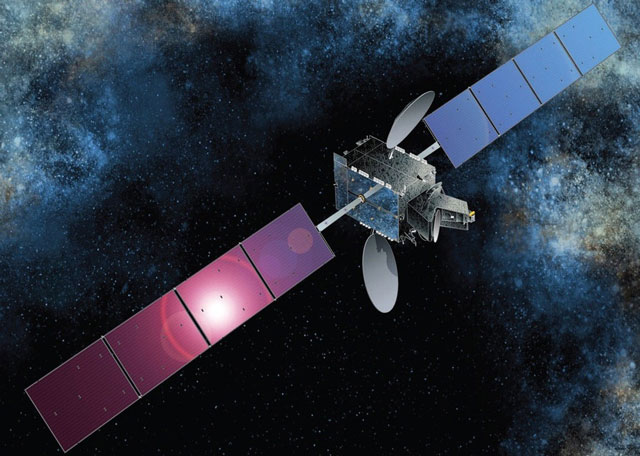
    There are thousands of satellites in Earth orbit, of varying age and usefulness. At some point they all reach the end of their lives and become floating junk. What do we do with them then?

    Most satellites are not designed with the end of their life in mind. But some are designed to be serviced, such as the Hubble Space Telescope, which as part of its final service was modified to include a soft capture mechanism. This is an interface designed to allow a future robotic spacecraft to attach itself and guide the telescope to safe disposal through burn-up in the Earth’s atmosphere once its operational life has ended.

    Thinking about methods to retire satellites is important, because without proper disposal they become another source of space debris — fragments of old spacecraft, satellites and rockets now orbiting Earth at thousands of miles per hour. These fragments travel so fast that even a piece the size of a coin has enough energy to disable a whole satellite. There are well over 100 000 pieces this size or larger already orbiting Earth, never mind much larger items — for example, the Progress unmanned cargo module, which Russian Space Agency mission controllers have lost control of and which will orbit progressively lower until it burns up in Earth’s atmosphere.

    We don’t know exactly how many or where they are. Only the largest — about 10% of those fragments substantial enough to disable a satellite — can be tracked from the ground. In fact, damage to satellites is not unknown, with Hubble and the Solar Maximum Mission (SMM) satellites among those to have coin-sized holes punched into them by flying debris. There is a risk that over the next few years there will be other, perhaps more damaging, collisions.

    The soft capture mechanism was installed to prevent more space debris. Engineers worldwide are devising ingenious ways to try to limit the amount of debris orbiting the planet — for good reason. Predictions show that if we don’t tackle the problem of space debris, then many of our most useful orbits will become too choked with flying fragments for satellites to occupy them safely.

    At some point, there may be enough debris in a given orbit for debris-satellite collisions and debris-debris collisions to cascade out of control. This is known as the Kessler syndrome, as shown (in somewhat exaggerated fashion) in the film Gravity.

    Given the degree to which we rely on satellites — for communication, GPS and time synchronisation, upon which in turn many vital services such as international banking rely — it’s crucial we prevent near-Earth space from reaching this point. And one of the important steps required is to remove large, defunct satellites that could become the source of many more chunks of debris.

    Satellites such as the UK’s TechDemoSat-1 (TDS-1), which was launched in 2014, are designed for end-of-life disposal. TDS-1 carries a small drag sail designed and built at Cranfield University that can be deployed once the satellite’s useful science life is over. This acts like a parachute, dragging the satellite’s orbit lower until it re-enters the atmosphere naturally and burns up high in Earth’s atmosphere.

    TDS-1 is small enough to burn up — larger or higher satellites will require other ways of moving them away from the most important, valuable and busy orbits. It’s possible, with enough fuel on board (and all systems functioning after perhaps decades in space), for satellites to de-orbit themselves. Other, more exotic solutions include tug satellites using nets, tethers and even high-power lasers.

    However, space debris isn’t just an engineering problem. Suppose Europe develops a tug satellite and tries to de-orbit old Russian satellites, or passes close to an active US spy satellite. Clearly this could get political. Simply put, we haven’t yet found a way to use space sustainably, and the problem is almost as complex as finding ways to ensure sustainable development on Earth. What we need are practical solutions — and soon.

    So, what will happen to Hubble, perhaps the best-known case of a satellite that requires a retirement plan? One day, perhaps in the early 2020s, a small spacecraft will be launched to rendezvous with the space telescope. It will attach using the soft capture mechanism and then fire its engines to guide Hubble toward re-entry over the South Pacific. For a satellite as large as Hubble, it’s likely that some parts will survive re-entry so a large uninhabited region over the ocean is best suited to avoid risk of damage or casualties.

    The re-entry can be tracked carefully from other satellites, aircraft, and ships — all will capture the moment that Hubble itself, having spent decades watching the heavens, will become a bright shooting star for other telescopes to capture. It somehow seems fitting that a mission as remarkable and long-lived as Hubble should itself end in a blaze of glory.The Conversation

    • Stephen Hobbs is senior lecturer and course director in cyberphysical systems at Cranfield University. Chiara Palla is a PhD student and Jennifer Kingston is a lecturer in aerospace and space systems at the same institution
    • This article was originally published on The Conversation


    Subscribe to TechCentral Subscribe to TechCentral
    Share. Facebook Twitter LinkedIn WhatsApp Telegram Email Copy Link
    Previous ArticleIS expects big DSL price cuts
    Next Article For mobile operators, sharing is caring

    Related Posts

    Icasa told to align on BEE in move that will favour Starlink - Solly Malatsi

    Icasa told to align on BEE in move that will favour Starlink

    12 December 2025
    South African solar industry faces a reality check

    South African solar industry faces a reality check

    12 December 2025
    TCS+ | Africa's digital transformation - unlocking AI through cloud and culture - Cliff de Wit Accelera Digital Group

    TCS+ | Cloud without culture won’t deliver AI: Accelera’s Cliff de Wit

    12 December 2025
    Company News
    When the physical world goes online: the new front line of cyber risk - Snode Technologies

    When the physical world goes online: the new front line of cyber risk

    12 December 2025
    Endless possibilities with Adapt IT Telecoms' unified VAS platform - Matthew Seabrook

    Endless possibilities with Adapt IT Telecoms’ unified VAS platform

    11 December 2025
    Securing IoT connectivity: how MSB Micro Systems keeps devices in check

    Securing IoT connectivity: how MSB Micro Systems keeps devices in check

    11 December 2025
    Opinion
    Netflix, Warner Bros deal raises fresh headaches for MultiChoice - Duncan McLeod

    Netflix, Warner Bros deal raises fresh headaches for MultiChoice

    5 December 2025
    BIN scans, DDoS and the next cybercrime wave hitting South Africa's banks - Entersekt Gerhard Oosthuizen

    BIN scans, DDoS and the next cybercrime wave hitting South Africa’s banks

    3 December 2025
    Your data, your hardware: the DIY AI revolution is coming - Duncan McLeod

    Your data, your hardware: the DIY AI revolution is coming

    20 November 2025

    Subscribe to Updates

    Get the best South African technology news and analysis delivered to your e-mail inbox every morning.

    Latest Posts
    Icasa told to align on BEE in move that will favour Starlink - Solly Malatsi

    Icasa told to align on BEE in move that will favour Starlink

    12 December 2025
    South African solar industry faces a reality check

    South African solar industry faces a reality check

    12 December 2025
    TCS+ | Africa's digital transformation - unlocking AI through cloud and culture - Cliff de Wit Accelera Digital Group

    TCS+ | Cloud without culture won’t deliver AI: Accelera’s Cliff de Wit

    12 December 2025
    OpenAI launches GPT-5.2 after 'code red' push to counter Google. Shelby Tauber/Reuters

    OpenAI launches GPT-5.2 after ‘code red’ push to counter Google

    12 December 2025
    © 2009 - 2025 NewsCentral Media
    • Cookie policy (ZA)
    • TechCentral – privacy and Popia

    Type above and press Enter to search. Press Esc to cancel.

    Manage consent

    TechCentral uses cookies to enhance its offerings. Consenting to these technologies allows us to serve you better. Not consenting or withdrawing consent may adversely affect certain features and functions of the website.

    Functional Always active
    The technical storage or access is strictly necessary for the legitimate purpose of enabling the use of a specific service explicitly requested by the subscriber or user, or for the sole purpose of carrying out the transmission of a communication over an electronic communications network.
    Preferences
    The technical storage or access is necessary for the legitimate purpose of storing preferences that are not requested by the subscriber or user.
    Statistics
    The technical storage or access that is used exclusively for statistical purposes. The technical storage or access that is used exclusively for anonymous statistical purposes. Without a subpoena, voluntary compliance on the part of your Internet Service Provider, or additional records from a third party, information stored or retrieved for this purpose alone cannot usually be used to identify you.
    Marketing
    The technical storage or access is required to create user profiles to send advertising, or to track the user on a website or across several websites for similar marketing purposes.
    • Manage options
    • Manage services
    • Manage {vendor_count} vendors
    • Read more about these purposes
    View preferences
    • {title}
    • {title}
    • {title}