SA’s unfolding digital TV nightmare

Confusion around the encryption and control of set-top boxes, and the complexity of subsidies of the boxes for poorer households, are threatening South Africa’s migration to digital terrestrial television. By Craig Wilson.

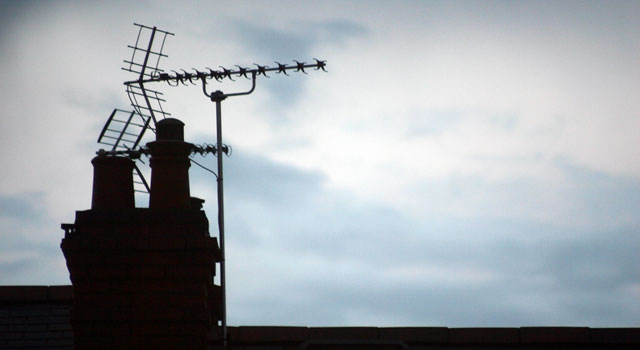
TV-Aerial-640

Lack of certainty around the encryption and access control mechanisms to be used for digital terrestrial television, along with how millions of set-top boxes will be subsidised for poorer households, looks set to throw South Africa even further off track in the already long-delayed, multibillion-rand project.

There is rising anger in both the broadcasting and telecommunications industries over the continued delays, which could mean South Africa continues to broadcast analogue signals well past the June 2015 deadline set by the International Telecommunication Union (ITU) to complete migration to digital.

The prospect of protracted legal action involving e.tv and communications minister Dina Pule, coupled with the complexity of proposed access control mechanisms, the insistence that subsidised set-top boxes be locally manufactured — despite the likelihood they’ll cost far more than units imported from Asia — and confusion over who will pay for the subsidy are raising hackles. Few industry players, however, are prepared to go on the record, mostly for fear of losing contracts or falling out of political favour.

Government says it intends to subsidise 70% of the cost of set-top boxes for 5m of South Africa’s poorest homes, an exercise expected to cost at least R4,5bn. It is unknown where this funding will come from. One of the proposed sources of funds for the subsidy is the Universal Service & Access Agency of South Africa (Usaasa). However, the fund Usaasa administers is not large enough to fund the project fully — it’s not clear how much money is in the fund, but industry players peg the number at between R1bn and R2bn.

Also, Usaasa’s funds don’t only come from broadcasters but from telecoms operators as well. These operators have raised objections to the fund being used to fund broadcasting. Operators will, however, potentially gain access to some of the radio frequency spectrum that will become available once the migration to digital broadcasting is complete.

Senior industry players, speaking to TechCentral on condition of anonymity because of their need to work with government, say the task of determining who is eligible for a subsidised box is going to be a major headache. They say many people who aren’t deemed eligible will argue they are. The process could be a nightmare to manage.

Altech UEC MD Rodger Warren

Altech UEC MD Rodger Warren

The department of communications continues to insist that the set-top boxes be locally sourced, saying the project would create local jobs and stimulate a black-owned manufacturing sector. Again, industry players question whether this plan makes sense, especially since many of the emerging manufacturers will simply be repackaging imported components rather than genuinely building boxes locally.

Access control
Because government will spend billions of rand on subsidising set-top boxes, it is insisting they include access control mechanisms to stop them from being sold by the intended beneficiaries. Originally, this was limited to a location verification-type mechanism that would prevent them being used outside the country. However, this has been expanded to include facilities to manage subscriptions and turn the boxes on or off remotely.

These conditional access (CA) requirements will have to be administered by a CA vendor. Sentech, which was instructed by minister Pule in May last year to manage the CA system, has proposed Nagravision as the vendor. It already uses Nagravision to manage some of its satellite services.

However, free-to-air broadcaster e.tv took exception to Pule’s decision to appoint Sentech, successfully suing the minister in the high court last year. That court’s judgment is now the subject of an appeal by the minister. This appeal process could take years, further endangering South Africa’s commitment to the ITU and prolonging the release of spectrum to broadband telecoms operators and the attendant benefits that will flow from that.

E.tv has argued that it and the SABC, along with future free-to-air broadcasters, should administer the CA system because they have the most to lose if it is not done correctly.

The broadcaster’s chief operating officer, Bronwyn Keene-Young, says it’s important that set-top boxes allow e.tv and the SABC to offer competitive services. “If you look at our court papers, the issue for us as free-to-air broadcasters is that our biggest competition is [MultiChoice’s] DStv. If we don’t have a platform that’s attractive, then free-to-air digital TV is going to be a non-starter,” she says.

Keene-Young says that if digital specifications and the CA system are not outlined and controlled carefully, users will not have a cohesive experience across different set-top boxes and this could impact negatively their view of free-to-air broadcasters and their offerings. “Encryption will ensure that boxes that don’t meet the specifications won’t work.”

Subscription control must also be considered. The vendor that manages the CA system will be able to turn set-top boxes on and off and identify each box by means of an individual identifier. This means a potential goldmine of data on viewing habits for the vendor that administers the system.
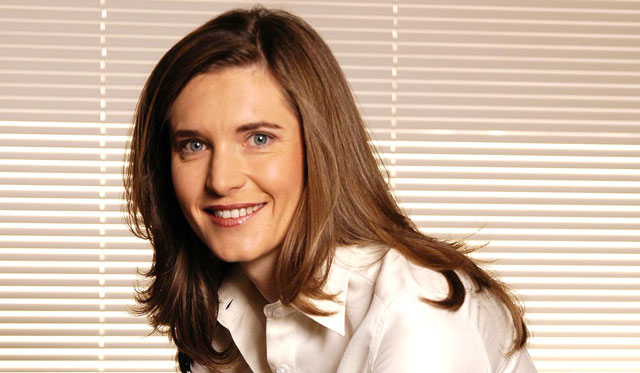
E.tv chief operating officer Bronwyn Keene-Young

E.tv chief operating officer Bronwyn Keene-Young

Altech UEC, a subsidiary of JSE-listed technology group Altech, is South Africa’s largest manufacturer of TV set-top boxes. Its MD, Rodger Warren, says that once the department of communications has settled its dispute with e.tv over the CA system, UEC will be able to build boxes that include any access control mechanisms government wants.

“How soon we can begin building set-top boxes is dependent on the department’s response to the court case,” Warren says. “Hopefully, the matter will be settled sooner rather than later.”

Warren says that the specifications for the boxes are “very unlikely to change”, even if Pule’s appeal fails and e.tv and the SABC end up managing the CA system. “If it had to change it would have to go back to the technical committee,” he says, adding that this seems “highly unlikely” given the additional delays that would incur.

“If e.tv wins, it will take time to go through the development phase,” Warren explains. “We could go whichever way is chosen. We’ve done several encryption systems on various platforms. Much of our software can cater for different paths, so we don’t see it as being a major setback.”  — (c) 2013 NewsCentral Media

Share this article

  • Davebee

    Yet MORE racism in the market place…set top boxes MUST be made by black owned businesses! Flat out racial DISCRIMINATION against another group of citizens!
    This is just the reason that the entire project is up to its neck in delays and cost overruns, the ANC playing the race card. A disgrace that this Pule individual is allowed to even be in a job let alone a cabinet minister.

  • Chris

    Does Pula’s family or friends maybe not have stakes in Nagravision? Just a question…

  • http://www.facebook.com/profile.php?id=527737873 Vusi Sibiya

    Thank you for the inclusion of industry players like Altech UEC whose representative are able to put their names to the remarks they make. As for Senior industry players, speaking to TechCentral on condition of anonymity… now that speaks volumes about the credibility and real value of the input which such individuals have to offer.

    My concern from the onset with the current spec of STBs, is that it’s like offering subsidized 1st generation mobile handsets when the industry has now advanced to smart phones and there are low cost 2nd & 3rd generation feature phone options also available. I think more of a problem than people who don’t qualify, trying to get these STBs will be finding people who’d want to have them in the first place with the latest developments in digital STBs and available features and options currently available in the market.

    My feelings are that the spec will have to be changed so as to include more advanced features which will be appealing to consumers rather than modifying aspects which are clearly in the interests of control. Having played with the three models on offer from the different suppliers, I must say that with the delays that are happening, if the spec stays the same you may need to pay the consumer to take the STBs from you.

  • http://www.techcentral.co.za/ Duncan McLeod

    Perhaps e.tv has designs on a terrestrial pay-TV product?

  • http://www.facebook.com/profile.php?id=527737873 Vusi Sibiya

    Couldn’t have said better…

  • Andrew Fraser

    You are 100% correct about the STB specs. Not to mention that it will be ridiculously expensive in comparison to more advanced boxes available.

    The current box spec does not include HDMI… enough said.

  • Public

    shhhhh!!

  • Public

    This digital nightmare is going to be with this country for a very long time unless the fundamental issues are dealt with: (a) The real reason etv is fighting for control of the STB access system is that Government will essential be funding PayTV Ready Set Top Boxes and Platform. If Government clarified in the DTT Policy that the envisaged STB access system is ONLY required to enable geo/zone blocking and removes the smartcard slot on the current STB specification – etv will walk away. (b) Anyone who understand a bit of television market will tell you that there is no business case for etv or any private commercial operator in the DTT free to air space until such time that there is critical mass of home on DTT, the only viable model will be PayTV. We cannot have our Government funding etv’s private commercial interests. If they want to fight Dstv, they must do so out of their own pockets. Let Government clarify the access system is policy and the country will move on with DTT

  • Greg Mahlknecht

    >The current box spec does not include HDMI… enough said

    The latest draft specs have an HDMI requirement, 4.4.2.5 – Google for “SABS_120420″ and you should get a hit on the latest draft of the spec.

    There is, however, no requirement for the channels to be encrypted, which gives me a little hope.

  • Dirk de Vos

    @Andrew Fraser, @ Vusi Sibiya and @Greg Mahlknecht make good points. There is an additional expense beyond the STB though and that is the aerial/antenna. The current UHF ones will not work and will have to be replaced with DTT compatible ones. I have not seen where this is budgetted either. DoC should be careful – South Africans love their TV and will be looking to blame someone if it goes wrong. Further, the whole TV environment is changing quickly while we are figuring this all out.

    One leftfield solution would be to “drop” DTT entirely and move everyone onto Satellite, say using TopTV’s platform – and be done with it. This would leave the existing spectrum to telcoms providers or open up spectrum for super WiFi. This would be much cheaper as it would save on the extensive replacement of DTT transmitters aroundf the country. Of course there are problems with this solution: Free-to-air is traditionally not broadcast via satellite and there are problems with content providers T’s&C’s but the traditional content rights “windows” is rapidly changing with IPTV abroad. The point is while we appear to be fiddling with a pretty straight-forward problem (precedents all aound us), TV as a medium is moving on….

  • Skerminkel

    By the time DoC and ICASA have sorted out this mess everyone in the country would have moved to satellite options. Since TopTV forced DSTV to make cheaper channel bundles available you see dishes even in squatter camps.

  • http://www.facebook.com/profile.php?id=527737873 Vusi Sibiya

    I could entertain your leftfield solution provided the telcos move quickly to offer afforadable IPTV offerings which wouldn’t be subject to the weather related interference experienced with satellite. Sentech also has a Vivid platform that can be considered in such a move and being on the same SAT service as DStv, one wouldn’t require an additional dish installation if you already have DStv.

  • http://www.facebook.com/profile.php?id=527737873 Vusi Sibiya

    OK Greg… but with what’s available in the market, and at affordable costs, would you really want the subsidized box with the current specs or is it just matter of poor households not being deserving of the latest technologies?

  • Greg Mahlknecht

    What exactly is so poor about that spec? h264 decoder supporting HD, digital audio and HDMI out, decent EPG… if you require more than that on your decoder… you aren’t in a poor household.

    Remember that the purpose of this decoder is to provide a temporary solution until all TVs sold have the tuners built in, and the old RF tuners have worked their way out of the system. We aren’t subsidizing cool toys for people.

    If it was cheap (say, sub-R50) to add nagravision channel-level control I’d be more than happy for my taxes to subsidize that – but if it’s going to substantially increase the cost of the decoder, then it’s up to the people offering the pay-tv channels to factor the decoder subsidy into their business plan and they pay for it.

  • http://www.facebook.com/profile.php?id=527737873 Vusi Sibiya

    Well then it shouldn’t come as too much of a surprise, with all the delays in this process, to find poor households opting to buy digital TVs instead and these subsidized STBs being redundant.

  • Greg Mahlknecht

    Obviously the manufacturers won’t start shipping the DVB-T2 models to this country until they know they’ll work here, but yes – that is first prize – when people replace their TVs, they’ll get a free built-in digital tuner and take the burden off the government. And with the increased picture clarity DTV brings, I’d imagine there will be a gigantic uptick in sales with people using that as an excuse to upgrade!

  • Andrew Fraser

    “4.11.3 Connectors

    The following connectors shall be used:

    a) RF input type IEC female in accordance with IEC 60169-2
    b) RF output connector, type IEC male in accordance with IEC 60169-2
    c) Colour-coded RCA sockets for composite (CVBS) video and stereo audio
    d) 2,5 mm d.c. power jack, minimum rating of 1,5 A, the centre pin as +12 V and the outer contact as earth
    e) USB 2.0 port via a USB type A jack (for future use)
    f) (Optional) A C8 a.c. power inlet in accordance with SANS 60320-1 if the power supply is built into the STB decoder.”

    No mention of hdmi, digital audio out etc.

  • http://twitter.com/_lifeboy_ Roland Giesler

    The broadcasters have the cards in their hands. Firstly, they can decide on an open format in which to transmit and publish it. Then anyone can build a decoder and in a competitive market prices will plummet, with no need for government to yet again intervene and mess up things. (Remember Infraco??) Look at what has been happening in the internet market in South Africa despite repeated attempts by government to intervene and control, be it through Telkom or not. An open protocol (tcp-ip) has established the world-wide basis for the internet and still many companies are making excellent money on the internet. So it should be with TV. The two are converging anyway, so help the process along and don’t stifle it. I don’t have a TV for watching TV, I use the internet for that exclusively.

    For goodness sake, Dina Dinasaur, enable the people, open the doors, stop enriching yourself and your cronies!! You should know that that is what ubuntu is about, yet you don’t do it. Who has bought your mind and pays you to enslave the nation??

  • http://www.facebook.com/people/Paul-Jaco-Slabbert/100000253739401 Paul-Jaco Slabbert

    im just curious why will a manufacturer like samsung start a production line for TV sets dedicated for SA only with its Specific requirements CA etc. the need for a S.T.B is real and this equipment was never replaced in the US,UK with TV sets that accomadate the addapted receivers middelware etc.

  • http://www.facebook.com/people/Paul-Jaco-Slabbert/100000253739401 Paul-Jaco Slabbert

    i think its purely because if the broadcaster have controll of the S.T.B meaning they will not cut your service off if you do not pay the license, WHY Because they need to reach viewers to enable them to sell adverts at high premiums to enable them to run their business “aint it?” if Sentech had controll for GOV it means license or no TV

  • http://www.facebook.com/people/Paul-Jaco-Slabbert/100000253739401 Paul-Jaco Slabbert

    i hope they drag this out for many more years its such a advantage for us at MMTV and the consumer offcourse

  • http://www.facebook.com/people/Paul-Jaco-Slabbert/100000253739401 Paul-Jaco Slabbert

    id like to know where you got the info @Dirk regarding the aerial for i saw 1st hand the Altech and Divitech S.T.B work with standard bunny aerial, the subsidy does include a propoer aerial though and instalation believe it or not.
    Also they surely could go for satelite solution “wich they are in very remote areas where they dont intend to rig a terestrial highsite” but to roll out a satelite tv service for free-to-air services is not feesible to expensive, no restrictions regarding content though a difference between Pay-TV and free to air, Pay-TV pays more for the rights on the content they want

  • Greg Mahlknecht

    US, UK, etc adopt a vanilla standard – in reading up on this on forums, numerous people in those countries buy the $15 USB DVB-T2 dongles from china, and they allow them to pick up the free-to-air DTT channels in that country without any fuss. If you look on amazon, you’ll see many TVs with DVB-T2 built in. The need for a STB is a temporary one until you get a TV with a digital tuner.
    So Samsung wouldn’t need to set up a whole new production line for us, we’d just start getting products off the production line with a compatible digital tuner, assuming we adopt a vanilla standard here.

  • jfgn

    BBBEE business don’t necessarily mean “black owned” rather an offset of the truly economically racist reality of the past aka Apartheid. If you don’t care for it – other countries are waiting for you (rolling my eyes). These delays are perpetuated by obvious incomeptence on the part of govt and their cronies but quit misusing the term racist!

  • Andrew Fraser

    Thanks… this looks much better than the previous version.

  • Andrew Fraser

    “assuming we adopt a vanilla standard here.”
    Big assumption. Please note that the DoC seems incapable of answering the question: “Will a standard DVB-T2 tuner be able to receive broadcasts in South Africa?”

  • Soorae

    With regards to the UHF. It looks like a broad band UHF Grid Aerial ( Channel 21 to 68) will be the aerial of choice compatible with most set top boxes. There might even be some indoor antennas that will work with the set top boxes.

Why TechCentral?

We know that as a prospective advertiser, you are spoilt for choice. Our job is to demonstrate why TechCentral delivers the best return for your advertising spend.

TechCentral is South Africa’s online technology news leader. We don’t say that lightly. We believe we produce the country’s best and most insightful online tech news aimed at industry professionals and those interested in the fast-changing world of technology.

We provide news, reviews and comment, without fear or favour, that is of direct relevance to our fast-expanding audience. Proportionately, we provide the largest local audience of all technology-focused online publishers.

We do not constantly regurgitate press releases to draw in search engine traffic — we believe websites that do so are doing their readers and advertisers a disservice. Nor do we sell “editorial features”, offer advertising “press offices” or rely on online bulletin-board forums of questionable value to advertisers to bolster our traffic.

TechCentral, which is edited and written by award-winning South African journalists, cares about delivering top-quality content to draw in the business and consumer readers that are of most interest to technology advertisers.

We’d like the opportunity to demonstrate the value of directing a portion of your advertising budget to TechCentral, whether your company is in the technology field or not. Numerous opportunities exist for companies interested in reaching our audience of key decision-makers in South Africa’s dynamic information and communications technology sector. We offer packages that will deliver among the best returns on investment available in the online technology news space.

For more information about advertising opportunities, and how your organisation can benefit by publicising itself on TechCentral, please call us on 011-792-0449 during office hours. Or send us an e-mail and ask for our latest rate card and brochure.