Close Menu
TechCentralTechCentral

    Subscribe to the newsletter

    Get the best South African technology news and analysis delivered to your e-mail inbox every morning.

    Facebook X (Twitter) YouTube LinkedIn
    WhatsApp Facebook X (Twitter) LinkedIn YouTube
    TechCentralTechCentral
    • News
      Sars to give every taxpayer a digital identity in sweeping tech overhaul

      Sars to give every taxpayer a digital identity in sweeping tech overhaul

      1 April 2026
      R12.1-billion wasted as government IT projects collapse - Sita

      R12.1-billion wasted as government IT projects collapse

      1 April 2026
      DStv 4K streaming launch is not imminent

      R99 DStv deal to keep Showmax subscribers from bolting

      1 April 2026
      TCS | MTN's Divysh Joshi on the strategy behind Pi - Divyesh Joshi

      TCS | MTN’s Divyesh Joshi on the strategy behind Pi

      1 April 2026
      The biggest untapped EV market on Earth is hiding in plain sight

      The biggest untapped EV market on Earth is hiding in plain sight

      1 April 2026
    • World

      Apple plans to open Siri to rival AI services

      27 March 2026
      It's official: ads are coming to ChatGPT

      It’s official: ads are coming to ChatGPT

      23 March 2026
      Mystery Chinese AI model revealed to be Xiaomi's

      Mystery Chinese AI model revealed to be Xiaomi’s

      19 March 2026
      A mystery AI model has developers buzzing

      A mystery AI model has developers buzzing

      18 March 2026
      Samsung's trifold gamble ends in retreat

      Samsung’s trifold gamble ends in retreat

      17 March 2026
    • In-depth
      The R18-billion tech giant hiding in plain sight - Jens Montanana

      The R16-billion tech giant hiding in plain sight

      26 March 2026
      The last generation of coders

      The last generation of coders

      18 February 2026
      Sentech is in dire straits

      Sentech is in dire straits

      10 February 2026
      How liberalisation is rewiring South Africa's power sector

      How liberalisation is rewiring South Africa’s power sector

      21 January 2026
      The top-performing South African tech shares of 2025

      The top-performing South African tech shares of 2025

      12 January 2026
    • TCS
      Anoosh Rooplal

      TCS | Anoosh Rooplal on the Post Office’s last stand

      27 March 2026
      Meet the CIO | HealthBridge CTO Anton Fatti on the future of digital health

      Meet the CIO | Healthbridge CTO Anton Fatti on the future of digital health

      23 March 2026
      TCS+ | Arctic Wolf unpacks the evolving threat landscape for SA businesses - Clare Loveridge and Jason Oehley

      TCS+ | Arctic Wolf unpacks the evolving threat landscape for SA businesses

      19 March 2026
      TCS+ | Vox Kiwi: a wireless solution promising a fibre-like experience - Theo van Zyl

      TCS+ | Vox Kiwi: a wireless solution promising a fibre-like experience

      13 March 2026
      TCS+ | Flipping the narrative on AI in the Global South - Josefin Rosén

      TCS+ | Flipping the narrative on AI in the Global South

      13 March 2026
    • Opinion
      The conflict of interest at the heart of PayShap's slow adoption - Cheslyn Jacobs

      The conflict of interest at the heart of PayShap’s slow adoption

      26 March 2026
      South Africa's energy future hinges on getting wheeling right - Aishah Gire

      South Africa’s energy future hinges on getting wheeling right

      10 March 2026
      Hold the doom: the case for a South African comeback - Duncan McLeod

      Apple just dropped a bomb on the Windows world

      5 March 2026
      VC's centre of gravity is shifting - and South Africa is in the frame - Alison Collier

      VC’s centre of gravity is shifting – and South Africa is in the frame

      3 March 2026
      Hold the doom: the case for a South African comeback - Duncan McLeod

      Hold the doom: the case for a South African comeback

      26 February 2026
    • Company Hubs
      • 1Stream
      • Africa Data Centres
      • AfriGIS
      • Altron Digital Business
      • Altron Document Solutions
      • Altron Group
      • Arctic Wolf
      • Ascent Technology
      • AvertITD
      • BBD
      • Braintree
      • CallMiner
      • CambriLearn
      • CYBER1 Solutions
      • Digicloud Africa
      • Digimune
      • Domains.co.za
      • ESET
      • Euphoria Telecom
      • HOSTAFRICA
      • Incredible Business
      • iONLINE
      • IQbusiness
      • Iris Network Systems
      • Kaspersky
      • LSD Open
      • Mitel
      • NEC XON
      • Netstar
      • Network Platforms
      • Next DLP
      • Ovations
      • Paracon
      • Paratus
      • Q-KON
      • SevenC
      • SkyWire
      • Solid8 Technologies
      • Telit Cinterion
      • Telviva
      • Tenable
      • Vertiv
      • Videri Digital
      • Vodacom Business
      • Wipro
      • Workday
      • XLink
    • Sections
      • AI and machine learning
      • Banking
      • Broadcasting and Media
      • Cloud services
      • Contact centres and CX
      • Cryptocurrencies
      • Education and skills
      • Electronics and hardware
      • Energy and sustainability
      • Enterprise software
      • Financial services
      • HealthTech
      • Information security
      • Internet and connectivity
      • Internet of Things
      • Investment
      • IT services
      • Lifestyle
      • Motoring
      • Policy and regulation
      • Public sector
      • Retail and e-commerce
      • Satellite communications
      • Science
      • SMEs and start-ups
      • Social media
      • Talent and leadership
      • Telecoms
    • Events
    • Advertise
    TechCentralTechCentral
    Home » Start-ups » How SA start-up wants to ‘reinvent search’

    How SA start-up wants to ‘reinvent search’

    By Editor2 February 2012
    Twitter LinkedIn Facebook WhatsApp Email Telegram Copy Link
    News Alerts
    WhatsApp
    Carl and Sally Greyling

    In an unassuming house on a golf estate in Centurion, south of Pretoria, nearly 30 Dell desktop computers run 24 hours a day in a makeshift server room. The machines are crawling Web feeds of breaking news along with all of the text of the US Library of Congress.

    This is the home of technology start-up Gatfol (pronounced gat-fole, not like the Afrikaans gatvol), which hopes to make search as intuitive as speech.

    Run on a shoestring budget by husband-and-wife team Carl and Sally Greyling, Gatfol has gradually taken shape over the past nine years. They hope to launch their first product in a fortnight — an applet that will work with Internet browsers and turn any search bar into a powerful tool that can handle far longer and more complex queries than currently possible.

    Inspired by artificial intelligence (AI) projects such as CYC and Princeton’s WordNet, the Greylings are attempting to make it possible for people to talk to machines, not in code or carefully constructed search terms, but using ordinary language. Carl Greyling says he likes to think of the project as “language talking to data”.

    Greyling started his career as an auditor and continues to do accounting work to make ends meet. He studied psychology and neurology at Unisa with the original aim of creating artificial intelligence software robots, or “bots”, for the likes of online community Second Life.

    “I started switching to data and search about a year ago,” he says.

    Greyling says it’s “hugely difficult” to use everyday language for search because it’s hard to carry every permutation of spoken language in a search engine.

    He looked at current and past semantic intelligence systems and found that for the most part their structures are either hierarchical or based on Boolean logic. “It’s been that way for the past 40 years, ever since early AI.”

    He says the problem that crops up in every AI system is the sheer number of possible permutations. Greyling says that if one takes a sentence like “I like to work on my computer in the morning” as an example, and considers possible replacements for the pronouns or nouns or verbs that would still make the sentence grammatically correct, the result is in the region of 10 to the power of eight possible permutations.

    “Simply describing the contents of a room could generate billions of permutations,” he says. The problem is, in order to remain workable, search engines require an engine that is small enough to process requests quickly.

    “You need an engine that’s tiny; literally a few megabytes,” Greyling says. He began looking at three-dimensional matrices and other mathematical systems to solve the problem and eventually stumbled onto the 100-year-old work of Russian mathematician Andrey Markov.

    “Markov’s chain analysis looks at strings or words in pairs — the words on either side of one another — and from this you can build up larger strings.”

    On the back of Markov’s approach, Greyling developed a tiny engine based on a two-dimensional matrix, “where every single concept in the matrix links to every other”. This, he says, gives the engine the power to consider trillions of permutations while remaining lightweight.

    He says the approach isn’t entirely new but that, where it has been employed, people have still used a word’s placement in a text to determine equivalences for it. He says this is ineffective because it cannot contend with factors like context.

    Conversation, says Greyling, is notoriously difficult. He uses the example of the sentence “my mother is in hospital with cancer” and says a standard response would be something like “I’m sorry to hear that”, which is based on an understanding of the words “mother”, “hospital”, and “cancer”. But were one to substitute “mother” for “Obama” that response wouldn’t be the same.

    He says in order to deal with plain, conversational language, engines must be able to deal with “multi-word equivalence”. Greyling believes he’s made a breakthrough in this regard and has a provisional patent in the US for his approach.

    The approach looks at a phrase from multiple viewpoints. He likens it to looking at an image of a landscape as a whole while looking at each tree or cloud or other element in close focus simultaneously. This approach forms the basis of the applet he hopes will be available within weeks.

    Gatfol operates with little to no funding. The backbone of the operation consists of 30 second-hand Dell PCs purchased from HSBC when the bank was going through an upgrade cycle. Running in parallel, the machines process about 2TB of Web data a month. Connectivity comes in the form of a leased line from MWeb.
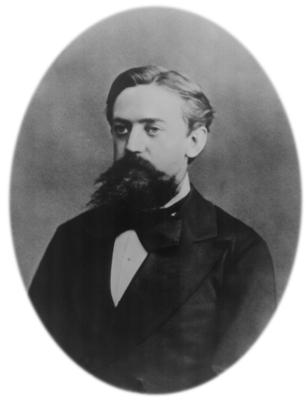
    Russian mathematician Andrey Markov

    Greyling says he can’t keep the PCs’ cathode-ray tube monitors on all the time because not only do they use a large amount of electricity but they generate an enormous amount of heat. He monitors the temperature in the server room using digital and mercury thermometers and uses one wall mounted air-conditioning unit, a freestanding unit and table fans to keep temperatures down.

    Most nights Greyling sleeps in the makeshift server room because he has become so used to the sounds and temperatures that even with the screens off he can tell if a machine has crashed or entered into an infinite loop.

    A power outage of even a few seconds means Greyling has to spend a full working day getting all of the machines up and running again because he has to find the operation with which they were busy when the electricity went out.

    Though he has a small generator, he says it’s only sufficient to power three or four machines. Neverthless, he’s glad for the equipment he has because it allows him to keep working on a project to which he’s dedicated many years of his life.

    Each machine looks at a different element of the data, while a master machine looks at all of them simultaneously. “We take every matrix we have and give it a different focus on the data that comes in. That’s what the brain does; it deals with the general picture and detail at the same time.”

    At one stage, Greyling ran 55 chat bots worldwide. From that experience, he got his inspiration for a project that could deal with “human language intelligence”.

    He says that, even after 40 years of people working on the problem, the best example we have is Apple’s Siri voice recognition software. “Siri is good but it’s still struggling with two-word combinations. A phrase like ‘alcohol poisoning’ still gives you liquor stores nearby.”

    Gatfol works by breaking a long phrase into roughly a thousand packets, each of which is run through Gatfol’s matrices to produce semantically equivalent phrases – that is, phrases with the same meaning. These are then ranked and the best of them used for the search query.

    “To search in parallel is not so much of a problem,” says Greyling. “[Relational database management software] SQL can do it, so volume-wise there’s not such an enormous load on databases, but it produces far more relevant results.”

    Greyling says that, for example, were one to search a dating site for someone with a “vibrant, outgoing personality”, his engine would return results that mentioned “joie de vivre” and “exuberance” because, although these aren’t the same words, they’re “semantically similar”.

    He says this notion of semantic similarity is of particular interest to institutions like US security agencies that trawl the Web looking for blog posts or tweets or anything else that might prove useful in preemptively detecting an assassination or terrorist attack.

    “Say someone wants to plant a bomb, you won’t get obvious words, perhaps, but you might find ‘this is my final act’ or ‘solving the problem’ or something similar.”

    Eventually, Greyling hopes the approach can also be used for the problem of image recognition, which, he says, is still predominantly tag based. “Look at a window — it could be a painting with a border, or a mirror, or a window, or any number of other things.”

    He says the search engine could be used for all manner of queries and may also be useful in instances where people are looking for something that has subsequently come to be called something else, like when someone searches for an antique car part on eBay, the online auctions site.

    “In the case of something like Google, the data is already there, but we have such primitive tools to get it out.”

    Though the applet will be free, Greyling plans to create a selection of application programming interfaces for business and hopes to monetise those. He also hopes to move the crawling work to the cloud when funding allows for it.

    According to Greyling, the biggest challenge Gatfol has faced is funding. He says it’s almost impossible to sell an idea and that investors want a “proof of concept”.

    It’s his hope that the applet, when it is released, will encourage investors that have expressed some interest to look at the project more seriously and pique others’ curiosity.  — Craig Wilson, TechCentral

    • Subscribe to our free daily newsletter
    • Follow us on Twitter or on Google+ or on Facebook
    • Visit our sister website, SportsCentral (still in beta)

    Follow TechCentral on Google News Add TechCentral as your preferred source on Google


    Carl Greyling Gatfol Google MWeb Sally Greyling
    WhatsApp YouTube
    Share. Facebook Twitter LinkedIn WhatsApp Telegram Email Copy Link
    Previous ArticleHow Zuck wrested control of Facebook from shareholders
    Next Article The $100bn question

    Related Posts

    'It's done for my industry': the SA director betting everything on AI film - Donovan Marsh

    The SA director betting everything on AI filmmaking

    31 March 2026
    Big Tech's Big Tobacco moment has arrived

    Big Tech’s Big Tobacco moment has arrived

    27 March 2026

    Apple plans to open Siri to rival AI services

    27 March 2026
    Company News
    Mining's problem isn't output, it's execution - Workday

    Mining’s problem isn’t output, it’s execution – Workday

    1 April 2026
    Paratus launches Starlink-powered connectivity for Africa's essential services - Paratus Essential Access

    Paratus launches Starlink-powered connectivity for Africa’s essential services

    1 April 2026
    How consumers can identify a true QLED TV

    How consumers can identify a true QLED TV

    30 March 2026
    Opinion
    The conflict of interest at the heart of PayShap's slow adoption - Cheslyn Jacobs

    The conflict of interest at the heart of PayShap’s slow adoption

    26 March 2026
    South Africa's energy future hinges on getting wheeling right - Aishah Gire

    South Africa’s energy future hinges on getting wheeling right

    10 March 2026
    Hold the doom: the case for a South African comeback - Duncan McLeod

    Apple just dropped a bomb on the Windows world

    5 March 2026

    Subscribe to Updates

    Get the best South African technology news and analysis delivered to your e-mail inbox every morning.

    Latest Posts
    Sars to give every taxpayer a digital identity in sweeping tech overhaul

    Sars to give every taxpayer a digital identity in sweeping tech overhaul

    1 April 2026
    R12.1-billion wasted as government IT projects collapse - Sita

    R12.1-billion wasted as government IT projects collapse

    1 April 2026
    DStv 4K streaming launch is not imminent

    R99 DStv deal to keep Showmax subscribers from bolting

    1 April 2026
    TCS | MTN's Divysh Joshi on the strategy behind Pi - Divyesh Joshi

    TCS | MTN’s Divyesh Joshi on the strategy behind Pi

    1 April 2026
    © 2009 - 2026 NewsCentral Media
    • Cookie policy (ZA)
    • TechCentral – privacy and Popia

    Type above and press Enter to search. Press Esc to cancel.

    Manage consent

    TechCentral uses cookies to enhance its offerings. Consenting to these technologies allows us to serve you better. Not consenting or withdrawing consent may adversely affect certain features and functions of the website.

    Functional Always active
    The technical storage or access is strictly necessary for the legitimate purpose of enabling the use of a specific service explicitly requested by the subscriber or user, or for the sole purpose of carrying out the transmission of a communication over an electronic communications network.
    Preferences
    The technical storage or access is necessary for the legitimate purpose of storing preferences that are not requested by the subscriber or user.
    Statistics
    The technical storage or access that is used exclusively for statistical purposes. The technical storage or access that is used exclusively for anonymous statistical purposes. Without a subpoena, voluntary compliance on the part of your Internet Service Provider, or additional records from a third party, information stored or retrieved for this purpose alone cannot usually be used to identify you.
    Marketing
    The technical storage or access is required to create user profiles to send advertising, or to track the user on a website or across several websites for similar marketing purposes.
    • Manage options
    • Manage services
    • Manage {vendor_count} vendors
    • Read more about these purposes
    View preferences
    • {title}
    • {title}
    • {title}