SA copyright law under fire

This article was posted by on Mar 3rd, 2010 and filed under News, Top. You can follow any responses to this entry using RSS 2.0. Both comments and pings are currently closed.

Owen Dean

SA is failing to keep up with international copyright treaties due to government “ineptitude and negligence” and, as a result of this, the country’s musicians, filmmakers and other creators of content do not enjoy the same protections as their peers in other countries.

That’s the view of Owen Dean (pictured), consultant to and former partner of specialist intellectual property lawfirm Spoor & Fisher. Dean says the country has failed to ratify a World Intellectual Property Organisation (Wipo)-sponsored treaty aimed at protecting rights-holders in a world where copying digital content has become easy to do and widespread.

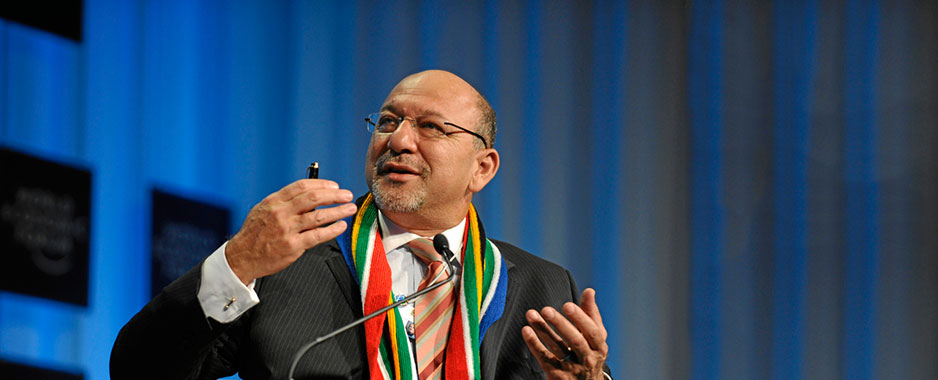
Dean says the department of trade & industry has “steadfastly declined” to ratify Wipo’s 1996 Performances and Phonograms Treaty or incorporate its provisions into the country’s domestic copyright law, despite the treaty being signed by former trade & industry minister Trevor Manuel.

“The international community regards these rights as essential for the continuing well-being of the music industry, but not so the department of trade & industry,” says Owen.

The Wipo treaty requires those that have ratified it to provide legal remedies against the circumvention of technological anti-copying measures like digital rights management (DRM) schemes and also requires them to introduce measures against the removal or alteration of rights management information.

“The government seems intent on casting SA in the role of international buffoon,” Dean says of the country’s unwillingness to ratify the treaty, which was drafted in part to deal with growing piracy on the Internet.

He says it’s important for signatories to the 1886 Berne Convention for the Protection of Literary and Artistic Works — SA is one — to update their national copyright laws to deal with changes brought about by new technologies.

Because SA has not ratified the 1996 Wipo treaty, SA artists are not afforded the protections offered by it, Dean says.

“Our law is frozen in the 1990s. It doesn’t cater for these new challenges and developments,” he says.

Dean says it doesn’t matter if technologies like DRM don’t work. The law must still keep pace with what’s happening elsewhere in the world.

“Has there been a change in the way the music industry works? Yes, the old-fashioned way is becoming obsolete. But that makes it all the more necessary for the copyright laws to be updated.”

The law needs to change to cater for new ways of selling copyrighted material, such as the subscription model now employed by companies like Nokia where consumers can download as many songs as they like.

“SA, being the sized country we are, really has to follow in the footsteps of the majors, and we’re not doing that,” Dean says. “If the footsteps turn out to be less effective than originally envisaged, then so be it. But that’s no reason not to have taken them at the time.”  — Duncan McLeod, TechCentral


  • http://webtechlaw.com Paul Jacobson

    Simply implementing these anti-circumvention mechanisms isn’t necessarily the best option. I haven’t reviewed them yet but many of these sorts of initiatives are driven by an industry intent on a particular model and not updating the law to cater for new developments.

  • http://translate.org.za/blogs/dwayne Dwayne Bailey

    Anti-circumvention is great technology, it turns people who actually buy stuff into criminals. Ever bought a regionally encoded CD with good money and you can’t play it, yes I feel the love. Anti-circumvention conveniently ignores the fact that rights that consumers have are removed.

    My understanding is that WIPO doesn’t include the anti-circumvention things. Its the lovely behind closed doors discussions, trips+, etc that do. I can’t trust something that fails at WIPO then gets pushed into local legislation through US trade negotiations. It puts the whole copyright issue in a different light, things gets forced into place that are not in the interest of society but purely the short term interests of an industry that claims to represent artists.

    Most of these issues point to an industry out of touch with what consumers want. We have an industry supported by lawyers painting pictures of starving rights owners. We hear very little from society. Isn’t society the people who actually give any value to these rights? Ask anyone who wrote a song or book that nobody wants, those rights are worth nothing. Where are our rights?

  • Greg

    What I took away from this article is that if I pirate South African music, there’s nothing they can do to bust me? Or is it all music sold in South Africa?

    If that’s the case, this is the most useful article EVER on TechCentral.

  • http://www.lp2cd.za.net/ Ian

    The SA Copyright Act must be changed to keep up to date with technological developments. Many people can no longer play their vinyl records either due to aging technology, the inability to obtain a stylus, affirmative shopping, and the like, and come to me to get me to digitize the contents of the LPs to CD. What’s wrong with that? CDs are not available in CD shops. Even if they were, it’s probably not the same group, same singers, same orchestra, same conductor, same cast, as to that which the listener is accustomed. The old copyright act in South Africa must be altered to allow the creation of at maximum ONE backup copy of the owner’s vinyl without any hint of prosecution for the person digitizing the music, or the person requesting the service to be done.

  • http://woganmay.com Wogan

    In a country where government officials openly steal, mismanage their departments, and start drug-trafficking rings, you really think they give a flying kidney about copyright law?

    ~ Wogan

  • http://manypossibilities.net Steve Song

    Don’t you think that shilling for the music corporates is a trifle undignified? Anyone interested in a more balanced assessment of SA copyright law might enjoy reading this review. Full disclosure, it was funded by the Shuttleworth Foundation.

  • http://www.chettylaw.co.za Pria Chetty

    Simply implementing the DRM provisions may limit freedoms such as the right to use a work for learning related purposes and diminish the body of available and accessible learning resources.

    This issue is complex. Updating copyright law is essential but the update must be balanced, and informed by more than industry requirements. In addition to review mentioned by Steve Song, have a look at http://www.aca2k.org “The African Copyright and Access to Knowledge” project’s website. A report with detailed findings on SA copyright law is also available from the website.

  • http://bokaap.net Philipp Schmidt

    The proposal put forward in this article is good for companies who own large amounts of content (most of which are not in South Africa) and lawyers specializing in Intellectual Property Law (the author of the article). The proposal is not good for consumers and artists in South Africa.

    Dean indicates that he has no interest drafting law that would reflect the social norms enabled by recent technological developments, or take into account the particular socio-economic context in South Africa. He suggests rather we blindly copy what others are doing. He fails to acknowledge that this would show our legal system failing us in the most fundamental way.

  • Frank Heydenrych

    Replying on behalf of Dr Owen Dean: “I have read the comments on my article with interest, but I think that some of the correspondents may be missing my point. I say that our copyright law is frozen in the nineties and is badly in need of updating. That is not to say that the updating must necessarily favour the copyright owners. If the wind is blowing in the direction of the consumers in the real world, so be it, but then let the law reflect that situation and not be trapped in a time warp, as it currently is. No-one is benefiting from the present neglect.”

  • Andrew Rens

    Mr Heydenrych, with respect, Dr Dean is not proposing updating the law in favour of consumers, instead he said: “SA, being the sized country we are, really has to follow in the footsteps of the majors, and we’re not doing that. If the footsteps turn out to be less effective than originally envisaged, then so be it.”
    The steps taken in the USA at the behest of the recording industry have not turned out well, there has been considerable abuse of the Digital Millennium Copyright Act, which is the type of legislation being urged by Dr. Dean.
    The commentators aren’t opposing improvement of the law but they are expressing what is well known in technology circles, that anti-circumvention provisions are not an improvement.

  • Guy Berger

    This article is rather problematic, as it takes the source at face-value, and leaves us wondering what the point of view is of the Department of Trade and Industry. It would have been far better if the journalist had have succeeded in providing us with the other side(s) of the story. We’re left wondering what axe is being ground here, and what the full picture is.

  • http://www.techcentral.co.za Editor

    Thanks for your criticism, Guy. I agree with you, of course. Time pressure is not an excuse. The plan is to do a follow-up interview with the DTI. I’ve also already invited an expert in the subject to write a counterview.

  • Denise Nicholson

    Yes, indeed the SA Copyright Act needs to be amended urgently, but it has to cater to the needs of a developing country. We are not a developed country, although we try to imitate many of them at various levels. What is sadly missing in our copyright law is appropriate and adequate limitations and exceptions for education, research, libraries, and persons with sensory-disabilities. Without such limitations and exceptions, introducing technological protection measures (which are already provided for without limitations or exceptions in our ECT Act, 2002) or any other added protections into our copyright law, such as traditional knowledge works as an additional category of work (as being proposed in the Intellectual Property Amendment Bill, 2009 by the Department of Trade and Industry) will just land up ‘locking up’ more information and shrinking the public domain everymore. South Africa is part of the Africa Group and a strong supporter of the WIPO Development Agenda. It should therefore be taking these issues into account back home. Readers are referred to the research findings of the African Copyright & Access to Knowledge (ACA2K ) Project which show that copyright laws in 8 African countries are restricting access to knowledge. Because of this, copyright infringing activities, and not copyright legislation, are currently facilitating access to knowledge in South Africa and other African countries. See: http://www.aca2k.org

  • Denise Nicholson

    Also see: “Unintended Consequences: Twelve Years under the DMCA ” – http://www.eff.org/wp/unintended-consequences-under-dmca

Advertisement

Recent Comments

  • Greg Mahlknecht: Also the wrong screenshot.  This article gets an “F”
  • Robert MacLean: “consumer preview released earlier this week” – There is not consumer preview...
  • Reynardt Badenhorst: Keep dreaming dude. This is South Africa, so bend over and take it. The fat basters are laughing...
  • Craig Wilson: Hi Peter, You’re quite right about the typo, my apologies and thank you for pointing it out....
  • Peter French: Two things. There is a minor typo with a major impact here. Facebook revenue was ~3.7 Billion $ (not...

Advertisement
Advertisement

TechCentral is proudly hosted by:


Log in / (c) 2009 - 2012 NewsCentral Media