On the future of computing

[By Greg Mahlknecht]

The elements of the future of the desktop are slowly falling into place. No one company has a comprehensive set of products and services that will deliver the future of computing, but the shape of things to come is getting clearer.

The key driver behind it all is convergence — convergence onto a single productivity device, and convergence in the “cloud”.

In hardware, desktops are losing market share to notebooks, which in turn are being eroded by netbooks, a market which itself is being diversified into tablets like the Apple iPad.

And devices like the BlackBerry and other smartphones have blurred the lines for the device of choice for a number of tasks such as e-mail and calendaring.

The iPad offers a great form factor for casual use. And it doesn’t take much to see how the much trumped and apparently now shelved Hewlett-Packard Slate could entirely replace a PC, especially when used in conjunction with a docking station.

In software, things are even more complex.

In operating systems, a three-way battle is emerging between Apple (with iOS used on the iPad and iPhone), Google’s Android, and the various flavours of Microsoft’s Windows.

And applications are shifting to the Web, or into the “cloud”, to use industry parlance.

Classic desktop applications like e-mail now use cloud-based storage. Full applications, such as Salesforce.com and Google Docs, are even offered online using the software as a service (Saas) model.

Then there’s the enabling technology that binds all this together. The two approaches here are Saas and the proprietary application store model, where apps are tied to the operating system and the data is stored on the Internet — in the cloud.

The guys who make operating systems — not to mention most users — love the idea of using native apps. Developers, on the other hand, love the idea of Saas.

Both camps will play a large part in the future of computing, but more non-core products and services will be based on Saas due to the enormous time involved in developing myriad native apps for multiple operating systems.

Once again, there are three main players in this game: Google, Apple and Microsoft. And they are all desperately trying to cover all the bases with varying degrees of success.

Google
The first company that springs to mind for cutting-edge, next-generation technology is Google. Ironically, this is the company struggling the most to carve a profitable niche into the future.

Hardware-wise, Google has nothing to offer. But their Android operating system is proving wildly successful.
Google's Android was mediocre at first release but has improved quickly

In typical Google fashion, the company stormed out of the starting blocks with a mediocre product and improved it incrementally, but did so very quickly. This approach worked very well on the Web, but it has proven somewhat troublesome with Android, as we are left with a fragmented set of devices beyond Google’s direct control.

Microsoft’s Windows Mobile suffered from this fragmentation and it eventually became impractical to maintain. One hopes Google recognises this threat sooner rather than later.

Chrome OS, though still unreleased, is Google’s obvious play for the Saas market. It sees the operating system as a way to lock users into their ecosystem on cheap devices, most likely tablets.

Being just a glorified browser, they are banking on everyone doing everything online and optimising it to make the Google cloud-services experience better. This suits them just because instead of venturing out their online safety zone, they are trying to pull everyone into the place they consider themselves king.

But therein lies the problem for Google. Though it has a rich set of cloud apps — Gmail, Google Docs, Maps — none is really good enough to replace its desktop counterpart. Sure, Gmail is a great Web app, but it falls woefully short when compared to the native mail readers on devices such as the BlackBerry, the iPhone and the iPad. And this generally holds true for just about any Saas application.

Apple
At the other end of the spectrum is Apple, which rabidly clings to its closed ecosystem, making the user do as much as possible on its devices.

Apple has wet its toes in online services with MobileMe, but has more or less backed the client-server model.

CEO Steve Jobs talks up HTML5 and Webkit a lot, but he either doesn’t understand the technology, or knows that not many people do, and so can pull the wool over their eyes.
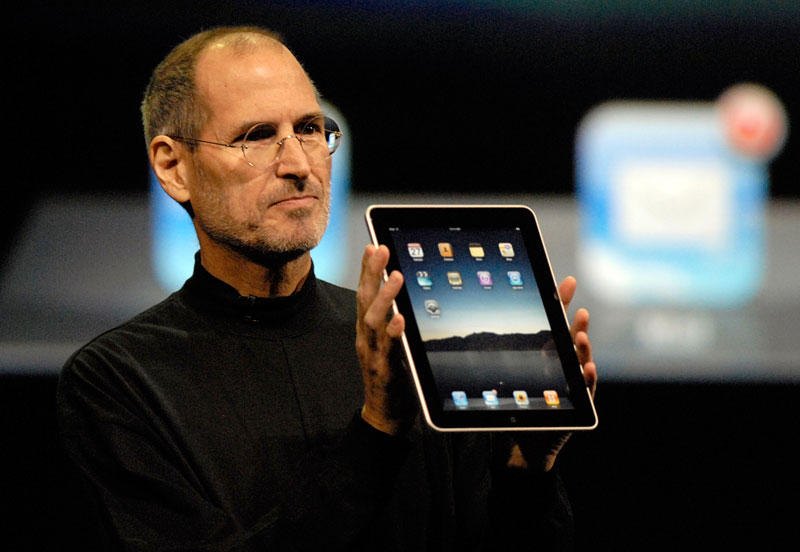
Apple CEO Steve Jobs unveils the iPad

The state of browsers on modern smartphones is in total disarray. There’s the awful Windows Mobile browser, the almost-as-bad BlackBerry browser, with most of the rest using Webkit.

A little research shows that every Webkit implementation on every platform has its own special quirks and shortcomings, so much so that it’s not an option to “write for Webkit” and assume it’ll work across all devices. The Webkit mobile branches have been forked and modified beyond recognition.

Even though Apple is the most secretive of the companies, it’s also the easiest to predict. It’s simple to see its long-term strategy, which is to keep developing iOS into its iPhone/iPad product ranges, and incrementally update the hardware. I don’t think anyone will be surprised if next year’s iPad looks like a big iPhone 4 with a Retina™ display.

What would be a big surprise is if Apple were to unveil a cloud offering that works on all browsers across all operating systems. That’s not Apple rolls – its happy pumping its niche in the market for repeat business.

Instead of starting with a clean slate and building an iPad that runs Mac OS X in a bid to expand its share of the desktop applications market, Apple will keep trying to get its users to “make do” with iOS and convince them it’s the way they want to work. (Incidentally, this Apple mindset was highlighted last week when Steve Jobs told the iPhone 4 users the way to fix an antenna problem was to hold their phones differently, rather than admit there was an issue with the device.)

Microsoft
This brings us to Microsoft, a sleeping giant that’s just awoken.

And, in typical Microsoft fashion, it’s decided to take on everyone with just about everything. A few years ago this would have spelt disaster, but in the past few years, Redmond hasn’t put a foot wrong.

Microsoft CEO Steve Ballmer with Hewlett-Packard's Slate tablet PC

Its server range is eroding other vendors’ market share, Windows 7 is an unquestionable success, Xbox 360 has erased the commercial embarrassment of the original Xbox, its revamp of online services has been well met by most critics, and its push into cloud services and mobile/tablets is looking strong.

The company has revamped its live.com site to give an online mail reader and office productivity suite that matches Google’s offerings. It’s extended this with its “Wave 4” beta of Windows Live Essentials, to provide cloud-storage versions of mail, photos and general storage.

The new Office 2010 also tightly integrates with the cloud storage (Skydrive) and the online Office offering to allow a rich set of tools for using your data in the cloud.

To deliver this, Microsoft is working to provide platforms on smartphones with Windows Phone Series 7 and tablets with Windows CE Embedded and Windows 7. Asus has demonstrated Eee tablets running both Windows CE Embedded and Windows 7, and if anyone has credentials in the ultra-portable low-end field, it’s Asus, the company that invented the netbook.

Samsung and LG have both thrown their mobile hats into Microsoft’s ring, which is significant as both are known for driving down prices of technology without sacrificing too much quality. A case in point is how Samsung almost singlehandedly halved the price of computer LCD monitors in the last 18 months.

None of the new generation of Microsoft products use dirty tricks to tie people in; and the company’s cloud-based apps run happily on all leading browsers.

Microsoft is even embracing third-party phone and tablet manufacturers and has opened up all its important Office and Outlook formats and protocols. All these are a clear indication that the company is looking to compete on the merits of its products rather than using the underhanded tactics it relied on in the past.

Winners and losers
If we distil all this information, the picture emerging is of a device, like the Hewlett-Packard Slate (a powerful iPad running a full operating system) at the center of the ecosystem, replacing notebooks, desktops and perhaps even gaming consoles.
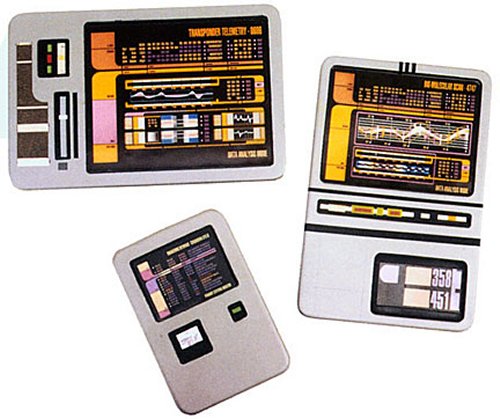
Gene Roddenberry was first ... the tablets used in Star Trek in the 1970s

A set of native apps would be needed to provide professionals and power users with core tasks (mail reader, word processor, spreadsheet, computer-aided design tools, photo editing software and games), with everything else — from simple paint applications to weather apps and social networking — offered via the cloud.

Which company, then, Apple, Microsoft or Google, is best positioned to take seize the opportunity?

The answer is the decision is out of these companies’ hands. There will be no single winner. Devices will tend towards becoming converged and open and made by third parties using Microsoft Windows.

App stores will be eroded by Web apps, and Google might win here with plans for an app store for Web apps.

Apple appears to be chasing short-term profits and its walled garden approach doesn’t seem wise in the longer term. Remember, it almost killed the company once before.

The real winners are the developers and users who get to enjoy a consolidated experience, one that will be built on foundations laid by Microsoft and Google.

  • Greg Mahlknecht is an entrepreneur and developer with more than 20 years of diverse experience in the IT industry

Share this article

  • The_Librarian

    Gene Roddenberry had a vision.

    Interesting to see that most of the things he thought of, is starting to become real things we can use everyday.

    We still have a long way to go…

  • http://alldaysci-fi.cerizmo.com/ All_Day_SCI-fi

    1970s? LOL

    Sorry, Star Trek The Next Generation did not air until 1987.

    The “Dr. Eye” by Inventec has the right form factor, fold down keyboard with touch screen that fits in a pocket. The iPad is too big and doesn’t have a camera or USB ports. But the Dr. Eye doesn’t have a 30 gig drive like my Archos PMA400. When is anybody going to get everything right?

    Cloud computing? You can keep it. I can back up to my own drives over the net. Disk space is so cheap it is scary. But I recently watched a video saying that some corporations were still using software from the 60s. So why are we upgrading SW every six months? LOL

    Software does not wear out, people.

    The future of computing is paying for silly upgrades. Does this sound like cars and stereo equipment? YEAH!
    .

  • Greg

    @All_Day_SCI-fi: 80′s… sorry, that was a typo, I’m not a Trekkie :)

    re: Dr Eye form factor – they’re fine as a Blackberry replacement, and certainly nothing new, that’s an evolutionary update on the old Nokia Communicators. To replace a laptop you need something with a decent sized screen so your eyes don’t explode and hands cramp up after a few hours, and a tablet sized device is the lower limit of that. The onscreen keyboard on a tablet sized device is very comfortable to type on – I actually wrote this article on an iPad assuming it would be difficult, and we’d need UMPC type keyboards tacked on “in the future”, and I was astounded at how well it worked. Landscape mode, though – the portrait keyboard is too small to do large amounts of work on.

    Backing up your hard drive over the net isn’t cloud computing.

    Upgrading software: this comes as a side-effect of hardware advances, there’s nothing stopping you using telnet to connect to your xenix server and doing your emails by command line and vi from whatever hardware your choose as a client, but I find it far better to use software that takes advantage of the power and features of the new hardware to make the experience easier/more accessible.

    Does it have a similarity to cars and stereo equipment? Sure… and there are those that still believe valve amplifiers and vinyl produce superior sound. They also probably think COBOL is a cool way to get things done, just because “it’s got the job done for 50 years”.

  • Brett

    well Said Greg.

    @All_Day_SCI-fi no offence but if you see no value in cloud computing what are you doing on the internet.

  • Brett_Chuck

    Computers get between you and what you need to do. I’m a sysadmin so you’d think that’s not the case for people like me but they annoy me daily. New advances like these start to eliminate those barriers.

    As for COBOL, still very much alive, like RPG which I use in production.

  • http://woganmay.com/ Wogan

    No, the biggest bone I have to pick here is the “single device” theory. If people were OK with a single device, we’d have 1 mobile phone brand, 1 netbook brand, etc, each producing exactly 1 device with no variations.

    We don’t. People like diversity, they like choice. They like to distinguish themselves by making those choices to suit their own needs. They do different things with different purposes on different devices. There are people who excel at catering to all these choices. There will ALWAYS be a spread of different devices, different brands, different styles and systems.

    I covered this here, highlighting what is probably a more likely (and believable) scenario.

    http://woganmay.com/2010/05/14/the-cloud-is-here-long-live-the-pc/

    @Greg Getting the job done for 50 years is damn good motivation to keep things working the way they are. Critical systems, like utilities control, financial databases and transactions, etc, these are rarely if ever upgraded, because there’s no NEED to upgrade them. Water will always we water, money will always be money, etc.

    Imagine if all the banks in SA patched their transaction software every 6 months, taking another 12 months to work out all the kinks. How many failed transactions, duplicate records and ATMs going offline would it take before the government burned those banks to the ground?

    And for the record, vinyl does produce superior sound.

    ~ Wogan

  • Greg

    @Brett_Chuck
    >As for COBOL, still very much alive, like RPG which I use in production.

    Sure it is, but the context of my comment was that there are better ways of doing things nowdays. If you were starting a bank from scratch today, would you seriously consider building your systems on COBOL or RPG, just because other banks have made do with it for 50 years?

    @Wogan
    >No, the biggest bone I have to pick here is the “single device” theory. If people were OK with a single device, we’d have 1 mobile phone brand

    I didn’t suggest one brand or a 100% standardised platform, I suggested a single device. The point is that, like email is now probably done as much from phones as it is from desktops, more and more tasks will converge onto a “single device”.

    >There will ALWAYS be a spread of different devices, different brands, different styles and systems.

    Agreed, and I wouldn’t want it any other way, you want to buy a device that’s strong at the tasks you want to use it for. Competition drives innovation. But there’s an unrelenting trend towards device convergence, and that trend is only getting faster.

    >I covered this here, highlighting what is probably a more likely (and believable) scenario.

    I had a quick skim (which it seems you did with my article judging by your comments :) ) … I agree 100% – I did mention that many tasks like CAD, Video/Photo-Editing, Games, etc are best suited for apps, and always will be, because they push the hardware requirements far faster than the cloud can deliver them.

    >And for the record, vinyl does produce superior sound.

    LOL. Don’t get me started on that.

  • http://alldaysci-fi.cerizmo.com/ All_Day_SCI-fi

    {{{ @All_Day_SCI-fi no offence but if you see no value in cloud computing what are you doing on the internet. }}}

    Ridiculous question! Like the internet wasn’t useful B4 this cloud computing drivel came up.

    Plenty of people buy technology for ridiculous reasons. It is nothing but status symbols for them. I have plugged a USB keyboard into my Archos but that doesn’t work on an iPad. I could get a folding USB keyboard if I used the Archos for input enough. I consider the lack of USB reason to not look at an iPad. They must have deliberately decided to not add that feature. WHY?
    .

  • Greg

    > They must have deliberately decided to not add that feature. WHY?

    Cos then they couldn’t sell you their Camera Connection Kit for $25. Real dick move, I agree… but if you buy the adaptor, it allows you to plug in keyboards, external HDD’s, flash readers, pretty much anything USB – which just goes to show the iPad can actually handle everything, they just decided not to put the USB plug in the unit.

    The iPad doesn’t compete with the Archos. The reason you get the iPad is because it’s currently the only way to get a big touchscreen in your hands with great battery life. With the best mobile browser around, it’s actually quite a great device. Having said that though, as soon as a comparable Win7 tablet comes out, I’m getting one and flogging my iPad. The only reason that the iPad is the best choice right now, is that it’s the only choice in its class.

Why TechCentral?

We know that as a prospective advertiser, you are spoilt for choice. Our job is to demonstrate why TechCentral delivers the best return for your advertising spend.

TechCentral is South Africa’s online technology news leader. We don’t say that lightly. We believe we produce the country’s best and most insightful online tech news aimed at industry professionals and those interested in the fast-changing world of technology.

We provide news, reviews and comment, without fear or favour, that is of direct relevance to our fast-expanding audience. Proportionately, we provide the largest local audience of all technology-focused online publishers.

We do not constantly regurgitate press releases to draw in search engine traffic — we believe websites that do so are doing their readers and advertisers a disservice. Nor do we sell “editorial features”, offer advertising “press offices” or rely on online bulletin-board forums of questionable value to advertisers to bolster our traffic.

TechCentral, which is edited and written by award-winning South African journalists, cares about delivering top-quality content to draw in the business and consumer readers that are of most interest to technology advertisers.

We’d like the opportunity to demonstrate the value of directing a portion of your advertising budget to TechCentral, whether your company is in the technology field or not. Numerous opportunities exist for companies interested in reaching our audience of key decision-makers in South Africa’s dynamic information and communications technology sector. We offer packages that will deliver among the best returns on investment available in the online technology news space.

For more information about advertising opportunities, and how your organisation can benefit by publicising itself on TechCentral, please call us on 011-792-0449 during office hours. Or send us an e-mail and ask for our latest rate card and brochure.