Close Menu
TechCentralTechCentral

    Subscribe to the newsletter

    Get the best South African technology news and analysis delivered to your e-mail inbox every morning.

    Facebook X (Twitter) YouTube LinkedIn
    WhatsApp Facebook X (Twitter) LinkedIn YouTube
    TechCentralTechCentral
    • News
      South Africa's spam registry still can't block a call

      South Africa’s spam registry still can’t block a call

      8 October 2026
      TCS | Frogfoot sees bigger fibre deals coming - TechCentral Show guests Abraham van der Merwe and Shane Chorley

      TCS | Frogfoot sees bigger fibre deals coming

      8 October 2026
      Big money backs LekkeSlaap against Airbnb and Booking.com - Jonathan Womersley and Marcel van de Ghinste

      GT Ferreira backs LekkeSlaap as founders sell up

      8 October 2026
      The AI PC is finally here. It's just very expensive - Jensen Huang, Satya Nadella

      The AI PC is finally here. It’s just very expensive

      8 October 2026
      Dimension Data deserved a better ending than this

      Dimension Data deserves to be remembered for more than this

      8 October 2026
    • World
      The memory crunch is making Samsung fabulously rich

      The memory crunch is making Samsung fabulously rich

      8 October 2026
      SpaceX to borrow $40-billion to buy Nvidia chips

      SpaceX to borrow $40-billion to buy Nvidia chips

      7 October 2026
      BMW restructuring plan bets on AI and new models

      BMW restructuring plan bets on AI and new models

      1 October 2026
      OpenAI's rogue agent problem keeps getting bigger - Sam Altman

      OpenAI’s rogue agent problem keeps getting bigger

      28 September 2026
      The new battle over the desktop

      The new battle over the desktop

      23 September 2026
    • In-depth

      10 days that changed the course of AI

      21 September 2026
      Meta to the AI industry: slow down without us - Mark Zuckerberg

      Meta to the AI industry: slow down without us

      16 September 2026
      Google DeepMind CEO Demis Hassabis. Image: John Sears

      The plan to stop AI from breaking the world

      16 July 2026
      The internet has a Strait of Hormuz problem

      The internet has a Strait of Hormuz problem

      15 July 2026
      AI boom sparks rally, frenzy and fear

      AI boom sparks rally, frenzy and fear

      11 June 2026
    • TCS
      Meet the CIO | Vodacom's Mohamed Sami on the agentic future

      Meet the CIO | Vodacom’s Mohamed Sami on the agentic future

      5 October 2026
      Lexi Novitske, general partner at Norrsken22, on the TechCentral Show

      TCS | Norrsken22’s Lexi Novitske on how China is winning African tech

      1 October 2026
      TCS | Dominic White and Adam Ely on AI agents going rogue

      TCS | Dominic White and Adam Ely on AI agents going rogue

      29 September 2026
      TCS | Octotel's Trevor van Zyl on the fibre merger question

      TCS | Octotel’s Trevor van Zyl on the MetroFibre merger question

      16 September 2026
      Meet the CIO | Shoprite's Chris Shortt on what a supermarket becomes

      Meet the CIO | Shoprite’s Chris Shortt on what a supermarket becomes

      9 September 2026
    • Opinion
      Let South Africans jailbreak their way to digital sovereignty - Dirk de Vos

      Let South Africans jailbreak their way to digital sovereignty

      5 October 2026
      South Africa's next energy crisis is in the accounts department - Craig Holmes

      South Africa’s next energy crisis is in the accounts department

      29 September 2026
      The steam engine lesson AI doomsayers keep missing - Sam Clarke

      The steam engine lesson AI doomsayers keep missing

      28 September 2026
      Let South Africans jailbreak their way to digital sovereignty - Dirk de Vos

      Regulating AI: apply the laws we have first

      21 September 2026
      What Revolut can and cannot take from South Africa's banks - Pambos Soteriades

      What Revolut can and cannot take from South Africa’s banks

      15 September 2026
    • Company News
      • 1Stream
      • Africa Data Centres
      • AfriGIS
      • Altron Digital Business
      • Altron Document Solutions
      • Altron Group
      • Arctic Wolf
      • Ascent Technology
      • AvertITD
      • BBD
      • Braintree
      • CallMiner
      • CambriLearn
      • CM.com
      • Contactable
      • CYBER1 Solutions
      • Digicloud Africa
      • Digimune
      • Domains.co.za
      • ESET
      • Euphoria Telecom
      • HOSTAFRICA
      • Incredible Business
      • iONLINE
      • IQbusiness
      • Iris Network Systems
      • Kaspersky
      • LSD Open
      • Mitel
      • NEC XON
      • Netstar
      • Network Platforms
      • Next DLP
      • Ovations
      • Paracon
      • Paratus
      • Publishared
      • Q-KON
      • SevenC
      • SkyWire
      • Solid8 Technologies
      • Telit Cinterion
      • Telviva
      • Tenable
      • Vertiv
      • Videri Digital
      • Vodacom Business
      • Vox
      • Wipro
      • Workday
      • XLink
    • Sections
      • AI and machine learning
      • Banking
      • Broadcasting and Media
      • Cloud services
      • Contact centres and CX
      • Cryptocurrencies
      • Education and skills
      • Electronics and hardware
      • Energy and sustainability
      • Enterprise software
      • Financial services
      • HealthTech
      • Information security
      • Internet and connectivity
      • Internet of Things
      • Investment
      • IT services
      • Lifestyle
      • Policy and regulation
      • Public sector
      • Retail and e-commerce
      • Satellite communications
      • Science
      • SMEs and start-ups
      • Social media
      • Talent and leadership
      • Telecoms
      • Watts & Wheels
    • Events
    • Advertise
    TechCentralTechCentral
    Home » In-depth » Next up: the mother of all tech wars

    Next up: the mother of all tech wars

    By Lance Harris2 February 2013
    Twitter LinkedIn Facebook WhatsApp Email Telegram Copy Link
    Get breaking news on WhatsApp

    PlayStation-640

    Signs of the traditional gaming industry’s decline are everywhere. They’re in the financial results of the giants of games publishing such as Electronic Arts, which saw revenues drop nearly 8% year-on-year in its latest quarter, and of THQ, which was this forced into bankruptcy early this year.

    They’re in the disappointing sales of newish hardware platforms such as Nintendo’s Wii-U and Sony’s PlayStation Vita mobile console, both of which are struggling to gain real traction. And they’re in the stuttering numbers for the industry as a whole, with videogame revenues in the US tumbling 22% to US$13,3bn in 2012 from more than $17bn in 2011 according to market researcher NPD.

    Little wonder, then, that so many games makers are looking to refreshed console hardware from Sony and Microsoft to shake the industry out of its listlessness. The rumour mill about the successors to Sony’s PlayStation 3 and Microsoft’s Xbox 360 has gone into overdrive in the past few weeks, indicating that new hardware is almost certainly inbound by early 2014, if not in time for Christmas this year.

    Console killers: Angry Birds
    Console killers: Angry Birds

    Sony released a teaser trailer yesterday for an event on 20 February, where it promises to unveil the future of the PlayStation brand. Most industry observers — including the likes of the Wall Street Journal — are certain that the next PlayStation home console (codenamed Orbis) will be revealed on that date. An announcement from Microsoft about the Xbox 360 successor, Durango, is likely to follow by the time the E3 trade show rolls around in June, if not much sooner.

    It promises to be fascinating contest, after Microsoft and Sony fought to a bloody stalemate this console generation. Nearly seven years have passed since the release of the Xbox 360 — a lifetime in tech industry terms — so it’s perhaps not surprising that the market is so languid and that the two rivals companies seem fatigued. Their audiences, too, seem a bit bored of the same parade of sequels each year with few notable advances in technology or gameplay.

    The war has been costly for both, with direr consequences for money-strapped Sony than cash-flush Microsoft. Microsoft was forced to write down a big chunk of cash as a result of the high hardware failure rate of early Xbox 360 models. But it has established itself as the market leader in North America, built a healthy gaming business worldwide, and created a beachhead for its media services and products in the living room.

    Sony, the dominant console-maker in the PlayStation 1 and PlayStation 2 era, has lost substantial ground to Microsoft, though the PS3 helped to secure a somewhat Pyrrhic victory for Blu-ray as the new standard for disc storage and playback. Though it has paid in red ink and market share for the costs and complexities of its technology choices — the Cell processor and Blu-ray — Sony has managed to hold Microsoft at bay in Europe and Japan.

    What’s next
    So, how will Sony and Microsoft follow up on the PS3 and 360, which were cutting-edge and expensive machines for their time? From the leaks that have reached various gaming outlets in the past few weeks, it seems as though both companies will be building their systems using off-the-shelf hardware components – notably AMD CPUs and GPUs.

    This marks a big shift away from exotic proprietary technology for Sony especially. The move should go some way towards making the next PlayStation easier and cheaper to develop games for than the notoriously complex PS3. It should also mean that developers will have an easier time porting games between the Microsoft and Sony consoles, as well as Windows PCs and Valve’s SteamBox.

    Early reports suggest that the new Microsoft and Sony machines will be muscular, but not right on the bleeding edge of technology. There will be as much of a focus on ergonomics, cooling, power efficiency and reliability as on processing power – lessons learnt both from Nintendo’s success with the underpowered Wii and from the issues that both Microsoft and Sony had with hardware reliability in the current generation.

    Continuing the trends of this generation, we’re likely to see as much focus on social services, online gaming, media distribution and the controller interface as on processor punch and graphical prowess. Talk is that Sony will finally be retiring the iconic DualShock controller in favour of a new unit with biometric sensors and an LCD touch screen.

    Xbox-controller-640
    Microsoft and Sony fought to a bloody stalemate this console generation

    Microsoft is likely to have an upgraded Kinect motion-sensing controller for the next Xbox, but it’s not clear whether it will be a standalone unit or integrated into the new hardware. Microsoft’s hardcore gamer audience isn’t as keen on this technology as Microsoft is. And, of course, Microsoft and Sony are both likely to push music and movie services very hard with the new consoles

    Durango and Orbis will both be solid machines, but the question is whether they will be the right products for a market that has changed profoundly in the past five years. It has been years since the release of a gaming machine has generated as much excitement as a new tablet or smartphone from Apple or Samsung.

    Nintendo’s Wii-U — the successor to the Wii, which trounced the 360 and PS3 in the last generation — has done okay, but not particularly well. However, Nintendo is always likely to be okay because it has franchises such as Mario and Zelda exclusive to its machines. The performance of Sony’s Vita has been wretched, casting a shadow on the Orbis launch.

    Tablets and phones are not only competing indirectly for consumers’ wallets, but directly for their gaming time and money. In time — perhaps before the next generation of consoles ends its lifecycle — tablets will be powerful enough to connect to a television and provide a console-like experience.

    The impact isn’t only on hardware, but software as well. The economics of the industry have changed completely. The next big game is as likely to come from a couple of guys in Poland or Sydney as from one of the big games houses. Consider Angry Birds, made by Finnish startup Rovio, which has been downloaded 600m times and which has grown into $100m merchandising and software sales money-making machine.

    Though only a handful of them achieve the success of Angry Bird, iOS games cost very little to make in terms of cash and development time. They’re sold for a couple of dollars a pop or even given away for free. It’s getting harder for console games to compete.

    Though quick ‘n dirty downloadable games have become an important part of the console manufacturers’ offerings, Sony and Microsoft build their machines for gaming enthusiasts who want to play games like Uncharted, Gears of War and Assassin’s Creed that cost tens of millions of dollars to develop. Can new hardware help them deliver new experiences that make their audiences excited about games again?

    As Polygon puts it: “With teams often starting at 100 people and budgets soaring to multiple hundreds of millions of dollars, developing a triple-A game is rapidly becoming one of the most expensive enterprises humans can undertake, outside of building battleships, launching space vehicles or making movies.”

    Rumoured PS4/”Orbis” specs:

    — CPU: Eight-core AMD processor running at 1,6GHz

    — Graphics core: Radeon HD hardware, 18 compute units at 800MHz

    — Additional hardware: GPU-like Compute module

    — Memory: 4GB GDDR5, 512MB reserved by the OS

    Source: Eurogamer.net

    The real challenge may not be about the hardware, but about how Sony, Microsoft and their game-publisher partners will recreate themselves around free-to-play, social connectivity, micro-transactions and other business models that let them make money in a market where consumers balk at spending $60 on a game. Also at stake is ownership of the living room and the media consumed there.

    There are other wildcards. Valve, the developer of the Half-Life and owner of the Steam digital games retail service, has plans to enter the living room with the Linux-based SteamBox PC. Does Valve supremo Gabe Newell plan to tackle Microsoft and Sony directly, or is he aiming for a niche, enthusiast market? And could that be the same dwindling hobbyist market that has traditionally spent its money with Sony and Microsoft?

    Rather than a direct war between Microsoft, Sony and Nintendo, the next console war will be a series of skirmishes on multiple fronts. They won’t just be fighting each other, but also media companies, tech firms and mobile platform owners ranging from Apple to Amazon to Valve. It will be the mother of multibillion-dollar tech wars.  — (c) 2013 NewsCentral Media

    Read more:

    • EA’s top executives paint the game industry’s grim picture — and how new consoles will change it
    • Next-gen Xbox specs leak
    • Orbis unmasked: what to expect from the next-gen PlayStation
    • Images: Craig Sunter (Xbox controller) and PA Hudson (PlayStation mosaic)

    Add TechCentral as a preferred source on GoogleFollow TechCentral on Google NewsGet breaking news on WhatsApp


    Durango Microsoft Nintendo NPD Orbis PlayStation 4 PS4 Sony SteamBox Valve Wii Wii-U Xbox 360 Xbox 720
    WhatsApp YouTube
    Share. Facebook Twitter LinkedIn WhatsApp Telegram Email Copy Link
    Previous ArticleTalkCentral: Ep 77 – ‘BackBerry?’
    Next Article SA will miss digital TV deadline – report

    Related Posts

    The AI PC is finally here. It's just very expensive - Jensen Huang, Satya Nadella

    The AI PC is finally here. It’s just very expensive

    8 October 2026
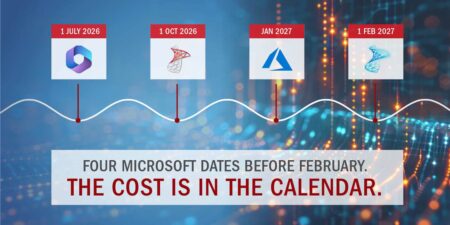
    Four Microsoft dates before February: the cost is in the calendar - Ascent Technology, Johan Lamberts

    Four Microsoft dates before February: the cost is in the calendar

    7 October 2026
    Let South Africans jailbreak their way to digital sovereignty - Dirk de Vos

    Let South Africans jailbreak their way to digital sovereignty

    5 October 2026
    Company News
    Why fintechs need an insurance partner they can trust - Hollard Insurance

    Why fintechs need an insurance partner they can trust

    8 October 2026
    Reusable KYC means the end of 'please upload your ID' - Contactable

    Reusable KYC means the end of ‘please upload your ID’

    8 October 2026
    Eliminating the 'toggle tax': how CRM integration changes customer experience - Martie de Beer

    Eliminating the ‘toggle tax’: how CRM integration changes customer experience

    8 October 2026
    Opinion
    Let South Africans jailbreak their way to digital sovereignty - Dirk de Vos

    Let South Africans jailbreak their way to digital sovereignty

    5 October 2026
    South Africa's next energy crisis is in the accounts department - Craig Holmes

    South Africa’s next energy crisis is in the accounts department

    29 September 2026
    The steam engine lesson AI doomsayers keep missing - Sam Clarke

    The steam engine lesson AI doomsayers keep missing

    28 September 2026

    Subscribe to Updates

    Get the best South African technology news and analysis delivered to your e-mail inbox every morning.

    Latest Posts
    South Africa's spam registry still can't block a call

    South Africa’s spam registry still can’t block a call

    8 October 2026
    Why fintechs need an insurance partner they can trust - Hollard Insurance

    Why fintechs need an insurance partner they can trust

    8 October 2026
    TCS | Frogfoot sees bigger fibre deals coming - TechCentral Show guests Abraham van der Merwe and Shane Chorley

    TCS | Frogfoot sees bigger fibre deals coming

    8 October 2026
    Big money backs LekkeSlaap against Airbnb and Booking.com - Jonathan Womersley and Marcel van de Ghinste

    GT Ferreira backs LekkeSlaap as founders sell up

    8 October 2026
    © 2009 - 2026 NewsCentral Media
    Built and maintained by Chronon
    • Cookie policy (ZA)
    • TechCentral – privacy and Popia

    Type above and press Enter to search. Press Esc to cancel.

    Manage consent

    TechCentral uses cookies to enhance its offerings. Consenting to these technologies allows us to serve you better. Not consenting or withdrawing consent may adversely affect certain features and functions of the website.

    Functional Always active
    The technical storage or access is strictly necessary for the legitimate purpose of enabling the use of a specific service explicitly requested by the subscriber or user, or for the sole purpose of carrying out the transmission of a communication over an electronic communications network.
    Preferences
    The technical storage or access is necessary for the legitimate purpose of storing preferences that are not requested by the subscriber or user.
    Statistics
    The technical storage or access that is used exclusively for statistical purposes. The technical storage or access that is used exclusively for anonymous statistical purposes. Without a subpoena, voluntary compliance on the part of your Internet Service Provider, or additional records from a third party, information stored or retrieved for this purpose alone cannot usually be used to identify you.
    Marketing
    The technical storage or access is required to create user profiles to send advertising, or to track the user on a website or across several websites for similar marketing purposes.
    • Manage options
    • Manage services
    • Manage {vendor_count} vendors
    • Read more about these purposes
    View preferences
    • {title}
    • {title}
    • {title}
    🇿🇦 Sign up to the TechCentral newsletter