

Microsoft learns to love the ‘cancer’

Microsoft is making large contributions to the open-source community it once clearly detested. By Duncan McLeod.

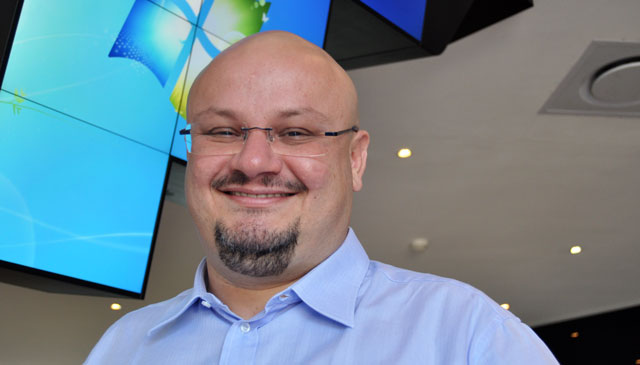
Gianugo Rabellino

A decade ago, Steve Ballmer described the free and open-source Linux operating system as a “cancer that attaches itself in an intellectual property sense to everything it touches”. The famously boisterous Microsoft CEO was attacking the General Public Licence which governs much of the software code developed by the open-source community.

But 10 years is a long time in the technology industry and if there’s one industry that evolves quickly it’s technology. Today the company is earning compliments — even respect — from some of the leaders in open source, including Red Hat, the enterprise-focused open-source software developer.

It’s even attracting open-source advocates to come and work for it. One of these people is Italian national Gianugo Rabellino — the senior director of open-source communities at Microsoft — who has spent the best part of 20 years making a living from open source. Founder and former CEO of Sourcesense, Rabellino joined Microsoft two years ago — based in the company’s headquarters in Seattle in the US — and says the software maker is making large contributions to the open-source community, both in terms of developer time and in programming code.

So, what changed? Why did Microsoft go from viewing Linux — or at least the licence that governs it — as a cancer to embracing open-source software, at least to some extent?

“I noticed Microsoft was changing and was more open than I thought,” Rabellino says. “Microsoft has become more open and the reason for that is it’s really about it going back to the real Microsoft DNA, to being a platform and ecosystem company.”

Pressure from business customers may have played a big role. “Customers are telling us how IT today is all about pragmatism,” Rabellino says. “It’s all about time to market and using the best tools to get the [best results]. People are calling for open standards and interoperability. The minute we take for granted that it’s a mixed [technology] world, interoperability becomes crucial.”

But growing maturity — among open-source advocates and proprietary software vendors like Microsoft — has also played a role. The almost religious wars between the two sides have largely died out, Rabellino says. “It’s no longer about religion and ideology. Rather, it’s now about pragmatism, efficient, time to market and working together.”

Though he still encounters some distrust towards Microsoft from the open-source community, this is the now exception rather than the rule, he adds. “Every time I have technical discussions, everything is fine. I wouldn’t even call it distrust at this point. It’s an initial attitude from not knowing all the details.”

Microsoft contributes to the Linux kernel and to a range of open-source technologies, often to ensure they work better with its own software platforms. The company has contributed to a range of open-source projects, including jQuery Mobile, MongoDB, Apache Hadoop and Node.js.

It also recently launched TypeScript, an open-source programming language and superset of JavaScript that makes it easier to build complex JavaScript applications for the Web. The company has released a TypeScript plug-in for its own Visual Studio development tools as well as for a range of editors, including emacs and vi, which are favoured by open-source developers.

“At the end of the day, we realised JavaScript had to be ubiquitous so it was in our own best interest to share those results with the community as a whole,” Rabellino says.  — (c) 2012 NewsCentral Media

Share this article

  • http://twitter.com/rmaclean Robert MacLean

    Between October 2010 & January 2012 Microsoft was in the top 20 contributors to the Linux kernel and MANY of their development projects including ASP.NET are fully open source.

  • AC

    “First they ignore you, then they laugh at you, then they fight you, then you win.” – Mahatama Gandhi quote

    First they ignore you – Linux in the early to mid 90s

    then they laugh at you – Linux in the mid to late 90s

    then they fight you – Linux in the early 2000s
    then you win – today.

  • Greg Mahlknecht

    About time! I was wondering if this was the year of Linux on the desktop, haven’t seen confirmation until now.

  • Mr. Purple

    It still isn’t the year of Linux on the desktop (and probably won’t ever be), but waiting for Linux on the desktop isn’t the point: Linux is the winner on the server side.

  • Greg Mahlknecht

    Actually, MS is making great inroads on that front too – every year they chip away at Linux’s marketshare, and their offerings get stronger and stronger. The latest stats I could find, from May’12, say that of the servers purchased, 50% of hardware spend are for WIndows boxes, 20% are for Linux boxes, When you look at how fast Hyper-V has become a credible alternative to VMWare, and the premium VMWare features it brings free as standard to Server’12, it’s no surprise.

    Linux is doing a great job of killing old-skool Unix systems, not really Windows Servers.

    Linux does indeed control the supercomputer market, and that gets a lot of press which leads people to believe it’s doing far better than it is, but really is insignificant compared to the server market as a whole.

Why TechCentral?

We know that as a prospective advertiser, you are spoilt for choice. Our job is to demonstrate why TechCentral delivers the best return for your advertising spend.

TechCentral is South Africa’s online technology news leader. We don’t say that lightly. We believe we produce the country’s best and most insightful online tech news aimed at industry professionals and those interested in the fast-changing world of technology.

We provide news, reviews and comment, without fear or favour, that is of direct relevance to our fast-expanding audience. Proportionately, we provide the largest local audience of all technology-focused online publishers.

We do not constantly regurgitate press releases to draw in search engine traffic — we believe websites that do so are doing their readers and advertisers a disservice. Nor do we sell “editorial features”, offer advertising “press offices” or rely on online bulletin-board forums of questionable value to advertisers to bolster our traffic.

TechCentral, which is edited and written by award-winning South African journalists, cares about delivering top-quality content to draw in the business and consumer readers that are of most interest to technology advertisers.

We’d like the opportunity to demonstrate the value of directing a portion of your advertising budget to TechCentral, whether your company is in the technology field or not. Numerous opportunities exist for companies interested in reaching our audience of key decision-makers in South Africa’s dynamic information and communications technology sector. We offer packages that will deliver among the best returns on investment available in the online technology news space.

For more information about advertising opportunities, and how your organisation can benefit by publicising itself on TechCentral, please call us on 011-792-0449 during office hours. Or send us an e-mail and ask for our latest rate card and brochure.