
Close Menu
TechCentralTechCentral

    Subscribe to the newsletter

    Get the best South African technology news and analysis delivered to your e-mail inbox every morning.

    Facebook X (Twitter) YouTube LinkedIn
    WhatsApp Facebook X (Twitter) LinkedIn YouTube
    TechCentralTechCentral
    • News
      Openserve hits back in fibre ISP row

      Openserve hits back in fibre ISP row

      20 July 2026
      Best network, worst vibes: the puzzle of SA telecoms

      Best network, worst vibes: the puzzle of SA telecoms

      20 July 2026
      Why South Africa is sending Balls to the moon

      Why South Africa is sending spheres to the moon

      20 July 2026
      The rands-and-cents case for electric trucks - William Kelly Watts & Wheels with Wills

      The rands-and-cents case for electric trucks

      20 July 2026
      South Africa's newfound economic resilience

      South Africa’s newfound economic resilience

      20 July 2026
    • World
      Meta AI will now tell parents if their teen is in crisis

      Meta AI will now tell parents if their teen is in crisis

      17 July 2026
      IBM shares crash 25% as AI upends software spending - Arvind Krishna

      IBM shares crash 25% as AI upends software spending

      15 July 2026
      Jony Ive's first OpenAI device: an AI smart speaker - Jony Ive and Sam Altman

      Jony Ive’s first OpenAI device: an AI smart speaker

      15 July 2026
      Stripe, Advent in talks to buy PayPal for $53-billion

      Stripe, Advent in talks to buy PayPal for $53-billion

      15 July 2026
      Memory crisis sends smartphone market into steep decline

      Memory crisis sends smartphone market into steep decline

      13 July 2026
    • In-depth
      The plan to stop AI from breaking the world - Google DeepMind CEO Demis Hassabis. Image: John Sears

      The plan to stop AI from breaking the world

      16 July 2026
      The internet has a Strait of Hormuz problem

      The internet has a Strait of Hormuz problem

      15 July 2026
      AI boom sparks rally, frenzy and fear

      AI boom sparks rally, frenzy and fear

      11 June 2026
      Every plug-in hybrid on sale in South Africa, ranked by price - Lamborghini Temerario

      Every plug-in hybrid on sale in South Africa, ranked by price

      7 June 2026
      What Wi-Fi 8 will mean for wireless networks

      What Wi-Fi 8 will mean for wireless networks

      1 June 2026
    • TCS
      Watts & Wheels S1E7: 'Ferrari's EV breaks the internet'

      Watts & Wheels S1E7: ‘Ferrari’s EV breaks the internet’

      8 July 2026
      TCS+ | How Tracker is turning vehicle data into business strategy - Silvia Schollenberger

      TCS+ | How Tracker is turning vehicle data into business strategy

      1 July 2026
      TCS+ | IBM Bob: an AI-powered 'development partner' for the enterprise - David Spurway

      TCS+ | IBM Bob: an AI-powered development partner for the enterprise

      30 June 2026
      Watts & Wheels S1E6: 'A flawless Alfa and a bakkie that divides'

      Watts & Wheels S1E6: ‘A flawless Alfa and a bakkie that divides’

      17 June 2026
      Watts & Wheels S1E6: 'A flawless Alfa and a bakkie that divides'

      Watts & Wheels S1E5: ‘A Bentley of the bush and a car that swims’

      8 June 2026
    • Opinion
      Selling vapour is corporate suicide in slow motion - Jannie van Zyl

      Selling vapour is corporate suicide in slow motion

      16 July 2026
      Brazil's online gambling crackdown is a lesson for South Africa

      How Amazon outmanoeuvred Starlink in South Africa

      15 July 2026
      The Popia problem with agentic AI - Herman Haasbroek

      The Popia problem with agentic AI

      14 July 2026
      The author, Fanie van Rooyen

      South Africa can still catch the AI wave – here’s how

      7 July 2026
      The author, Fanie van Rooyen

      The AI utopia South Africa can’t afford

      1 July 2026
    • Company Hubs
      • 1Stream
      • Africa Data Centres
      • AfriGIS
      • Altron Digital Business
      • Altron Document Solutions
      • Altron Group
      • Arctic Wolf
      • Ascent Technology
      • AvertITD
      • BBD
      • Braintree
      • CallMiner
      • CambriLearn
      • CM Telecom
      • Contactable
      • CYBER1 Solutions
      • Digicloud Africa
      • Digimune
      • Domains.co.za
      • ESET
      • Euphoria Telecom
      • HOSTAFRICA
      • Incredible Business
      • iONLINE
      • IQbusiness
      • Iris Network Systems
      • Kaspersky
      • LSD Open
      • Mitel
      • NEC XON
      • Netstar
      • Network Platforms
      • Next DLP
      • Ovations
      • Paracon
      • Paratus
      • Q-KON
      • SevenC
      • SkyWire
      • Solid8 Technologies
      • Telit Cinterion
      • Telviva
      • Tenable
      • Vertiv
      • Videri Digital
      • Vodacom Business
      • Wipro
      • Workday
      • XLink
    • Sections
      • AI and machine learning
      • Banking
      • Broadcasting and Media
      • Cloud services
      • Contact centres and CX
      • Cryptocurrencies
      • Education and skills
      • Electronics and hardware
      • Energy and sustainability
      • Enterprise software
      • Financial services
      • HealthTech
      • Information security
      • Internet and connectivity
      • Internet of Things
      • Investment
      • IT services
      • Lifestyle
      • Policy and regulation
      • Public sector
      • Retail and e-commerce
      • Satellite communications
      • Science
      • SMEs and start-ups
      • Social media
      • Talent and leadership
      • Telecoms
      • Watts & Wheels
    • Events
    • Advertise
    TechCentralTechCentral
    Home » Opinion » Hilton Tarrant » M-Pesa’s SA relaunch a massive flop

    M-Pesa’s SA relaunch a massive flop

    By Hilton Tarrant30 July 2015
    Twitter LinkedIn Facebook WhatsApp Email Telegram Copy Link
    News Alerts
    WhatsApp

    hilton-tarrant-180In its annual report for the year to end March 2015, Vodacom tries to be frank about the re-relaunch in South Africa of M-Pesa, the mobile money transfer service that has fast become the de facto banking system in East Africa. This success in Kenya (and neighbours Tanzania and Uganda) has seen practically every mobile operator in any developing market worldwide salivating at the opportunity, dog-headedly trying to transplant something that worked somewhere for specific reasons to other far-flung corners of the globe.

    Vodacom has tried launching M-Pesa in South Africa thrice now. I could call out the ludicrous targets (at one point) of 10m customers in three years, but I won’t. Its most recent effort hasn’t done much better than the previous attempts. Arguably, it’s fared worse.

    Says Vodacom: “We soft-launched M-Pesa in South Africa during the year. While the uptake is still relatively modest with one million registered customers and 76 000 people actively using the service, it is gaining traction.”

    Really?

    The one million number is meaningless, so ignore that. It’s one of those “lifetime” numbers of people who may at some point possibly have registered for something called M-Pesa, whether they realised they had done so or not.

    Dig a little deeper though, and even that embarrassingly low number of 76 000 is found to be a stretch. In a footnote on page 69 of the annual report, Vodacom states that 76 000 is the “number of unique customers who have generated revenue related to any M-Pesa activities in relation to M-Pesa revenue in the past 90 days, of these 42 000 have been active in the past 30 days in South Africa”.

    Now, this 76 000 number is the one that’s been repeated by the company in its annual results Sens release to the market, in the accompanying presentation and even in interviews surrounding the announcement.

    This reminds me a lot of the old “active Sim” double-counting trick from years gone by when Sim cards were counted as long as they’d been on the network at some point in the last 90 days. How useful is a mobile money transfer service (or, indeed one that facilitates payments) if it’s not used once a month?

    So, the 76 000 turns out to actually be 42 000, despite massive promotional activity to drive M-Pesa usage. Like marketing (read: spam) SMSes from Vodacom that plead, “You can get 60 Voda to Voda minutes FREE for a day when you register for M-Pesa mobile money solution before 31 March.”

    Until the end of June, Vodacom would reward customers who bought airtime with M-Pesa with 10 times that amount in talk time. So, a customer buying R12 worth of airtime would get 120 minutes of voice minutes.

    And M-Pesa is a service that is in fourth place on its self-service USSD menu, higher than “Promotions”!

    Remember, this is an operator with 32,1m active customers. So, 76 000 is 0,24% of its subscriber base; 42 000 is 0,13% penetration. Laughable.

    How does the executive in charge of this sleep at night? But, I suppose this is “group strategy”.

    Does anyone really believe Vodacom’s assertion that M-Pesa is “gaining traction”?
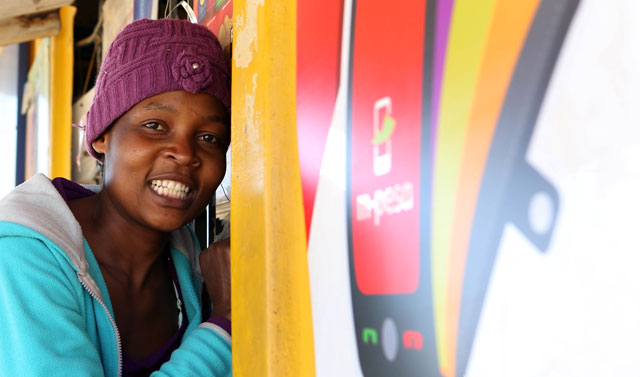
    There has been little consumer demand in South Africa for M-Pesa
    There has been little consumer demand in South Africa for M-Pesa

    Can you imagine the cost of acquisition of those 42 000 customers? Even at 76 000, Vodacom must be spending tens of thousands of rands (hundreds?) per customer.

    Overall, the group claims 8m M-Pesa customers, an increase of 34% from a year prior. That would be across all its operations, in Tanzania, the Democratic Republic of Congo and Mozambique.

    Again, a footnote (this time on page 74) “clarifies” that the 8m is the “number of unique customers who have generated revenue related to any M-Pesa activities in relation to M-Pesa revenue in the past 90 days, of these 5,6, have been active in the past 30 days in ‘International’”.

    So, even that 8m number is somewhat “optimistic”.

    But it gets better. In its quarterly update to 30 June, Vodacom says “M-Pesa revenue grew 16,1%, underpinned by strong M-Pesa customer growth of 18,1% to 7,8m”.

    So the 8m is now 7,8m? At least the 30-day active figure remains 5,6m.

    So much for “M-Pesa continuing “to gain traction in all our markets, fuelled by expansion in the distribution channel and a growing ecosystem”.

    Vodacom’s eyes are surely transfixed on the (relative) success in Tanzania, where it launched in 2008 (likely before this was “strategy” defined or imposed by Vodafone). In that market (adjacent to Kenya, remember), M-Pesa accounts for 22,6% of service revenue.

    Service revenue in its “International” segment (it does not break the numbers up per country) was R15,3bn in the last financial year. The “Other service revenue” category (again, across all markets) was R1,6bn. It would be safe to assume that around (at least?) R1bn of that is M-Pesa in Tanzania. That’s a big number … no wonder it’s enduring relaunch after relaunch.

    (As an aside, MTN has been surprisingly quiet about its MTN Mobile Money product. Again, transplanted from Kenya — no doubt from “consultants” — via Uganda to South Africa.)

    The major problem facing M-Pesa (and similar services) is that we are a country with surprisingly high financial inclusion. Various studies put it at anywhere from 75% to 85%. Yes, seriously. So we don’t really need a mobile money platform that solves this problem in another context altogether.
    m-pesa-visa-640

    The other big problem is that Vodacom doesn’t know what it wants M-Pesa to be in South Africa. All of the obvious problems have been solved. So, it might be useful for remittances in certain population segments. It might be useful for payments, again in certain contexts. But its messaging to a disillusioned customer base that has heard it before is unclear. It’s trying to be everything to everyone. There’s no clear “job to be done” and that’s evident in the marketing.

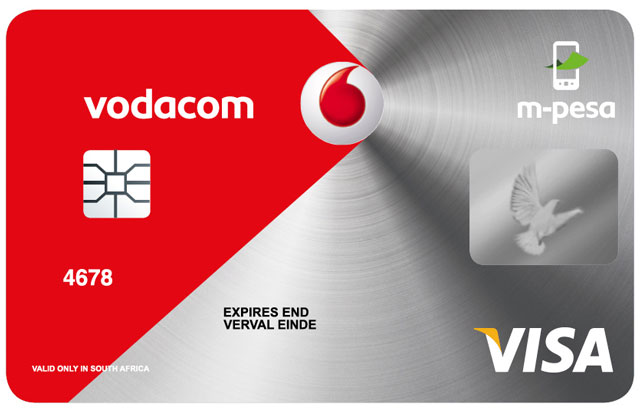
    It’s a “mobile money solution”, it’s a “mobile money transfer service”, it’s a “mobile money wallet”. It’s “not a bank account”, yet it’s a place to “store money safely” and with a Visa card, you can “swipe and buy”. I’m not making this up — this is how Vodacom has described the service in this most recent relaunch.

    Vodacom freely admits it’s paid its school fees. Elsewhere in the annual report, it claims it “revamped” its “old M-Pesa to cater for the South African market. We are optimistic about our proposition as we have resolved a number of issues that inhibited take-up previously.

    It fixed a footprint problem too, and now says it has “8 800 points of presence — 10 times more than when it first launched M-Pesa”.

    M-Pesa, says Vodacom, is now “integrated into the banking system and retail points of sale. Customers can make online transfers to M-Pesa from any bank and also have the option to obtain a Visa card linked to their M-Pesa account.

    The operator also “designed an M-Pesa voucher similar to an airtime voucher, which customers can buy from stores and load onto their accounts”. It “increased loyalty offers such as bonus airtime to incentivise behaviour”, and it says its “proposition of free to get, free to keep and free to load resonates well with our customers”.

    Many of these seem obvious enough to have implemented the first time around. But some of these scream “presentations-from-management-consultants”.

    The big question is why Vodacom is obsessed with somehow making M-Pesa work in South Africa.

    Either Vodafone suits conceived a priority list (read: criteria for the calculation of bonuses/incentives) for the local operation that includes M-Pesa, or Vodacom executives are stubbornly pursuing this dead horse to prove something to someone.

    As a shareholder, I’d be very worried if it was the latter. My hunch is that it’s the former. After all, every emerging market is the same, right?

    Murmurs in the market suggest that this time, Vodacom might just have enough data to prove that no amount of “relaunching” and “redesigning” is going to make customers use a product they clearly don’t want, or, more importantly, need. Marketing budgets for M-Pesa sound like they’ve been trimmed back “substantially”. Then again, nothing like a very tough trading environment (complete with depreciating rand, higher electricity prices and anaemic economic growth) to focus priorities.

    Vodacom should’ve cut its losses on M-Pesa years ago. Maybe Vodafone won’t let it…

    • Hilton Tarrant works at immedia, specialists in native mobile app and Web development
    • This column was first published on Moneyweb and is republished here with permission

    Follow TechCentral on Google News Add TechCentral as your preferred source on Google


    Hilton Tarrant M-Pesa MTN Vodacom Vodafone
    WhatsApp YouTube
    Share. Facebook Twitter LinkedIn WhatsApp Telegram Email Copy Link
    Previous ArticleProject Isizwe free Wi-Fi now in W Cape
    Next Article Vilakazi latest DDG out at telecoms

    Related Posts

    Best network, worst vibes: the puzzle of SA telecoms

    Best network, worst vibes: the puzzle of SA telecoms

    20 July 2026
    Amazon Leo all set for South African launch - From left, Maziv CEO Dietlof Mare, communications minister Solly Malatsi, Herotel CEO Van Zyl Botha and Amazon's David Zapolsky

    Amazon Leo all set for South African launch

    15 July 2026
    Industry to Icasa: punish municipalities that stall network roll-out

    Industry to Icasa: punish municipalities that stall network roll-out

    13 July 2026
    Company News
    The AI-led industrial revolution has begun - CallMiner Bruce McMahon

    The AI-led industrial revolution has begun

    20 July 2026
    Sophos firewalls: your business's first line of cyber defence - Vox

    Sophos firewalls: your business’s first line of cyber defence

    20 July 2026
    Paratus again voted Namibia's most reliable internet provider

    Paratus again voted Namibia’s most reliable internet provider

    17 July 2026
    Opinion
    Selling vapour is corporate suicide in slow motion - Jannie van Zyl

    Selling vapour is corporate suicide in slow motion

    16 July 2026
    Brazil's online gambling crackdown is a lesson for South Africa

    How Amazon outmanoeuvred Starlink in South Africa

    15 July 2026
    The Popia problem with agentic AI - Herman Haasbroek

    The Popia problem with agentic AI

    14 July 2026

    Subscribe to Updates

    Get the best South African technology news and analysis delivered to your e-mail inbox every morning.

    Latest Posts
    Openserve hits back in fibre ISP row

    Openserve hits back in fibre ISP row

    20 July 2026
    Best network, worst vibes: the puzzle of SA telecoms

    Best network, worst vibes: the puzzle of SA telecoms

    20 July 2026
    Why South Africa is sending Balls to the moon

    Why South Africa is sending spheres to the moon

    20 July 2026
    The rands-and-cents case for electric trucks - William Kelly Watts & Wheels with Wills

    The rands-and-cents case for electric trucks

    20 July 2026
    © 2009 - 2026 NewsCentral Media
    Built and maintained by Chronon
    • Cookie policy (ZA)
    • TechCentral – privacy and Popia

    Type above and press Enter to search. Press Esc to cancel.

    Manage consent

    TechCentral uses cookies to enhance its offerings. Consenting to these technologies allows us to serve you better. Not consenting or withdrawing consent may adversely affect certain features and functions of the website.

    Functional Always active
    The technical storage or access is strictly necessary for the legitimate purpose of enabling the use of a specific service explicitly requested by the subscriber or user, or for the sole purpose of carrying out the transmission of a communication over an electronic communications network.
    Preferences
    The technical storage or access is necessary for the legitimate purpose of storing preferences that are not requested by the subscriber or user.
    Statistics
    The technical storage or access that is used exclusively for statistical purposes. The technical storage or access that is used exclusively for anonymous statistical purposes. Without a subpoena, voluntary compliance on the part of your Internet Service Provider, or additional records from a third party, information stored or retrieved for this purpose alone cannot usually be used to identify you.
    Marketing
    The technical storage or access is required to create user profiles to send advertising, or to track the user on a website or across several websites for similar marketing purposes.
    • Manage options
    • Manage services
    • Manage {vendor_count} vendors
    • Read more about these purposes
    View preferences
    • {title}
    • {title}
    • {title}