LED lighting: everything you need to know

As electricity prices continue to spike higher each year and as Eskom continues pleading with residential and business users to cut their consumption to prevent another wave of nationwide rolling blackouts, there is growing interest from South Africans in highly power-efficient light-emitting diode (LED) lighting technology.

But the subject matter is complex, with few experts to hand to explain to consumers interested in moving from halogen lamps, fluorescent tubes and incandescent bulbs to LEDs how the technology works and what they need to know. With the sale of incandescent bulbs to be banned in SA from 2016, there is growing interest among consumers about LED solutions.

In an effort to get to grips with LED lighting and what consumers need to know, TechCentral editor Duncan McLeod sat down with an expert in the field, John Westermeyer, the regional marketing manager for lighting at Philips SA, to explore the fast-growing LED industry.

LEDs were invented by General Electric scientist Nick Holonyak in 1962. His first LED was a small, very low-powered indicator light that could be used in calculators or signalling devices.

But the technology didn’t take off until 1993, when Shuji Nakamura of Japan’s Nichia Corp invented the first high-brightness blue LED suitable for mass production. This was the key to producing modern, bright, white LED lighting. After the technology began to take off in the early 2000s, and as television makers ramped up production of LED components for modern, flat-panel TVs, prices began to plummet, making them a relatively affordable general-purpose alternative to conventional lighting products.

Westermeyer says prices are now halving every 18-24 months, with the lifespan of the products improving constantly. This means the technology has reached the point where consumers should consider switching.

He says moving to LED technology can slash consumers’ electricity bills because, for example, an LED downlighter that produces the same amount of light as a halogen lamp consumes one-fifth of the power. So, 50W halogen downlighters can be replaced with 10W LED lamps. In a home with, say, 40 downlighters, that can translate into a huge saving in energy costs.
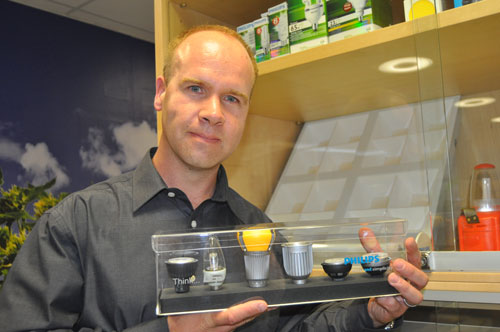
John Westermeyer

However, the upfront costs are high. Whereas a halogen downlighter typically costs less than R50, a good quality LED downlighter can fetch as much as R200 (cheaper and nastier variants are available for less than R100, but Westermeyer cautions consumers against buying these for a variety of reasons).

The market, he says, is being flooded by low-cost and poor-quality LED lighting solutions from China. These typically contain a large number of little diodes all clustered together. Often, their circuitry is not well built and they fail much sooner than more expensive solutions. They also produce a wide range of colours, from warm to cool, even though they often claim to be within a certain range.

“No one LED is exactly the same as the next one in terms of the colour temperature,” Westermeyer explains. “When they come out of the factory, they have to be ‘binned’ to ensure they’re grouped together in the same classification. A quality manufacturer will do a lot of sub-binning where they put the LEDs in one colour range in their own bin. The cheaper guys will choose a much wider range and put them together in the same packaging.”

The problem with this is consumers buy the cheaper brands and are then disappointed with the result, with colour differences in their rooms. They then label LED technology as poor and often go back to more power-hungry solutions. Westermeyer says local retailers tend to stock cheap products because they can move more of them, but ultimately consumers are not getting great solutions and the image of LED lighting is harmed.

Poorly designed LEDs also have bad thermal management, meaning they dissipate heat badly, which can damage the circuitry in the lamps and even pop the LEDs. A quality LED product will dissipate most excess heat — which is already much less than what’s generated (and wasted) by incandescent globes — through the back of the lamp.
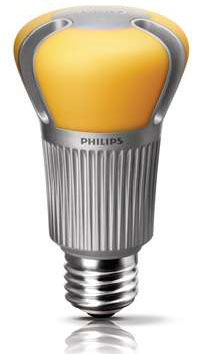
Another area of contention in the LED lighting industry is the claimed lifetime of the products. LEDs last far longer than conventional lighting — 10 to 100 times as long and improving all the time – but there isn’t a “complete set of agreed-upon standards” for measuring their expected lifespan.

Westermeyer says LED lamp manufacturers use something known as the L70 method to calculate the lifespan of their products. L70 refers to the number of hours the lamp will burn before it reaches 70% of its initial light output, after which it’s deemed as having reached the end of its life.

Companies that make them typically test them for 6 000 hours and then extrapolate to calculate the lifespan of the lamp. However, they all use slightly different methods to calculate this, with some manufacturers making overstated claims about lamp life without using test reports than can be verified by independent bodies.

For a high-quality LED downlighter, Westermeyer says consumers should expect to pay as much as R200. But he believes the long-term cost-savings and the convenience of not having to replace the lamps because of their exceptional lifespan means consumers shouldn’t wait to begin switching.

He says those worried about the high up-front costs can replace lamps room by room in their homes rather than incurring the costs of a full replacement immediately. They can even replace lamps individually, if necessary, though it’s important to match the colour temperature of the other lights in the room. For example, a 50W, 2 700K halogen lamp should be replaced with a 10W, 2 700K LED.

Consumers also need to consider what sort of light spread they’re looking for — do they want a 40-degree angle of light or a narrower beam? — and what type of colour temperature they’re after.

In kitchens, bathrooms, offices and schools, cooler temperatures make more sense (a range of 4 000K to 5 000K is good, he says) whereas warmer light (2 700K to 3 000K) is more suited to bedrooms and living areas.

Another important thing to consider is if a home or office uses a low-voltage (12V) system, it’s best to buy a lamp that matches that otherwise an adapter or converter will be necessary, adding cost to the investment. Westermeyer says it’s not necessary to convert the power source to 240V to move to LED lighting.

Installations with dimmers add another piece of complexity to the puzzle. Consumers must be careful to ensure the lamps they buy work with their dimmer systems. “Find out from your lamp supplier which dimmers are compatible with their lamps.”

Another challenge is finding good quality lamps. Retailers are reluctant to stock them because the rate of sale is low. Cheaper options mean higher revenues and quicker stock turnover. But Westermeyer expects leading retailers will begin stocking better-quality LED options this year as prices continue to fall across the board.  — Duncan McLeod, TechCentral

Share this article

  • http://twitter.com/markknijnenburg Mark Knijnenburg

    Another consideration not mentioned is that the majority of LED bulbs have flickering issues with standard 12v 50W electronic transformers, forcing you to replace them with conventional wire-wound transformers or special LED drivers, or install conditioning circuits which also adds to the cost.

  • Anonymous

     Thanks for the input, Mark. This is a new area of research for me and I’m finding it fascinating. Forgive me for what is probably a bit of a newbie question, but do the 12V LED lamps not have the requisite drivers to prevent the flickering issues?

  • http://twitter.com/markknijnenburg Mark Knijnenburg

    The more expensive ones include drivers, but require you to switch to 220v. I think Osram makes a 12v MR16 downlight which includes a conditioning circuit, but would need to be tested with the particular electronic transformer first to ensure there’s no flicker before buying a whole bunch. I’m also no expert, I’ve been working through the options since our place is being built at the moment and I need to make a decision on the best solution for the 93 downlights I need to install. So far it seems the most cost effective option for guaranteed flicker-free downlights is the GU10 220v variety with built-in drivers.

  • Greg Mahlknecht

    I did a lot of research into this over the holidays and have switched a few rooms over.  A few things that I found:
     
    Firstly, you want to use lamps using Cree LEDs.  They’re the clear world leader in high intensity LEDs.  I replaced 12v 50W downlighters with 6W 220V Cree-based downlighters from these guys http://www.khanyisa.co.za/ and there is no visible difference in both intensity and colour temperature.   You don’t need to go as high as 10W to replace a 50W with good LEDs.
     
    >> Another important thing to consider is if a home or office uses a low-voltage (12V) system, it’s best to buy a lamp that matches that otherwise an adapter or converter will be necessary, adding cost to the investment. 
     
    I read this at a number of “expert source” sites and it’s wrong.  You NEED to convert to 220V.   I was ready to just replace all my 12V halogens with 12V LED downlighters (same price as 220V LED) and the Khanyisa guys recommended against it.  Ever the skeptic, I pulled out my trusty multimeter and set up a few tests on my workbench with some test bulbs I’d bought and found that with the transformers I had in my house (average quality,  few years old), a 50W halogen downlighter was drawing close to 60W, and a 12V 6W LED was drawing over 10W.   I’m not an electrician or electronic engineer, but I believe this is just from wastage in the transformer.  The 220V 6W LED drew what it advertised – 6W.
     
    The 220V downlighters fit into the 12V brackets, and you can replace the transformer with a R22.00 SABS-approved plug to get it straight onto the 220V circuit.  Less electricity loss, and with the transformer out the picture, you don’t need to worry about the flickering possibility, and there’s one less component to go wrong in the long term.  Of course, if you’re building a new house, the 220V plug is cheaper than the transformer, so it’s an easy choice.
     
    I actually wanted to try the Philips lamps but couldn’t find a retailer for them, and a website query didn’t get a reply (it was the holiday season, I guess that might explain it).   Does anyone know where one can buy the Philips lamps in Durban, I’d really like to try a room with them.


  • http://twitter.com/waynegemmell Wayne Gemmell

    I bought a simple LED globe to replace a globe in my lounge. The thing was so dim that I eventually put it in another room where there was too much light. I’ll think twice about going LED again.

  • Greg Mahlknecht

    Great, thanks – Makro’s a bit far away from me, but I see ACDC is just a few mins away, I’ll pop there and check them out.  I see they stock them – up to 9W dimmable.  They have a 723 page (!!) downloadable pricelist.  Why did I not know about these guys, they’re awesome for electrical things.

  • http://twitter.com/theunisdk Theunis De Klerk

    I have started replacing my downlights with LED ones. Started with the Osram ones, but at R200, too damn expensive. Then I found the 4w Ellies ones at Builders. They are a perfect replacement for the 50w halogen and only R90. Ppl don’t even notice the difference
    No flickering issues either.

  • Brian

    Weslite sent me their catalog and price list this morning.  The pricing seemed very reasonable and they are in Bryanston.

  • Greg Mahlknecht

    Are you sure you aren’t replacing 25W downlighters with those Ellies?  I got some to check them out, and in my testing they came off as replacements for 25W, not 50W.  They’re the ones with tons of normal LEDs in a cluster, and not 2 or 3  little chips on a board?

  • http://twitter.com/theunisdk Theunis De Klerk

     Nope. The ellies 4w MR16 12v only have 3 led’s. My bathroom only has 2 in it. and they light it perfectly. WIll post pics if you want.

  • Greg Mahlknecht

    No, that’s fine, I’ll nip past my local hardware store and check it out.  In the xmas holidays all the Ellies I saw were those cheaper LED cluster ones.  They must have a new supplier.

  • Maneveld

    I’d be mightily surprised if the 4w could replace 50 watt halogens.

    I’m in my 3rd year of LED lights now, I’ve replaced all my downlights, fluorescent tubes and security lights with lights from

    http://shop.futurelight.co.za/

    No problems whatsoever and they have by far the widest range of led lighting online I have seen……

  • http://twitter.com/waynegemmell Wayne Gemmell

     I bought what the shop had. After reading this page and a bit further I might be able to make a more informed purchase next time.

  • http://www.imigyled.com/product/she/ LEDspotlights

    a very helpfull article for LED beginners. and all the prices mentioned here may decrease due to technology development and costs decrease

  • http://www.ledpanellight.net/ LEDstrips

    thanks for everything we need to know you’ve mentioned in this article.

Why TechCentral?

We know that as a prospective advertiser, you are spoilt for choice. Our job is to demonstrate why TechCentral delivers the best return for your advertising spend.

TechCentral is South Africa’s online technology news leader. We don’t say that lightly. We believe we produce the country’s best and most insightful online tech news aimed at industry professionals and those interested in the fast-changing world of technology.

We provide news, reviews and comment, without fear or favour, that is of direct relevance to our fast-expanding audience. Proportionately, we provide the largest local audience of all technology-focused online publishers.

We do not constantly regurgitate press releases to draw in search engine traffic — we believe websites that do so are doing their readers and advertisers a disservice. Nor do we sell “editorial features”, offer advertising “press offices” or rely on online bulletin-board forums of questionable value to advertisers to bolster our traffic.

TechCentral, which is edited and written by award-winning South African journalists, cares about delivering top-quality content to draw in the business and consumer readers that are of most interest to technology advertisers.

We’d like the opportunity to demonstrate the value of directing a portion of your advertising budget to TechCentral, whether your company is in the technology field or not. Numerous opportunities exist for companies interested in reaching our audience of key decision-makers in South Africa’s dynamic information and communications technology sector. We offer packages that will deliver among the best returns on investment available in the online technology news space.

For more information about advertising opportunities, and how your organisation can benefit by publicising itself on TechCentral, please call us on 011-792-0449 during office hours. Or send us an e-mail and ask for our latest rate card and brochure.