Close Menu
TechCentralTechCentral

    Subscribe to the newsletter

    Get the best South African technology news and analysis delivered to your e-mail inbox every morning.

    Facebook X (Twitter) YouTube LinkedIn
    WhatsApp Facebook X (Twitter) LinkedIn YouTube
    TechCentralTechCentral
    • News
      Big win for South African innovation agency - Technology Innovation Agency CEO Titus Mathe

      R1.2-billion win for South African innovation agency

      9 June 2026
      Eskom Green to build 32GW of renewables by 2040 - Mteto Nyati - Mteto Nyati

      Eskom Green to build 32GW of renewables by 2040

      9 June 2026
      South Africa's EV sales nearly double - but the base is still tiny

      South Africa’s EV sales nearly double – but the base is still tiny

      9 June 2026
      MTN enlists Alipay owner to turn MoMo into a super app

      MTN enlists Alipay owner to turn MoMo into a super app

      9 June 2026
      The clock is ticking on South African banks' biggest advantage

      The clock is ticking on South African banks’ biggest advantage

      9 June 2026
    • World
      Meta declares war on Israeli spyware firm

      Meta declares war on Israeli spyware firm

      8 June 2026
      Meta takes on OpenAI and Anthropic in enterprise AI

      Meta takes on OpenAI and Anthropic in enterprise AI

      4 June 2026
      AI demand sparks 'chipflation' warning

      AI demand sparks ‘chipflation’ warning

      4 June 2026
      Astronomers discover exoplanets with magnetic fields

      Strange winds reveal magnetic fields on distant ‘hot Jupiters’

      2 June 2026
      AI giant Anthropic files for landmark US listing

      AI giant Anthropic files for landmark US listing

      1 June 2026
    • In-depth
      Every plug-in hybrid on sale in South Africa, ranked by price - Lamborghini Temerario

      Every plug-in hybrid on sale in South Africa, ranked by price

      7 June 2026
      What Wi-Fi 8 will mean for wireless networks

      What Wi-Fi 8 will mean for wireless networks

      1 June 2026
      Alfa's electric rebel - Alfa Romeo Junior Elettrica Veloce

      Alfa’s electric rebel

      29 April 2026
      Africa switches on as Europe dims the lights

      Africa switches on as Europe dims the lights

      9 April 2026
      The biggest untapped EV market on Earth is hiding in plain sight

      The biggest untapped EV market on Earth is hiding in plain sight

      1 April 2026
    • TCS
      Watts & Wheels S1E5: 'A Bentley of the bush and a car that swims'

      Watts & Wheels S1E5: ‘A Bentley of the bush and a car that swims’

      8 June 2026
      TCS | Charge's R1.8-billion bet on an off-grid EV future - Charge chairman Joubert Roux

      TCS | Charge’s R1.8-billion bet on an off-grid EV future

      18 May 2026
      TCS+ | The Up&Up Group on the hidden cost of AI - Jason Harrison

      TCS+ | The Up&Up Group on the hidden cost of AI

      13 May 2026
      Michael Rossouw

      TCS+ | The retirement decision most South Africans get wrong

      6 May 2026
      TCS | The Cape Town start-up listening for TB with AI - Braden van Breda

      TCS | The Cape Town start-up listening for TB with AI

      4 May 2026
    • Opinion

      Clashing judgments leave South Africa’s crypto law unsettled

      2 June 2026
      The author, Pambos Soteriades

      The trap inside South Africa’s banking MVNO boom

      1 June 2026
      The hidden cost of social media age bans is everyone's privacy - Petrus Potgieter

      The hidden cost of social media age bans is everyone’s privacy

      29 May 2026
      Treasury's crypto crackdown is a betrayal of Mandela's promise - Duncan McLeod

      Treasury’s crypto crackdown is a betrayal of Mandela’s promise

      22 May 2026
      South Africa is sleepwalking into another AI policy failure - Celeste Labuschagne

      South Africa is sleepwalking into another AI policy failure

      20 May 2026
    • Company Hubs
      • 1Stream
      • Africa Data Centres
      • AfriGIS
      • Altron Digital Business
      • Altron Document Solutions
      • Altron Group
      • Arctic Wolf
      • Ascent Technology
      • AvertITD
      • BBD
      • Braintree
      • CallMiner
      • CambriLearn
      • CM Telecom
      • Contactable
      • CYBER1 Solutions
      • Digicloud Africa
      • Digimune
      • Domains.co.za
      • ESET
      • Euphoria Telecom
      • HOSTAFRICA
      • Incredible Business
      • iONLINE
      • IQbusiness
      • Iris Network Systems
      • Kaspersky
      • LSD Open
      • Mitel
      • NEC XON
      • Netstar
      • Network Platforms
      • Next DLP
      • Ovations
      • Paracon
      • Paratus
      • Q-KON
      • SevenC
      • SkyWire
      • Solid8 Technologies
      • Telit Cinterion
      • Telviva
      • Tenable
      • Vertiv
      • Videri Digital
      • Vodacom Business
      • Wipro
      • Workday
      • XLink
    • Sections
      • AI and machine learning
      • Banking
      • Broadcasting and Media
      • Cloud services
      • Contact centres and CX
      • Cryptocurrencies
      • Education and skills
      • Electronics and hardware
      • Energy and sustainability
      • Enterprise software
      • Financial services
      • HealthTech
      • Information security
      • Internet and connectivity
      • Internet of Things
      • Investment
      • IT services
      • Lifestyle
      • Motoring
      • Policy and regulation
      • Public sector
      • Retail and e-commerce
      • Satellite communications
      • Science
      • SMEs and start-ups
      • Social media
      • Talent and leadership
      • Telecoms
    • Events
    • Advertise
    TechCentralTechCentral
    Home » Opinion » Alistair Fairweather » How much is the Internet’s electricity bill?

    How much is the Internet’s electricity bill?

    By Editor14 September 2011
    Twitter LinkedIn Facebook WhatsApp Email Telegram Copy Link
    News Alerts
    WhatsApp

    [By Alistair Fairweather]

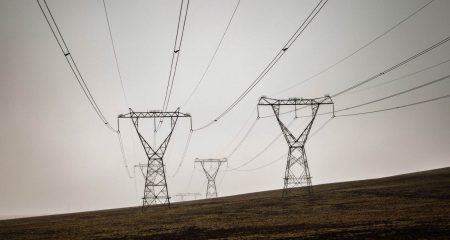
    To most of us, the Internet is pretty close to magic. Type in a search, click a link, and the info just arrives on our screens. There isn’t any visible evidence that actual work is needed to make this happen; no grinding gears or roaring burners, and there certainly isn’t an exhaust pipe. It’s also, with few exceptions, free. That makes it easy to overlook the biggest hidden cost of the net: electricity.

    We got a rare insight into that cost this week when the normally secretive Google revealed exactly how much electricity it uses to operate its business. In 2010, Google drew a continuous 260MW of power to keep its home fires burning.

    That means that in 2010 Google consumed more than 2,2m megawatt-hours of electricity (2 277 gigawatt-hours to be more exact). If the company was based in SA, its yearly power bill would be about R940m.

    That sounds like an awful lot, but in global terms it’s fairly small. Our smallest coal-fired powered station, Komati, could power three Googles on its own with room to spare. By way of comparison, the US’s aluminium smelting industry uses more than 1m gigawatt-hours per year — over 400 times as much as Google.

    But Google is only one player in a rapidly expanding industry. Facebook, Yahoo and Microsoft attract comparable audiences, and presumably use comparable amounts of energy. The Internet as a whole has literally billions of active users. No one is entirely certain how much energy all this consumes, but estimates range between 5% and 6% of global electricity supply. That means the Internet’s annual electricity bill is somewhere between US$120bn and $200bn. Ouch.

    So, what chews all this energy? The biggest culprits are enormous data centres, giant warehouses full of powerful servers that do the heavy lifting required to keep the Internet running. All these computers packed together generate an enormous amount of heat, and so they must be continuously air conditioned. Google alone is rumoured to have millions of servers scattered around the globe, hence its large energy footprint.

    Google argues that its services actually produce a net saving in energy, because they allow people to quickly and cheaply find the information they need without resorting to car trips. The same can be applied to the Internet in general — telecommuting (working from home) and video conferencing save many millions of litres of fuel each year.

    But, given how quickly the industry is expanding, many people are concerned about the net’s future power needs. The exploding popularity of cloud computing, which shifts computing power away from desktops and offices and into ever larger data centres, will be a huge factor in this growth. Greenpeace frets that the industry will consume triple the amount of power by 2020.

    Although this concern is understandable, it’s largely overblown. We’ve all heard about Moore’s Law — the tendency of computers to double in power and halve in price every 18 months — but a handy corollary has recently been discovered. Engineers at Stanford University have proven that the energy efficiency of computers also doubles every 18 months. This has applied ever since the first computers were built in the 1950s, and continues to apply today. It’s most starkly illustrated by the recent leaps in cellphone technologies. A modern smartphone is now more powerful than a desktop computer was a decade ago, but it uses a tiny fraction of the power.

    What’s more, we are only scratching the surface. Richard Feynman, a Nobel-prize-winning physicist, hypothesised in 1985 that computers could be made 100bn times more efficient before they hit any theoretical limits. Computers are already 40 000 times more efficient than in 1985. And as Professor Jonathan Koomey, who lead the Stanford study, says: “There’s so far to go. It’s only limited by our cleverness, not the physics.”

    As if on cue, Intel announced yesterday that its next generation of chips will use 20 times less energy than they currently do. This will allow you to run a laptop for 24 hours without recharging, and to run it off a solar cell.

    Whether the marketing fanfare proves completely accurate or not is irrelevant. Even if the technology delivers 50% of its promise, data centres will be many times more efficient to run than they currently are. And so the Internet could feasibly triple in size by 2020 without tripling in energy hunger.

    What’s more, data centre owners have a vested interest in efficiency. Unlike many other large utilities, their costs are tied directly to their consumption of electricity. And so what is good for the planet is also good for their bottom lines.

    I have often fretted about the impact of the Internet on pollution and global warming. But, as is so often the case, technology has made a fool out of me. In this case, I’m happy to eat my words as long as I get one of those 24-hour laptops in the bargain.

    • Alistair Fairweather is digital platforms manager at the Mail & Guardian
    • Visit the Mail & Guardian Online, the smart news source
    • Subscribe to our free daily newsletter
    • Follow us on Twitter or on Facebook
    Follow TechCentral on Google News Add TechCentral as your preferred source on Google


    Alistair Fairweather Eskom Google Greenpeace Intel Jonathan Koomey Richard Feynman
    WhatsApp YouTube
    Share. Facebook Twitter LinkedIn WhatsApp Telegram Email Copy Link
    Previous ArticleVodacom’s trampled berries
    Next Article The patent wars: a lawyer’s perspective

    Related Posts

    Eskom Green to build 32GW of renewables by 2040 - Mteto Nyati - Mteto Nyati

    Eskom Green to build 32GW of renewables by 2040

    9 June 2026
    Apple plays AI catch-up as Siri gets a long-awaited reboot

    Apple plays AI catch-up as Siri gets a long-awaited reboot

    8 June 2026
    Moody's flags risk in Eskom grid split

    Moody’s flags risk in Eskom grid split

    1 June 2026
    Company News
    South Africa's operators solved fintech. Digital identity is next - Contactable

    South Africa’s operators solved fintech. Digital identity is next

    9 June 2026
    Huawei nova 15 Max now available in South Africa

    Huawei nova 15 Max now available in South Africa

    9 June 2026
    Avert IT Distribution, AnyDesk create growth opportunities for African IT partners

    Avert IT Distribution, AnyDesk create growth opportunities for African IT partners

    9 June 2026
    Opinion

    Clashing judgments leave South Africa’s crypto law unsettled

    2 June 2026
    The author, Pambos Soteriades

    The trap inside South Africa’s banking MVNO boom

    1 June 2026
    The hidden cost of social media age bans is everyone's privacy - Petrus Potgieter

    The hidden cost of social media age bans is everyone’s privacy

    29 May 2026

    Subscribe to Updates

    Get the best South African technology news and analysis delivered to your e-mail inbox every morning.

    Latest Posts
    Big win for South African innovation agency - Technology Innovation Agency CEO Titus Mathe

    R1.2-billion win for South African innovation agency

    9 June 2026
    Eskom Green to build 32GW of renewables by 2040 - Mteto Nyati - Mteto Nyati

    Eskom Green to build 32GW of renewables by 2040

    9 June 2026
    South Africa's EV sales nearly double - but the base is still tiny

    South Africa’s EV sales nearly double – but the base is still tiny

    9 June 2026
    MTN enlists Alipay owner to turn MoMo into a super app

    MTN enlists Alipay owner to turn MoMo into a super app

    9 June 2026
    © 2009 - 2026 NewsCentral Media
    • Cookie policy (ZA)
    • TechCentral – privacy and Popia

    Type above and press Enter to search. Press Esc to cancel.

    Manage consent

    TechCentral uses cookies to enhance its offerings. Consenting to these technologies allows us to serve you better. Not consenting or withdrawing consent may adversely affect certain features and functions of the website.

    Functional Always active
    The technical storage or access is strictly necessary for the legitimate purpose of enabling the use of a specific service explicitly requested by the subscriber or user, or for the sole purpose of carrying out the transmission of a communication over an electronic communications network.
    Preferences
    The technical storage or access is necessary for the legitimate purpose of storing preferences that are not requested by the subscriber or user.
    Statistics
    The technical storage or access that is used exclusively for statistical purposes. The technical storage or access that is used exclusively for anonymous statistical purposes. Without a subpoena, voluntary compliance on the part of your Internet Service Provider, or additional records from a third party, information stored or retrieved for this purpose alone cannot usually be used to identify you.
    Marketing
    The technical storage or access is required to create user profiles to send advertising, or to track the user on a website or across several websites for similar marketing purposes.
    • Manage options
    • Manage services
    • Manage {vendor_count} vendors
    • Read more about these purposes
    View preferences
    • {title}
    • {title}
    • {title}