Gov’t wants to license new telecoms operators

This article was posted by on Aug 19th, 2011 and filed under News, Top. You can follow any responses to this entry using RSS 2.0. Both comments and pings are currently closed.

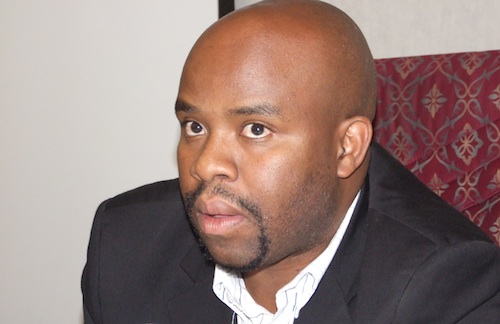
Robert Nkuna

The department of communications wants to use the sale of radio frequency spectrum in “high-demand bands” to facilitate the entrance of new infrastructure competitors in SA’s telecommunications industry.

“We should allow licensees that don’t have spectrum so they can compete with the incumbents,” says Robert Nkuna, special adviser to communications minister Roy Padayachie. “The opportunity should allow us to introduce new operators.”

Industry regulator, the Independent Communications Authority of SA (Icasa), is expected to license access to two key frequency bands — 2,6GHz and 3,5GHz — either later this year or early next year.

Operators are particularly keen to get access to the 2,6GHz band, which is ideally suited for providing the next generation of wireless broadband networks using a technology called long-term evolution.

“Engagements with Icasa are ongoing to see how fast we can conclude the process,” says Nkuna.

Incumbent operators such as Vodacom and MTN are lobbying hard for access to the spectrum, arguing they’re best resourced financially to fund the roll-out of national networks.

Communications director-general Rosey Sekese adds that the “real issue” the department is grappling with around spectrum is ensuring that whichever companies are granted licences roll out services in rural areas and not only in urban areas that are already well served.

“It’s not about ensuring people continue to roll out where there is already infrastructure,” says Sekese.

Meanwhile, Nkuna says government will direct Icasa to conduct a full review of the spectrum currently used by television broadcasters, and not only the spectrum expected to be freed up around 800MHz — usually referred to as the “digital dividend” spectrum.

It will direct Icasa to conduct a review of all spectrum between 470MHz and 862MHz to determine which of it could be freed up for other purposes, including broadband.

The department is also discussing whether to license access to the digital dividend spectrum to telecoms operators ahead of completion of digital migration to ensure companies can begin offering wireless broadband services as soon as possible after analogue switch-off. Nkuna says all issues related to spectrum are being “fast tracked”.  — Duncan McLeod, TechCentral


  • Gregg

    More licences = more money for the dept of comms. They’re not interested in bringing prices down or expanding access to services, this is about making money.

  • Anonymous

    Duncan, any idea on Mr Nkuna’s position on using the managed unlicensed model now being used for sub 1GHz spectrum in the US, UK and Canada?

    The IEEE has just revealed the 802.22 standard, so we can expect to see rapid development of TV Band Devices. The usage of this will revolutionize rural communications in SA, and if we follow the overseas licencing model, whoever builds the towers first (and 2nd, 3rd… 50th) will automatically get the rights to the spectrum in a particular area.

    There is no need for auctions or beauty contests as it’s no longer necessary (technologically) , nor desirable (economically), for a single company to own an exclusive licence to spectrum.

  • Prom

    The 2.6GHz and 3.5GHz frequencies are ill suited to providing broadband. You have to quite literally build a tower for every block though this could be an advantage with LTE that actually uses up a lot of spectrum requiring denser base stations without interference from each of them.

    What Vodacom and MTN actually want is the digital divident spectrum but looking at their track record it would be a mistake to license this to them as they won’t use it to effectively compete. This could take years to rectify if it ever is. Rather do something different this time and turn it into white space spectrum so everyone can use it and if that turns out to be a mistake it can easily be rectified.

Advertisement

Recent Comments

  • Greg Mahlknecht: I don’t think it’s misleading at all.  Pay a flat fee, get unlimited travel allowance. ...
  • Ends: So by 2016 we will have paid for the toll roads…? Bearing in mind that construction started in 2008 and...
  • Ends: No it doesn’t. The amount you travel has never been capped. The title is incorrect and misleading.
  • Danie van der Merwe: It has nothing to do with 25 years of Apartheid and DSTV…. I have been a DSTV subscriber...
  • Danie van der Merwe: Real pity as I’ve been waiting for ages for their PVR. Difficult to move from DSTV’s...

Advertisement
Advertisement

TechCentral is proudly hosted by:


Log in / (c) 2009 - 2012 NewsCentral Media