Give fund’s R1bn to Telkom, says MWeb

This article was posted by on Sep 1st, 2010 and filed under News, Top. You can follow any responses to this entry using RSS 2.0. Both comments and pings are currently closed.

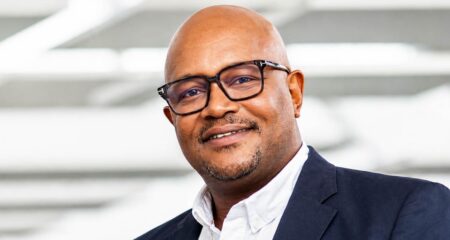
MWeb CEO Rudi Jansen

In a surprising move, MWeb is lobbying government to give Telkom the more than R1bn in cash stashed away in the universal service fund so that it can plough that money into upgrading its network.

CEO Rudi Jansen is especially keen for the money to be used to upgrade the so-called last mile of copper cables that connect customers to Telkom’s network.

He says the network has fallen into disrepair and needs work if it’s to be used to deliver the next-generation of broadband applications over fixed lines.

Jansen says Telkom could do with a big cash injection to get its network into shape to cope with increased demand from broadband subscribers.

“With proper regulations and pricing in place there is no reason Telkom should not be given the money,” he says. Jansen says he is lobbying in political circles for the money to be given to Telkom.

The universal service fund, which is administered by the Universal Service & Access Agency of SA (Usaasa), is believed to have more than R1bn in its coffers, contributed by telecommunications operators over a period of years dating back to the 1990s.

The money is meant to be used to facilitate the roll-out of telecoms infrastructure in underserviced and rural parts of SA but has remained largely untapped for years.

However, Usaasa, which has come under fire for not doing more to spend the cash, has recently promised to start disbursing more of it.

Jansen says that the money should be used to help Telkom make good on its network capacity promises. “Who else will get the capacity to the public?” he asks.

MWeb will have a tough time convincing government and many of the companies, other than Telkom, that have contributed to the fund over the years that handing the money to the fixed-line operator is a good idea.

Already, the department of communications has earmarked about R400m of the fund for subsidisation of digital set-top boxes for broadcasting, provoking uproar from Telkom and other telecoms companies that have contributed to the fund.

They argue it should be ploughed back into telecoms, not spent on broadcasting. Broadcasters, they argue, haven’t contributed to the fund and so shouldn’t benefit from it.

Jansen says Telkom is a deserving cause, provided the money is used correctly and its network tightly regulated.

Telkom has just begun an upgrade of all its local exchanges that will eventually result in many of its customers migrating to 10Mbit/s connections.

But some customers have asked to have their line speeds reduced because the infrastructure can’t cope. In some instances, it made the lines slower than before the upgrade, Jansen says.  — Candice Jones, TechCentral


  • http://www.hellkom.co.za Hellkom

    Large parts of their network are being held together by luck and scooby doo wire.

    Hopefully Telkom 1) knows how to stretch a billion bucks and 2) knows where to spend it, because judging from their CEO remuneration and the company’s performance they’re putting our money in horrifyingly unsuitable places.

  • Christian

    One might understand why Mr Rudy Jansen would promote such an idea…As Mweb would stand to gain from a Telkom Infrastructure upgrade and extension. Though one would wonder if Telkom is up to the job, as their infrastructure isn’t reliable and a shambles at the best of times. An ADSL connection, which where Mweb would fit into the picture, is expensive and Telkom is unable to maintain a constant connection. Yes, Telkom needs to upgrade a lot faster than it is doing now and hopefully will not squander the kinda monies on offer.

  • http://translate.org.za/blogs/dwayne Dwayne Bailey

    I’ve got an idea, why don’t we use the money to “facilitate the roll-out of telecoms infrastructure in underserviced and rural parts of SA”?

    It seems that all other network operators are able to raise money for capital expansion, yet Telkom isn’t and needs us to donate money to them. This money was a condition of their license, now we just give it back for them to do the stuff that they were meant to do when they had a monopoly.

    Telkom hopelessly failed at providing any infrastructure in rural areas (I have a great time spotting DECT poles in rural areas). They paid lip service to rural people, pretending to role out technology when all it was was a loss maker for a great license. Why exactly will they do any different if we release this money to them now?

    This suggestion seems terribly self serving and doesn’t benefit the country as a whole.

    A more interesting proposal would be that these funds are used as a capital investments into fibre to rural towns, schools and hospitals.

  • AL

    Their is a very good reason why Telkom must not be given the money. When they had the monopoly they rather paid fat cat salaries and big dividends, rather than maintaining their network and passing the savings on to their customers. If anybody helps Telkom they will just become another SABC or SAA. Rather give the money to Neotel. At least they created the competition that is driving Telkom out of business and giving customer better, faster and more affordable services.

  • John

    Neo who? Mweb recognizes the fact true broadband or triple play services are best provided over a fixed line or fibre network. If you are a content provider you would want the best infrastructure to lease to provide that services over. Mweb are making big inroads into the ADSL market and they recognize that there are no other players that can provide the infrastructure. Neotel are not interested in the domestic market.

  • Andrew

    What did Telkom do with the huge profits that were generated while they had a 50% share in Vodacom? Why didn’t they invest in their network properly rather than distribute these windfall profits to their shareholders (i.e. Govt and various crony capitalists like Andile Ngcaba, Smuts Ngonyama et al)? After all, Telkom aquired their share of Vodacom on the back of taxpayer funding. In order to secure their licence Telkom cynically paid lip service to the requirements to connect under-serviced areas, and now it seems that the “USF” is now holding R1 Billion that hasn’t been invested.

    I’m not convinced that giving Telkom R1 Billion would work. Better to forcibly remove some of the local loop (i.e. all metropolitan areas) from their control and invest R1 Billion in another entity to manage it. Telkom has repeatedly shown that it does not have the appetite or ability to compete.

    Then again, I might just be bitter because my ADSL line is unstable and slow since Telkom hasn’t done any real maintenance on the copper in my area since 1970.

  • Chris

    Investing in poor rural areas is easy when you are Vodacom or MTN. No copper theft ! Fibre optic, fibre optic, yes we know, why cant we bring fibre all the way to the clients premises like “first world countries”. Well besides the fact that first world countries are less corrupt and therefore have more money to spend or are just willing to spend more and embezzle less, first world countries where most websites are hosted have far stronger currencies, and we have to purchase bandwidth from them in dollars, pounds and euros. There are so many reasons why we pay so much for internet access. Telkom in many areas just cant keep up with copper theft, even by laying fibre like crazy which is still limited to certain distances due to extreme cost involved. We probably import fibre optic cables and equipment to with out pathetic rate of exchange. We should rather concentrate on improving out exchange rate if we want to make internet or anything cheaper. Why does COSATU want to continuously weaken the Rand on the weak pretext of creating foreign investment to create jobs. If this is what you to do strengthen countries and economies why arent first world countries doing the same thing ? There are many other ways of “creating jobs”. Question everything, accept nothing.

  • Cynical

    Something’s very fishy here.
    A dominant company exerting pressure while cozying up to another dominant company. Never mind that said second company has been hit with a massive abuse of dominance fine.

    Effectively, for all intents and practice, equitable access to the “last mile” copper network will never be achieved, as long as a self-interested private company owns it.

  • AL

    Here is the reality: Neotel is forced to scale down its domestic market penetration, because every Tom, Dick , Harry and Van is allowed to provide them services fragmenting the market to the point where it is not profitably for anybody. That is why the industry is suppose to be regulated. Unfortunately the useless regulator that is more interested in the political alignment of its office bearers can not regulate the traffic at a 4 way stop in a small Karoo town, hence there contribution is a joke and the consumer at best gets a cream pie in the face.

  • sarantis

    why noot just force telkom to give you access to exchanges then put cable in with fees of 10% above maintenance cost. and anyone can use it.. hell sentech can own the physical wires. we need telkom to take a back seat and realise they are like eskom, not little municipalities and eskom.

  • Nortic

    Cynical is right. Something is fishy about this. I suspect the Mweb business model is at risk if telkom does not shape up and if the mobile operators start reacting to Cell C’s shake up, doom and gloom is on the horizon for Mweb.

    Unless they can convince the mobile operators to go wholesale. Cell C is spending R2 billion just on improvements to call centers/systems to support ’4Gs’ . Traditionally the mobile operators enjoy owning the client. This will be hard if not near impossible to change.

    The path to reduce the medium term risk via ‘partnering’ with Telkom to invest in the LL leads to companies like Mweb benefiting again once LLU becomes a reality.

Advertisement

Recent Comments

  • Theunis De Klerk: I have started replacing my downlights with LED ones. Started with the Osram ones, but at R200, too...
  • Greg Mahlknecht: Great, thanks – Makro’s a bit far away from me, but I see ACDC is just a few mins away,...
  • Wayne Gemmell: I bought a simple LED globe to replace a globe in my lounge. The thing was so dim that I eventually...
  • Jsteffen: Yes Simphiwe, the are called “cheapies” – the phone is on contract, which means that they...
  • Jsteffen: Yeah, and the adults who “own” it, doesn’t have a clue how to use all of the features, as...

Advertisement
Advertisement

TechCentral is proudly hosted by:


Log in / (c) 2009 - 2012 NewsCentral Media