Close Menu
TechCentralTechCentral

    Subscribe to the newsletter

    Get the best South African technology news and analysis delivered to your e-mail inbox every morning.

    Facebook X (Twitter) YouTube LinkedIn
    WhatsApp Facebook X (Twitter) LinkedIn YouTube
    TechCentralTechCentral
    • News
      Woan's ghost exorcised - Solly Malatsi

      Woan’s ghost exorcised

      25 September 2026
      Eskom's profit doubles even as it sells less electricity - Mteto Nyati

      Mteto Nyati to stay on as Eskom chairman

      25 September 2026
      Meta's new gadget is a pocket watch for its viral AI agent - Muse Charm

      Meta’s new gadget is a pocket watch for its viral AI agent

      25 September 2026
      Insurers carry the can for MIP breach, regulators say

      Insurers carry the can for MIP breach, regulators say

      25 September 2026
      South Africa's car exports face an EV reckoning

      South Africa’s car exports face an EV reckoning

      25 September 2026
    • World
      Anthropic weighs new model launch to blunt OpenAI's Astra surge - Anthropic CEO Dario Amodei and OpenAI CEO Sam Altman

      Anthropic weighs new model launch to blunt OpenAI’s Astra surge

      21 September 2026
      Hackers hack hackers: ShinyHunters seizes cl0p's dark web site

      Hackers hack hackers as dark web feud erupts

      21 September 2026
      Film piracy malware is reaching corporate machines

      Film piracy malware is reaching corporate machines

      21 September 2026
      Crypto's big bet fails as US senate sinks Clarity Act

      Crypto’s big bet fails as US senate sinks Clarity Act

      16 September 2026
      'This is not circular': Jensen Huang defends $3.5-billion MediaTek deal

      ‘This is not circular’: Jensen Huang defends $3.5-billion MediaTek deal

      2 September 2026
    • In-depth
      Meta to the AI industry: slow down without us - Mark Zuckerberg

      Meta to the AI industry: slow down without us

      16 September 2026
      Google DeepMind CEO Demis Hassabis. Image: John Sears

      The plan to stop AI from breaking the world

      16 July 2026
      The internet has a Strait of Hormuz problem

      The internet has a Strait of Hormuz problem

      15 July 2026
      AI boom sparks rally, frenzy and fear

      AI boom sparks rally, frenzy and fear

      11 June 2026
      Every plug-in hybrid on sale in South Africa, ranked by price - Lamborghini Temerario

      Every plug-in hybrid on sale in South Africa, ranked by price

      7 June 2026
    • TCS
      TCS | Octotel's Trevor van Zyl on the fibre merger question

      TCS | Octotel’s Trevor van Zyl on the MetroFibre merger question

      16 September 2026
      Meet the CIO | Shoprite's Chris Shortt on what a supermarket becomes

      Meet the CIO | Shoprite’s Chris Shortt on what a supermarket becomes

      9 September 2026
      Rubicon's EV charging network is profitable - and growing fast - Watts & Wheels

      Rubicon’s EV charging network is profitable – and growing fast

      8 September 2026
      Winstone Jordaan on building a national EV charging network

      Winstone Jordaan on building a national EV charging network

      2 September 2026
      Watts & Wheels S1E8: 'Tesla lands in Africa, just not here'

      Watts & Wheels S1E8: ‘Tesla lands in Africa, just not here’

      24 August 2026
    • Opinion
      Regulating AI: apply the laws we have first - Dirk de Vos

      Regulating AI: apply the laws we have first

      21 September 2026
      The end is nigh, and the shares go on sale in October - Duncan McLeod

      The end is nigh, and the shares go on sale in October

      14 September 2026
      The fragile joint in the Capitec machine - Pambos Soteriades

      The R197-billion market the banks can’t reach

      25 August 2026
      South African tech's compounding debt problem - Jannie van Zyl

      Management consulting as we know it is over

      21 August 2026
      South African tech's compounding debt problem - Jannie van Zyl

      The most dangerous customer is the quiet one

      10 August 2026
    • Company Hubs
      • 1Stream
      • Africa Data Centres
      • AfriGIS
      • Altron Digital Business
      • Altron Document Solutions
      • Altron Group
      • Arctic Wolf
      • Ascent Technology
      • AvertITD
      • BBD
      • Braintree
      • CallMiner
      • CambriLearn
      • CM.com
      • Contactable
      • CYBER1 Solutions
      • Digicloud Africa
      • Digimune
      • Domains.co.za
      • ESET
      • Euphoria Telecom
      • HOSTAFRICA
      • Incredible Business
      • iONLINE
      • IQbusiness
      • Iris Network Systems
      • Kaspersky
      • LSD Open
      • Mitel
      • NEC XON
      • Netstar
      • Network Platforms
      • Next DLP
      • Ovations
      • Paracon
      • Paratus
      • Q-KON
      • SevenC
      • SkyWire
      • Solid8 Technologies
      • Telit Cinterion
      • Telviva
      • Tenable
      • Vertiv
      • Videri Digital
      • Vodacom Business
      • Vox
      • Wipro
      • Workday
      • XLink
    • Sections
      • AI and machine learning
      • Banking
      • Broadcasting and Media
      • Cloud services
      • Contact centres and CX
      • Cryptocurrencies
      • Education and skills
      • Electronics and hardware
      • Energy and sustainability
      • Enterprise software
      • Financial services
      • HealthTech
      • Information security
      • Internet and connectivity
      • Internet of Things
      • Investment
      • IT services
      • Lifestyle
      • Policy and regulation
      • Public sector
      • Retail and e-commerce
      • Satellite communications
      • Science
      • SMEs and start-ups
      • Social media
      • Talent and leadership
      • Telecoms
      • Watts & Wheels
    • Events
    • Advertise
    TechCentralTechCentral
    Home » In-depth » Flame malware constitutes a ‘cyber weapon’

    Flame malware constitutes a ‘cyber weapon’

    By Duncan McLeod30 May 2012
    Twitter LinkedIn Facebook WhatsApp Email Telegram Copy Link
    Get breaking news on WhatsApp

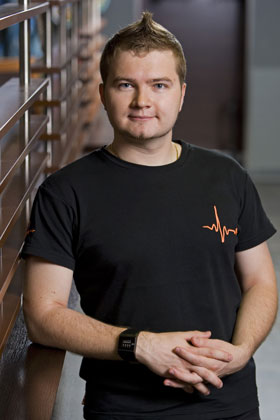
    Vitaly Kamluk

    The Flame malware that infected computers across the Middle East and North Africa is a “cyber weapon”, probably developed by a nation state for the purpose of espionage.

    This is the view of Vitaly Kamluk, chief malware expert at Russia’s Kaspersky Lab, the antivirus company that played an instrumental role in uncovering the malware, which has been described as the most sophisticated software of its kind ever detected.

    Kamluk was speaking to TechCentral from Moscow on Wednesday. He says Kaspersky has been unable to determine the origin of the malware or how it was first propagated, but says it is a highly complex piece of software — 20 times more complex than the Stuxnet worm, discovered in 2010, that targeted Siemens industrial software and equipment. It’s been speculated that Israel and/or the US were behind development of both Flame and Stuxnet. Stuxnet targeted five Iranian organisations, reportedly damaging Iran’s nuclear programme.

    Through its antivirus software, Kaspersky is aware of the virus infecting 600 machines, but Kamluk believes there are probably thousands of machines that were compromised. It can record audio, grab screenshots and monitor keyboard activity and network traffic. It can even record Skype conversations and download contact information from nearby Bluetooth-enabled mobile phones.

    Kamluk says it appears the developers and controllers of the Flame malware, which spreads through Microsoft Windows-based computers, were able to use it to obtain vital information use it to “destroy” operating systems, rendering machines “completely broken”.

    Flame, Kamluk says, is part of a “small group of malicious applications that can be referred to as ‘cyber weapons’”. With all its modules, the virus is 20MB in size, which is unusually large for malware.

    Kaspersky Lab has tried to determine who wrote the software, but admits it hit a brick wall in its investigations. “There was obviously no contact information in the body of the malware, so we tried to find out what it does and where it is controlled from,” Kamluk says. “We discovered dozens of servers located in different countries.”

    He explains that if the software was developed by a nation-state government, as seems likely, it would have been “silly” to locate the command-and-control servers in the country of origin.

    Kaspersky then tried a different approach, which it uses often to try to narrow down the likely source of malware. Often, Korean- or Chinese-developed malware is “quite identifiable” because of certain characters used in the code unique to those markets. “We tried to extract all the text from all the modules [in the malware],” he says. “What we found was it was all in pure English. But English is a universal language and quite common. All we know is that the developer probably speaks English very well.”

    All indications are that the software was not developed by common cyber criminals, who usually develop malware for the purpose of stealing personal information in order to get access to sources of electronic money, such as bank account login credentials. The sole purpose of Flame appears to be espionage.

    “This doesn’t look like [it was developed by] traditional cyber-criminal developers,” Kamluk says.

    Also, the highly sophisticated architecture of the malware points to something way beyond what common cyber criminals would or could develop. “It consists of many modules written in a not very popular programming language [called Lua] and required huge amounts of human resources to program and test it. That’s why we think it’s a nation state or organisation that might be behind this threat.”

    It appears the virus was planted initially using a USB stick but has different means of propagation. For example, it can be spread over local-area networks or through any machine-attached media. Operators can command the malware to start spreading. However, the initial attack vector “remains a mystery”.

    “We don’t know how they managed to infect the first computer,” Kamluk says, adding that the virus has been in the wild since at least early 2010.

    He says ordinary consumers should be aware of and concerned about malware like Flame. Governments developing cyber weapons is a “rising problem and we need to pay more attention to this”.

    Kamluk says there is an urgent need to regulate the use of these weapons. “There are no goals and no conventions to regulate the use of such weapons. In our view, this has to change.”  — (c) 2012 NewsCentral Media

    Add TechCentral as a preferred source on GoogleFollow TechCentral on Google NewsGet breaking news on WhatsApp


    Kaspersky Lab Vitaly Kumlak
    WhatsApp YouTube
    Share. Facebook Twitter LinkedIn WhatsApp Telegram Email Copy Link
    Previous ArticleSA behind in Internet access
    Next Article Zuma appeals to Eskom over tariffs

    Related Posts

    Kaspersky to shut its US business under pressure

    Kaspersky to shut its US business under pressure

    16 July 2024
    Kaspersky to shut its US business under pressure

    Biden to ban US sales of Kaspersky antivirus software

    20 June 2024

    Illegal crypto mining a huge threat in Africa

    14 December 2018
    Company News
    The Courier Guy enhances customer engagement with Telviva

    The Courier Guy enhances customer engagement with Telviva

    23 September 2026
    Pinnacle takes its channel to Mauritius for TechScape 2026

    Pinnacle takes its channel to Mauritius for TechScape 2026

    23 September 2026
    Why true customer enablement starts on the inside - Backspace Technologies COO Graeme Thomson

    Why true customer enablement starts on the inside

    23 September 2026
    Opinion
    Regulating AI: apply the laws we have first - Dirk de Vos

    Regulating AI: apply the laws we have first

    21 September 2026
    The end is nigh, and the shares go on sale in October - Duncan McLeod

    The end is nigh, and the shares go on sale in October

    14 September 2026
    The fragile joint in the Capitec machine - Pambos Soteriades

    The R197-billion market the banks can’t reach

    25 August 2026

    Subscribe to Updates

    Get the best South African technology news and analysis delivered to your e-mail inbox every morning.

    Latest Posts
    Woan's ghost exorcised - Solly Malatsi

    Woan’s ghost exorcised

    25 September 2026
    Eskom's profit doubles even as it sells less electricity - Mteto Nyati

    Mteto Nyati to stay on as Eskom chairman

    25 September 2026
    Meta's new gadget is a pocket watch for its viral AI agent - Muse Charm

    Meta’s new gadget is a pocket watch for its viral AI agent

    25 September 2026
    Insurers carry the can for MIP breach, regulators say

    Insurers carry the can for MIP breach, regulators say

    25 September 2026
    © 2009 - 2026 NewsCentral Media
    Built and maintained by Chronon
    • Cookie policy (ZA)
    • TechCentral – privacy and Popia

    Type above and press Enter to search. Press Esc to cancel.

    Manage consent

    TechCentral uses cookies to enhance its offerings. Consenting to these technologies allows us to serve you better. Not consenting or withdrawing consent may adversely affect certain features and functions of the website.

    Functional Always active
    The technical storage or access is strictly necessary for the legitimate purpose of enabling the use of a specific service explicitly requested by the subscriber or user, or for the sole purpose of carrying out the transmission of a communication over an electronic communications network.
    Preferences
    The technical storage or access is necessary for the legitimate purpose of storing preferences that are not requested by the subscriber or user.
    Statistics
    The technical storage or access that is used exclusively for statistical purposes. The technical storage or access that is used exclusively for anonymous statistical purposes. Without a subpoena, voluntary compliance on the part of your Internet Service Provider, or additional records from a third party, information stored or retrieved for this purpose alone cannot usually be used to identify you.
    Marketing
    The technical storage or access is required to create user profiles to send advertising, or to track the user on a website or across several websites for similar marketing purposes.
    • Manage options
    • Manage services
    • Manage {vendor_count} vendors
    • Read more about these purposes
    View preferences
    • {title}
    • {title}
    • {title}
    🇿🇦 Sign up to the TechCentral newsletter