Close Menu
TechCentralTechCentral

    Subscribe to the newsletter

    Get the best South African technology news and analysis delivered to your e-mail inbox every morning.

    Facebook X (Twitter) YouTube LinkedIn
    WhatsApp Facebook X (Twitter) LinkedIn YouTube
    TechCentralTechCentral
    • News
      Another windfall for Datatec shareholders - Jens Montanana

      Another windfall for Datatec shareholders

      19 June 2026
      WhatsApp starts charging South Africans - for the extras

      WhatsApp starts charging South Africans – for the extras

      19 June 2026
      AI agents are coming to your Visa card

      AI agents are coming to your Visa card

      19 June 2026
      Naspers signals core earnings surge ahead of results

      Naspers signals core earnings surge ahead of results

      19 June 2026
      Home affairs bookings get a security overhaul

      Home affairs bookings get a security overhaul

      19 June 2026
    • World
      Google on the hook for what its AI tells users, court rules

      Google on the hook for what its AI tells users, court rules

      15 June 2026
      How Russians juggle VPNs to outwit the Kremlin

      How Russians juggle VPNs to outwit the Kremlin

      15 June 2026
      Amazon CEO flagged Anthropic AI risks to Washington - Andy Jassy

      Amazon CEO flagged Anthropic AI risks to Washington

      14 June 2026
      Trouble at Xbox

      Trouble at Xbox

      11 June 2026
      Meta declares war on Israeli spyware firm

      Meta declares war on Israeli spyware firm

      8 June 2026
    • In-depth
      AI boom sparks rally, frenzy and fear

      AI boom sparks rally, frenzy and fear

      11 June 2026
      Every plug-in hybrid on sale in South Africa, ranked by price - Lamborghini Temerario

      Every plug-in hybrid on sale in South Africa, ranked by price

      7 June 2026
      What Wi-Fi 8 will mean for wireless networks

      What Wi-Fi 8 will mean for wireless networks

      1 June 2026
      Alfa's electric rebel - Alfa Romeo Junior Elettrica Veloce

      Alfa’s electric rebel

      29 April 2026
      Africa switches on as Europe dims the lights

      Africa switches on as Europe dims the lights

      9 April 2026
    • TCS
      Watts & Wheels S1E6: 'A flawless Alfa and a bakkie that divides'

      Watts & Wheels S1E6: ‘A flawless Alfa and a bakkie that divides’

      17 June 2026
      Watts & Wheels S1E6: 'A flawless Alfa and a bakkie that divides'

      Watts & Wheels S1E5: ‘A Bentley of the bush and a car that swims’

      8 June 2026
      TCS | Charge's R1.8-billion bet on an off-grid EV future - Charge chairman Joubert Roux

      TCS | Charge’s R1.8-billion bet on an off-grid EV future

      18 May 2026
      TCS+ | The Up&Up Group on the hidden cost of AI - Jason Harrison

      TCS+ | The Up&Up Group on the hidden cost of AI

      13 May 2026
      Michael Rossouw

      TCS+ | The retirement decision most South Africans get wrong

      6 May 2026
    • Opinion
      Finish the job Mandela started - Farzam Ehsani

      Finish the job Mandela started

      18 June 2026
      The author, Fanie van Rooyen

      The US just showed it can switch off our AI

      17 June 2026
      The clock is ticking on South African banks' biggest advantage - Pambos Soteriades

      The clock is ticking on South African banks’ biggest advantage

      9 June 2026

      Clashing judgments leave South Africa’s crypto law unsettled

      2 June 2026
      The clock is ticking on South African banks' biggest advantage - Pambos Soteriades

      The trap inside South Africa’s banking MVNO boom

      1 June 2026
    • Company Hubs
      • 1Stream
      • Africa Data Centres
      • AfriGIS
      • Altron Digital Business
      • Altron Document Solutions
      • Altron Group
      • Arctic Wolf
      • Ascent Technology
      • AvertITD
      • BBD
      • Braintree
      • CallMiner
      • CambriLearn
      • CM Telecom
      • Contactable
      • CYBER1 Solutions
      • Digicloud Africa
      • Digimune
      • Domains.co.za
      • ESET
      • Euphoria Telecom
      • HOSTAFRICA
      • Incredible Business
      • iONLINE
      • IQbusiness
      • Iris Network Systems
      • Kaspersky
      • LSD Open
      • Mitel
      • NEC XON
      • Netstar
      • Network Platforms
      • Next DLP
      • Ovations
      • Paracon
      • Paratus
      • Q-KON
      • SevenC
      • SkyWire
      • Solid8 Technologies
      • Telit Cinterion
      • Telviva
      • Tenable
      • Vertiv
      • Videri Digital
      • Vodacom Business
      • Wipro
      • Workday
      • XLink
    • Sections
      • AI and machine learning
      • Banking
      • Broadcasting and Media
      • Cloud services
      • Contact centres and CX
      • Cryptocurrencies
      • Education and skills
      • Electronics and hardware
      • Energy and sustainability
      • Enterprise software
      • Financial services
      • HealthTech
      • Information security
      • Internet and connectivity
      • Internet of Things
      • Investment
      • IT services
      • Lifestyle
      • Motoring
      • Policy and regulation
      • Public sector
      • Retail and e-commerce
      • Satellite communications
      • Science
      • SMEs and start-ups
      • Social media
      • Talent and leadership
      • Telecoms
    • Events
    • Advertise
    TechCentralTechCentral
    Home » In-depth » Fitness trackers: wearer be warned

    Fitness trackers: wearer be warned

    By The Conversation11 September 2014
    Twitter LinkedIn Facebook WhatsApp Email Telegram Copy Link
    News Alerts
    WhatsApp

    runners-640

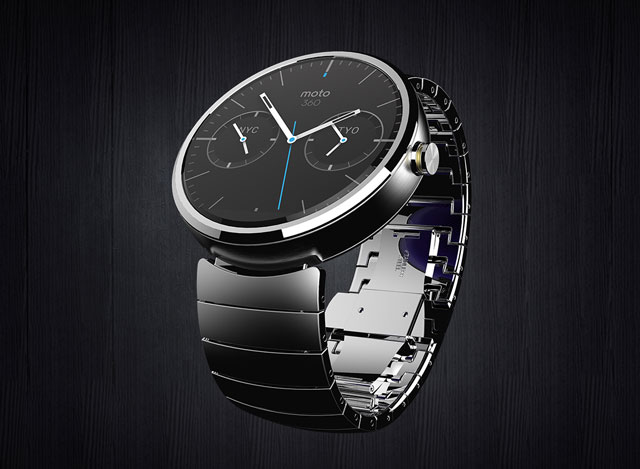
    People interested in tracking their health, physical activity levels and body functions can now choose from a plethora of sensor-embedded digital gadgets to monitor and measure their bodies. But the big question for many users is how their personal health and medical data are used.

    The Apple Watch, announced in detail yesterday, is just the latest among an array of wearable technologies using built-in sensors. Apple’s iOS 8 Health app provides a “dashboard” of health and fitness data for self-trackers. Apple has also developed a tool for developers, the HealthKit.

    When self-tracking was an activity limited to jotting down notes in a paper journal or diary, this information could easily be kept private. No one else could know the finer details of one’s sleeping or bowel habits, sex life, diet, heart rate, body weight or efforts to give up smoking.

    However, when people use digital devices that connect to computing cloud storage facilities or developers’ data archives, the user no longer owns or controls their own data. This personal and often very private information becomes part of vast digital data collections that are increasingly used by actors and agents in many different social domains.

    Personal health and medical data is now used for much more than just gathering information on oneself for one’s own private reasons. This information is a commodity that can be used for commercial, managerial and governmental purposes and on-sold to third parties.

    The US Federal Trade Commission, for example, recently found that 12 health and fitness apps shared user data with a total of 76 third parties. This data in some cases included geolocation, gender, names and e-mail addresses, exercise and diet habits and medical symptom searches.

    Self-tracking devices are now often used as surveillance technologies by organisations that are interested in monitoring people’s health and medical information.

    Health and life insurance companies in the US are beginning to use financial incentives to encourage their customers to use digital self-tracking devices. The data that are generated are used by the companies to calculate risk and customise their premiums for each individual customer.

    Some wearable tech developers have arrangements in place with workplaces to support wellness programmes using self-tracking technologies.

    Even the customer loyalty programs of some retailers are now incorporating members’ digitally-tracked personal health data into their rewards systems.

    New forms of discrimination are potentially created by the use of personal health data by other parties. The Federal Trade Commission’s report noted that combining personal data sets can lead to users being re-identified even when the data were originally anonymous.

    This could have serious repercussions. People may be denied credit, housing, employment or insurance, for example, if their medical data was readily accessible.

    Devices like the Fitbit Flex let people track their health
    Devices like the Fitbit Flex let people track their health

    Not only is personal data now used by second and third parties, the security of the data is in question. We know from the recent hacking into Apple’s iCloud allowing access to celebrities’ private nude photos that such digital storage facilities are not as secure as many users assume.

    A report published by the US Privacy Rights Clearinghouse found that mobile health and fitness app developers often have no privacy policy and send the data uploaded by app users to undisclosed third parties. Few of these developers encrypted all data connections and transmissions between the app and developer’s website.

    In response to concerns about self-trackers’ control of their personal data there have been calls for better access. One of the founders of the Quantified Self movement, Gary Wolf, recently released a statement on its website announcing a campaign on this issue. He wrote that:

    Now is the time to work hard to insure that the data we collect about ourselves using any kind of commercial, noncommercial, medical, or social service ought to be accessible to ourselves, as well as to our families, caregivers, and collaborators, in common formats using convenient protocols.

    While this is a worthy initiative, the question remains as to how users can challenge the vast power of the Internet empires like Apple, Google and Facebook.

    People need to think twice before downloading apps or using wearable devices if they are concerned about what happens to their personal health and medical information.The Conversation

    Read privacy policies and terms of use statements carefully for what they reveal about the developers’ use of personal data. If, as so often is the case, the developer does not include these details, then it may simply be a case of “user beware”.The Conversation

    • Deborah Lupton is centenary research professor at University of Canberra
    • This article was originally published on The Conversation

    Follow TechCentral on Google News Add TechCentral as your preferred source on Google


    Apple Apple Watch Deborah Lupton Fitbit
    WhatsApp YouTube
    Share. Facebook Twitter LinkedIn WhatsApp Telegram Email Copy Link
    Previous ArticleDeep divisions over Internet governance
    Next Article M-Net to launch new channels

    Related Posts

    Cook warns of unavoidable Apple price hikes - Tim Cook

    Cook warns of unavoidable Apple price hikes

    18 June 2026
    SpaceX vaults past Amazon and Microsoft's market value

    SpaceX vaults past Amazon and Microsoft in market value

    17 June 2026
    Apple finally overhauls Siri in late bid to catch AI rivals - Tim Cook

    Apple finally overhauls Siri in late bid to catch AI rivals

    9 June 2026
    Company News
    Moving past the pilot: inside the CloudZA and AWS closed-door AI executive roundtable

    CloudZA and AWS chart the road from AI pilots to production

    19 June 2026
    The role of edge infrastructure in South Africa's AI leap - OADC Open Access Data Centres

    The role of edge infrastructure in South Africa’s AI leap

    19 June 2026
    BBD's new FinOps white paper: your road map to kill cloud waste

    BBD’s new FinOps white paper: your road map to kill cloud waste

    19 June 2026
    Opinion
    Finish the job Mandela started - Farzam Ehsani

    Finish the job Mandela started

    18 June 2026
    The author, Fanie van Rooyen

    The US just showed it can switch off our AI

    17 June 2026
    The clock is ticking on South African banks' biggest advantage - Pambos Soteriades

    The clock is ticking on South African banks’ biggest advantage

    9 June 2026

    Subscribe to Updates

    Get the best South African technology news and analysis delivered to your e-mail inbox every morning.

    Latest Posts
    Another windfall for Datatec shareholders - Jens Montanana

    Another windfall for Datatec shareholders

    19 June 2026
    WhatsApp starts charging South Africans - for the extras

    WhatsApp starts charging South Africans – for the extras

    19 June 2026
    AI agents are coming to your Visa card

    AI agents are coming to your Visa card

    19 June 2026
    Naspers signals core earnings surge ahead of results

    Naspers signals core earnings surge ahead of results

    19 June 2026
    © 2009 - 2026 NewsCentral Media
    • Cookie policy (ZA)
    • TechCentral – privacy and Popia

    Type above and press Enter to search. Press Esc to cancel.

    Manage consent

    TechCentral uses cookies to enhance its offerings. Consenting to these technologies allows us to serve you better. Not consenting or withdrawing consent may adversely affect certain features and functions of the website.

    Functional Always active
    The technical storage or access is strictly necessary for the legitimate purpose of enabling the use of a specific service explicitly requested by the subscriber or user, or for the sole purpose of carrying out the transmission of a communication over an electronic communications network.
    Preferences
    The technical storage or access is necessary for the legitimate purpose of storing preferences that are not requested by the subscriber or user.
    Statistics
    The technical storage or access that is used exclusively for statistical purposes. The technical storage or access that is used exclusively for anonymous statistical purposes. Without a subpoena, voluntary compliance on the part of your Internet Service Provider, or additional records from a third party, information stored or retrieved for this purpose alone cannot usually be used to identify you.
    Marketing
    The technical storage or access is required to create user profiles to send advertising, or to track the user on a website or across several websites for similar marketing purposes.
    • Manage options
    • Manage services
    • Manage {vendor_count} vendors
    • Read more about these purposes
    View preferences
    • {title}
    • {title}
    • {title}