
Close Menu
TechCentralTechCentral

    Subscribe to the newsletter

    Get the best South African technology news and analysis delivered to your e-mail inbox every morning.

    Facebook X (Twitter) YouTube LinkedIn
    WhatsApp Facebook X (Twitter) LinkedIn YouTube
    TechCentralTechCentral
    • News
      South African tech's compounding debt problem

      South African tech’s compounding debt problem

      29 July 2026
      Russia charges Telegram founder with terrorism - Pavel Durov

      Russia charges Telegram founder with terrorism

      29 July 2026
      Green light for massive new Cape Town data centres

      Green light for massive new Cape Town data centres

      29 July 2026
      DStv's subscriber count has gone dark

      DStv’s subscriber count has gone dark

      28 July 2026
      Luno cutting a fifth of its workforce - South Africa not spared

      Luno cutting a fifth of its workforce – South Africa not spared

      28 July 2026
    • World
      Meta AI will now tell parents if their teen is in crisis

      Meta AI will now tell parents if their teen is in crisis

      17 July 2026
      IBM shares crash 25% as AI upends software spending - Arvind Krishna

      IBM shares crash 25% as AI upends software spending

      15 July 2026
      Jony Ive's first OpenAI device: an AI smart speaker - Jony Ive and Sam Altman

      Jony Ive’s first OpenAI device: an AI smart speaker

      15 July 2026
      Stripe, Advent in talks to buy PayPal for $53-billion

      Stripe, Advent in talks to buy PayPal for $53-billion

      15 July 2026
      Memory crisis sends smartphone market into steep decline

      Memory crisis sends smartphone market into steep decline

      13 July 2026
    • In-depth
      The plan to stop AI from breaking the world - Google DeepMind CEO Demis Hassabis. Image: John Sears

      The plan to stop AI from breaking the world

      16 July 2026
      The internet has a Strait of Hormuz problem

      The internet has a Strait of Hormuz problem

      15 July 2026
      AI boom sparks rally, frenzy and fear

      AI boom sparks rally, frenzy and fear

      11 June 2026
      Every plug-in hybrid on sale in South Africa, ranked by price - Lamborghini Temerario

      Every plug-in hybrid on sale in South Africa, ranked by price

      7 June 2026
      What Wi-Fi 8 will mean for wireless networks

      What Wi-Fi 8 will mean for wireless networks

      1 June 2026
    • TCS
      TCS+ | A smarter approach to cloud for South African businesses - Joel Chacko and Jonathan Oaker

      TCS+ | A smarter approach to cloud for South African businesses

      28 July 2026
      TCS | How Optasia lends billions to people banks can't see - Salvador Anglada

      TCS | How Optasia lends billions to people banks can’t see

      23 July 2026
      The rands-and-cents case for electric trucks - William Kelly Watts & Wheels with Wills

      The rands-and-cents case for electric trucks

      20 July 2026
      Watts & Wheels S1E7: 'Ferrari's EV breaks the internet'

      Watts & Wheels S1E7: ‘Ferrari’s EV breaks the internet’

      8 July 2026
      TCS | Pick n Pay's Enrico Ferigolli on Penny, the AI that shops for you

      TCS | Pick n Pay’s Enrico Ferigolli on Penny, the AI that shops for you

      2 July 2026
    • Opinion
      The author, Jannie van Zyl

      Selling vapour is corporate suicide in slow motion

      16 July 2026
      Brazil's online gambling crackdown is a lesson for South Africa

      How Amazon outmanoeuvred Starlink in South Africa

      15 July 2026
      The Popia problem with agentic AI - Herman Haasbroek

      The Popia problem with agentic AI

      14 July 2026
      The author, Fanie van Rooyen

      South Africa can still catch the AI wave – here’s how

      7 July 2026
      The author, Fanie van Rooyen

      The AI utopia South Africa can’t afford

      1 July 2026
    • Company Hubs
      • 1Stream
      • Africa Data Centres
      • AfriGIS
      • Altron Digital Business
      • Altron Document Solutions
      • Altron Group
      • Arctic Wolf
      • Ascent Technology
      • AvertITD
      • BBD
      • Braintree
      • CallMiner
      • CambriLearn
      • CM Telecom
      • Contactable
      • CYBER1 Solutions
      • Digicloud Africa
      • Digimune
      • Domains.co.za
      • ESET
      • Euphoria Telecom
      • HOSTAFRICA
      • Incredible Business
      • iONLINE
      • IQbusiness
      • Iris Network Systems
      • Kaspersky
      • LSD Open
      • Mitel
      • NEC XON
      • Netstar
      • Network Platforms
      • Next DLP
      • Ovations
      • Paracon
      • Paratus
      • Q-KON
      • SevenC
      • SkyWire
      • Solid8 Technologies
      • Telit Cinterion
      • Telviva
      • Tenable
      • Vertiv
      • Videri Digital
      • Vodacom Business
      • Vox
      • Wipro
      • Workday
      • XLink
    • Sections
      • AI and machine learning
      • Banking
      • Broadcasting and Media
      • Cloud services
      • Contact centres and CX
      • Cryptocurrencies
      • Education and skills
      • Electronics and hardware
      • Energy and sustainability
      • Enterprise software
      • Financial services
      • HealthTech
      • Information security
      • Internet and connectivity
      • Internet of Things
      • Investment
      • IT services
      • Lifestyle
      • Policy and regulation
      • Public sector
      • Retail and e-commerce
      • Satellite communications
      • Science
      • SMEs and start-ups
      • Social media
      • Talent and leadership
      • Telecoms
      • Watts & Wheels
    • Events
    • Advertise
    TechCentralTechCentral
    Home » Opinion » Alistair Fairweather » Facebook wants Africans to have free Internet

    Facebook wants Africans to have free Internet

    By Alistair Fairweather6 October 2015
    Twitter LinkedIn Facebook WhatsApp Email Telegram Copy Link
    News Alerts
    WhatsApp

    alistair-fairweather-180At the end of this year, Facebook will launch a satellite into orbit to provide free access to the Internet to the African continent. Yes, really. But what is a social networking service doing mucking around with satellites?

    To be completely accurate, Facebook has partnered with a Paris-based firm called Eutelsat (which was planning to launch the satellite anyway) rather than following through on rumoured plans to build its own.

    And it’s not Facebook per se that will be offering the service, but Internet.org, a non-profit organisation to which Facebook is the largest contributor. But the net result is the same: from the middle of 2016, a Facebook-backed organisation will be offering free Internet access across broad swathes of Africa (including South Africa).

    Internet.org is the pet project of Mark Zuckerberg, Facebook’s relentlessly optimistic and ambitious founder. In 2013, he published a whitepaper that argued for Internet connectivity as a human right, and outlined bold plans to “connect” the 5bn people who lack Internet access.

    Another Internet.org project that it being tested is enabling connectivity via extremely efficient unmanned drones, capable of staying aloft for months at a time. These drones will communicate with each other, and with base stations, using lasers. Yes, lasers!

    While there’s definitely a good deal of altruism behind Internet.org, there’s also some good business sense. Facebook already has 1,5bn active users. If it continues to grow at even half its current pace, it will literally run out of new customers within a decade.

    Facebook has proved exceptionally good at convincing people to use its services. If it spends a few billion dollars to bring another billion people online in the next decade, it’s fairly certain that a lot of them will become customers.

    This isn’t a particularly new idea. Google, which is also running out of new customers, has been working on similar projects since 2008. Its first foray into the field, Project Loon, will use weather balloons to offer Internet connectivity to isolated communities.

    Last year, Google bought Titan Aerospace, a company specialising in solar-powered drones, to do the same thing. So what looks like a whacky science project for a bored billionaire is really an arms race to find the next billion customers.

    The other members of Internet.org — Samsung, Ericsson, MediaTek, Opera Software, Nokia and Qualcomm — are in a similar boat to Facebook. They need access to new customers, and there are powerful interests and barriers preventing them from making progress.
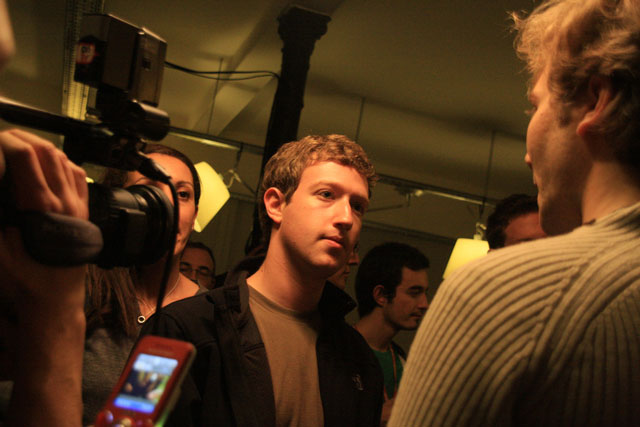
    Mark Zuckerberg of Facebook - image Ludovic Toinel
    Mark Zuckerberg of Facebook – image Ludovic Toinel

    Mobile network operators, for instance, tend to be extremely territorial and unwilling to collaborate with anyone they see as a potential competitor. This is particularly true in developing countries, where a few large networks have a stranglehold on connectivity and no real interest in expanding coverage. In this context, Google and Internet.org could be powerful forces for good.

    These projects are not without their critics. The Internet access they provide is heavily circumscribed and curated. This isn’t the Web most of us are used to; this is a carefully selected menu of services that will work well via their exotic delivery channels. Anything too bandwidth intensive is not even offered.

    To sceptical eyes, this kind of editorial influence amounts to an attack on network neutrality. Critics see it as a cynical land grab, herding poor people into a walled garden controlled entirely by a corporation.

    Teaching billions of people that Facebook equals the Internet does sound vaguely Orwellian, but the hecklers are largely overstating their point. Internet.org’s Free Basics platform offers access to a huge variety of services at zero cost to consumers.

    Yes, Facebook is prominently featured, and yes that is not entirely selfless. But if Facebook brings Internet access to even 10m people who would not otherwise have had it, then that’s an amazing public good.

    Of course, none of this is a reality yet. The engineering challenges are immense, and the logistical challenges are even bigger. Getting drones into the air and connected via lasers is one thing. Getting telecoms equipment into rural Africa is quite another.

    But let’s look past all the squabbling and the sniping, and see how truly exciting these ideas are. This is thinking on a scale that most people would never dare to explore. If any one of these projects becomes a reality, just think about what it could mean to the world. It’s hard to stay cynical when someone out there is busy making the impossible possible.

    • Subscribe to TechCentral’s free daily newsletter

    Follow TechCentral on Google News Add TechCentral as your preferred source on Google


    Alistair Fairweather Eutelsat Facebook Google Internet.org Mark Zuckerberg Project Loon
    WhatsApp YouTube
    Share. Facebook Twitter LinkedIn WhatsApp Telegram Email Copy Link
    Previous ArticleWhy I quit Android
    Next Article ANC urged to ditch nuclear plans

    Related Posts

    Africa's most popular phones have a tracking problem

    Africa’s most popular phones have a tracking problem

    24 July 2026
    The plan to stop AI from breaking the world - Google DeepMind CEO Demis Hassabis. Image: John Sears

    The plan to stop AI from breaking the world

    16 July 2026
    The lone ship guarding Africa's internet - Léon Thévenin

    The lone ship guarding Africa’s internet

    14 July 2026
    Company News
    The infrastructure behind smart account-based recurring payments in South Africa - Pay@ Capitec Pay

    The infrastructure behind smart account-based recurring payments in South Africa

    29 July 2026
    Acer at 50: how local assembly keeps prices down

    Acer at 50: how local assembly keeps prices down

    29 July 2026
    Altron appoints Collin Govender as MD of Altron HealthTech

    Altron appoints Collin Govender as MD of Altron HealthTech

    29 July 2026
    Opinion
    The author, Jannie van Zyl

    Selling vapour is corporate suicide in slow motion

    16 July 2026
    Brazil's online gambling crackdown is a lesson for South Africa

    How Amazon outmanoeuvred Starlink in South Africa

    15 July 2026
    The Popia problem with agentic AI - Herman Haasbroek

    The Popia problem with agentic AI

    14 July 2026

    Subscribe to Updates

    Get the best South African technology news and analysis delivered to your e-mail inbox every morning.

    Latest Posts
    South African tech's compounding debt problem

    South African tech’s compounding debt problem

    29 July 2026
    Russia charges Telegram founder with terrorism - Pavel Durov

    Russia charges Telegram founder with terrorism

    29 July 2026
    The infrastructure behind smart account-based recurring payments in South Africa - Pay@ Capitec Pay

    The infrastructure behind smart account-based recurring payments in South Africa

    29 July 2026
    Acer at 50: how local assembly keeps prices down

    Acer at 50: how local assembly keeps prices down

    29 July 2026
    © 2009 - 2026 NewsCentral Media
    Built and maintained by Chronon
    • Cookie policy (ZA)
    • TechCentral – privacy and Popia

    Type above and press Enter to search. Press Esc to cancel.

    Manage consent

    TechCentral uses cookies to enhance its offerings. Consenting to these technologies allows us to serve you better. Not consenting or withdrawing consent may adversely affect certain features and functions of the website.

    Functional Always active
    The technical storage or access is strictly necessary for the legitimate purpose of enabling the use of a specific service explicitly requested by the subscriber or user, or for the sole purpose of carrying out the transmission of a communication over an electronic communications network.
    Preferences
    The technical storage or access is necessary for the legitimate purpose of storing preferences that are not requested by the subscriber or user.
    Statistics
    The technical storage or access that is used exclusively for statistical purposes. The technical storage or access that is used exclusively for anonymous statistical purposes. Without a subpoena, voluntary compliance on the part of your Internet Service Provider, or additional records from a third party, information stored or retrieved for this purpose alone cannot usually be used to identify you.
    Marketing
    The technical storage or access is required to create user profiles to send advertising, or to track the user on a website or across several websites for similar marketing purposes.
    • Manage options
    • Manage services
    • Manage {vendor_count} vendors
    • Read more about these purposes
    View preferences
    • {title}
    • {title}
    • {title}