E.tv rubbishes DTV delay claims

Local electronics manufacturer Tellumat warned last week that there could be further delays to the digital terrestrial television migration process if the department of communications’ appeal fails, a claim e.tv has denied. By Craig Wilson.

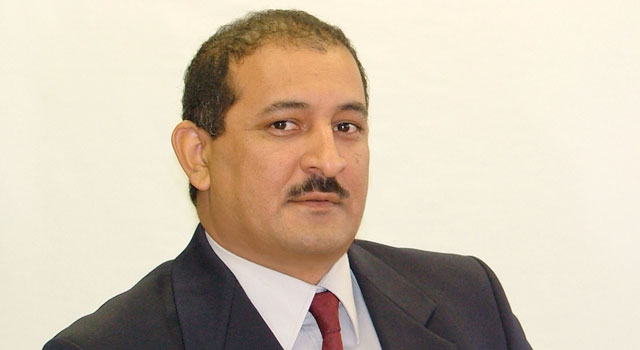
Tellumat's Shaun Hendricks

Tellumat’s Shaun Hendricks

Tellumat, one of the companies hoping to build set-top boxes for digital terrestrial television, says if e.tv succeeds in its bid for free-to-air broadcasters to manage the control system for the boxes, this could lead to further delays in the already long-delayed migration away from analogue broadcasts.

E.tv says the specifications for the set-top boxes were outlined before the dispute erupted and will not change should it and the SABC be allowed to administer the system, which manages encryption to ensure, among other things, that the set-top boxes that will be subsidised for poorer households are not stolen and sold across the border.

The department of communications last week said it would appeal against a high court judgment, handed down in December, which found that communications minister Dina Pule’s decision to appoint state-owned broadcasting signal distributor Sentech as the manager of the control system was “unlawful”.

E.tv says its court victory will help speed up the already massively delayed migration process, but according to Shaun Hendricks, a managing executive at Tellumat, the judgment will have the opposite effect.

He says the department of communications has worked with manufacturers like Tellumat on developing the digital broadcasting specification needed for set-top boxes for five years and that the control system forms part of this.

Hendricks says the control system has not been finalised because e.tv and the SABC will have to appoint a vendor for the system should the department of communications be unsuccessful in its appeal.

Hendricks says e.tv could, potentially, change the specification baseline. “This will cause more delays, and the millions in investment would be lost,” he says. “To move the specification even just slightly would incur significant extra costs and delays. To integrate new conditional access vendors into one’s solution could take six months to a year.”

E.tv, however, disputes Hendricks’s claims. “It is incorrect that the effect of the court decision is that the set-top box specification will change,” says group head of corporate affairs Vasili Vass. “The set-top box specification has been finalised … and there is no intention by the broadcasters to attempt to change this.”

In addition, the specification states that free-to-air broadcasters will be responsible for the control system, “so the court decision is entirely consistent with the [South African Bureau of Standards] specification”.

All parties, including manufacturers, were aware that the specification left the issue of the control system in the hands of the broadcasters, he says.  — (c) 2013 NewsCentral Media

Share this article

  • http://www.hostinsight.com/ hostinsight.com

    Oh just hurry already and free the airwaves so they can be put to better use.

  • TPM2

    investigate tellumat….

  • Chris

    I totally agree with Tellumat, ETV, I dont know why you are concerned about who controls the boxes. Im sure there is no money in controlling these boxes, so why are you so concerned about it?

  • http://www.facebook.com/kconradie Kobus Conradie

    I don’t understand… Are we going to use DVB-T2 or re-inventing the wheel again?
    DVB-T2 allows for CAM’s, why can’t each broadcaster decide his own control and whether they WANT to implement CAM?
    They don’t have to if they don’t want to!
    FTA, isn’t it???

  • http://www.facebook.com/kconradie Kobus Conradie

    If it is such a non-issue, why the fight??? I smell a rat… or two…

  • colinza

    +1. Instead of the DoC just doing things the correct way, *they* are choosing to waste time with appeals.

  • Noah

    Hi Chris,

    As someone who is involved in the project, there is a lot of money in the controlling of the box. This area of technology is normally referred to as “conditional access” (CA) and it is a multi billion Euro per year industry. There are several big players in this field and they are all trying to get the South African business…

    There have been forces within the system (broadcasters and government) who were and still are trying to sway the decision – their reasoning is questionable! I have no doubt that there are several fat brown envelopes floating around…

    The bottom line is that from a manufacturing point of view, these delays, changes in specifications and the uncertainty have a devastating effect on the business. It generates losses due to money invested without return or wasted all together (e.g. when the specification was changed from DVB-T to DVB-T2 – all the money spent on developing and prototyping the DVB-T STB was lost forever…). Not to mention the revenue lost from not being able to utilize the spectrum which should have already been available in South Africa…

    All parties must come to the table and settle this quickly, efficiently and with as little damage to the industry as possible!

  • Noah

    Hi Kobus,

    Unfortunately, its not that simple… Yes, CAM can be used, but this implies a more sophisticated and costly Set-Top-Box for starters. Then, over and above this, on the broadcasting side, each broadcaster will have to implement its own conditional access system (to broadcast the encrypted signal) which is a highly costly set-up and upkeep (several R millions to set-up and then very expensive yearly maintenance fees)…

    Regarding Free To Air (FTA), yes it is… BUT – if the government wants to protect its investment (in at least 5 million subsidized STBs), to continually promote and support the local ICT industry, create new sustainable jobs, prevent grey imports and prevent misuse of STBs – an access control system must be implemented…

    So it seems like the only solution to what has become a pathetic of a project is for the DoC, eTV, SABC, Sentech and ICASA (who were brought in by the court ruling) to sit together and come up with an agreement, out of court and without changing the STB specifications or the control of it… Else, we are heading towards another 6-12 months delay in the DTT migration and god knows how many more wasted millions of rands…

  • Greg Mahlknecht

    It’s sad that the government is so desperate to create jobs and so short-sighted that they’d force a nonstandard, bastardized implementation of DVB-T2 onto the country. The STB’s should be a temporary fix while the TVs with the old tuners work their way out of the system, not a permanent job creation programme.

    We all know how this is going to play out – this is going to create a bunch of manufacturing jobs in China, and a few jobs in the unloading-palletes-of-STBs-from-china-and-putting-them-into-retail-boxes sector here.

  • Noah

    Not entirely true, Greg…

    The SA standard (SANS-862) is mostly based on international standards…

    STBs are still incredibly popular in Europe (over 60% of the market) despite the fact that TVs with compatible tuners and CAM slots are readily available there…

    If the DoC follows through with their policy, the allocation process and continue to monitor the selected LOCAL manufacturers – many jobs will be created in the electronics industry as well as distribution, installation, maintenance and repairs… Not to mention the knowledge and expertise that have already been and will continue to be transferred/acquired to/by local companies who wish to succeed in the tender process.

    There are strict requirements regarding local content in this tender process and bidding companies must at least purchase the casing, cables and PCBs locally as well as PCB populating, assembly, final assembly and testing must be performed in country. I truly hope that all companies who will receive allocations will follow these guide lines which can only benefit our local industry and not just the Chinese (where most of the electronic components will come from, but unfortunately we do not have the local capability to produce these)…

    I also hope that political connections will not effect this tender and that only the relevant companies who can grow and contribute to the local economy will be chosen (and not Malema’s cousin or the likes)…

  • Greg Mahlknecht

    >The SA standard (SANS-862) is mostly based on international standards…

    Yes. Mostly. But until I can order a DVB-T2 dongle from eBay, or buy a Samsung TV with DVB-T2, plug it in and watch, like I could anywhere else in the world, we’re running a “bastardized implementation”. We might as well have gone with that Brazilian standard and saved years of delays.

    >If the DoC follows through with their policy, the allocation process and continue to monitor the selected LOCAL manufacturers

    I have very little faith in this process, and even if it works exactly as planned, it’s still stupid. Will the government be subsidizing these STBs forever? If we’d gone with the basic standard, that R5bil could have been cut in half straight away, and we could have invested our time and energy subsidizing and building an industry with international appeal that might have a chance of competing on a global stage.

  • http://www.facebook.com/kconradie Kobus Conradie

    OK, so if they don’t use a CAM, it means that it isn’t off-the-shelf DVB-T2?
    I can bring in a receiver for my car for ridiculous m

  • http://www.InTheCube.co.za/ InTheCube.co.za

    Yes, it sounds like they might be engrossed in corrupt dealings with the DoC, and stand to lose out if the DoC loses. Just another day in corrupt RSA. Viva cANCer, viva!

  • Andrew Fraser

    I’m sorry, I don’t agree. While I’m sure that this process will create some jobs, the fact is that those jobs will be created almost entirely at the cost of the taxpayer. It isn’t feasible to create an industry to satisfy such a small country’s demand. There is only a market of around 7 million STBs (based on number of households), of which 1.5 – 2 million already have digital TV in the form of DSTV or TopTV, and so have no requirement to add another box. In addition, once the initial demand is satisfied, the incremental demand will be much lower. i.e. Not sustainable for five manufacturers.

    If SA wanted to do this process right, it would have implemented DVB-T2 in a completely vanilla method, with clear standards on the format of the additional services (Extended information display etc.) and allowed the market to supply compatible decoders. Either in the form of STBs or in the form of DVB-T2 capable TV sets. If it was then required to subsidise some STBs, they could go to tender for the necessary requirement. Market forces would then ensure that the tax payer would be paying the real price for the STB, rather than a protectionist tax to artificially create jobs.

Why TechCentral?

We know that as a prospective advertiser, you are spoilt for choice. Our job is to demonstrate why TechCentral delivers the best return for your advertising spend.

TechCentral is South Africa’s online technology news leader. We don’t say that lightly. We believe we produce the country’s best and most insightful online tech news aimed at industry professionals and those interested in the fast-changing world of technology.

We provide news, reviews and comment, without fear or favour, that is of direct relevance to our fast-expanding audience. Proportionately, we provide the largest local audience of all technology-focused online publishers.

We do not constantly regurgitate press releases to draw in search engine traffic — we believe websites that do so are doing their readers and advertisers a disservice. Nor do we sell “editorial features”, offer advertising “press offices” or rely on online bulletin-board forums of questionable value to advertisers to bolster our traffic.

TechCentral, which is edited and written by award-winning South African journalists, cares about delivering top-quality content to draw in the business and consumer readers that are of most interest to technology advertisers.

We’d like the opportunity to demonstrate the value of directing a portion of your advertising budget to TechCentral, whether your company is in the technology field or not. Numerous opportunities exist for companies interested in reaching our audience of key decision-makers in South Africa’s dynamic information and communications technology sector. We offer packages that will deliver among the best returns on investment available in the online technology news space.

For more information about advertising opportunities, and how your organisation can benefit by publicising itself on TechCentral, please call us on 011-792-0449 during office hours. Or send us an e-mail and ask for our latest rate card and brochure.