DA backpedals on SunSpace criticism

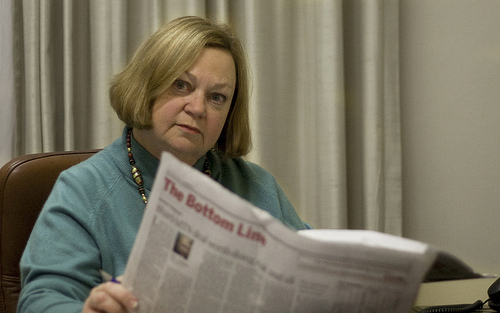
Marian Shinn, DA's shadhow minister for science & technology

The Democratic Alliance (DA) has apologised for its criticism of SunSpace and the SumbandilaSat satellite project.

Last week, the party’s shadow minister for science and technology, Marian Shinn, attacked the department of science & technology for its proposed investment in SumbandilaSat’s builder, SunSpace, which was approved by cabinet earlier this year.

SumbandilaSat was built by SunSpace as part of the department’s integrated satellite development project. The satellite is equipped with a high-resolution camera that is used to monitor agriculture, and to map infrastructure and the use of land across the country.

SumbandilaSat experienced a number of teething problems when it launched earlier this year. However, these early issues have all been overcome, says SunSpace business development director, Ron Olivier.

Shinn said in a media statement last week that  the satellite was riddled with problems and had permanent damage which “compromises its capability to deliver.”

She added that the DA did not understand why taxpayer money should be invested in a satellite manufacturing company that has been unable to deliver a robust working vehicle. 

However, Shinn has since sent a letter to SunSpace MD Bart Cilliers, apologising for her criticism of the company and the SumbandilaSat project. 

In her letter, she says that she accepts the reasoning behind SunSpace’s request for government investment in its business and promsies to make no further comments on the pending sale of a stake in the company to governnment. — Staff reporter, TechCentral

Share this article

  • Christo Viljoen

    Marian Shinn has sent a private letter to the MD of SunSpace, the Stellenbosch based firm who manufactured Sumbandilasat, apologising for her misguided press release, but she did not withdraw the statement, which can still be seen on the DA’s website, and her allegations still stand.
    In it she claims to be “reliably informed” that “about R52-million has been spent in commissioning costs and trying to correct damage caused during the launch.” This is totally untrue. Sumbandilasat was provided with adequate redundancy in it’s electronics to cater for the eventuality of radiation damage of it’s on board electronics. When a small part was damaged after launch, SunSpace’s engineers restructured the on board systems in an ingenious way to resolve the problems. The repairs did not cost R52 million as Shinn claims, but was done cost free as part of the commissioning contract. Since March Sumbandilasat has been operating 100% efficiently. It is no “flying turkey” and her claim that “this indicates that there must be something to hide about the perpetual problems this satellite is experiencing” is unfounded. There is nothing to hide and no “perpetual problems” Her claim that ““about half the capability of the satellite is lost” is totally untrue.
    Next, Shinn claims that the DA “does not see why public money should be invested in a satellite manufacturing company that has been unable to deliver a robust working vehicle” and advocates that SA purchases it’s microsatellites overseas. SunSpace provided a satellite to an overseas customer that has been operating faultlessly for 3 and a half years, delivering images of high quality on a daily basis. Her statement endangers the jobs of 60+ engineers and scientists at SunSpace, and shows scant understanding of the geopolitics of the satellite industry. Governments are the only clients for observation satellites; it makes no sense to operate a space agency isolated from a domestic satellite industry, and no such model exists anywhere in the world to my knowledge.
    Shinn further states: “The satellite provides a mere 10 minutes of transmission time per day, taking it over two weeks to process usable images.” This is totally untrue. Sumbandilasat on average provide 2 passes in the morning; one is used for downloading telemetry data and the other to upload instructions; the evening pass is used to download images, which are processed immediately. To date Sumbandilasat has provided 0,4 terabytes of useful image data, the record being 6 gigabytes on one day.
    Shinn lent out her ears to a malicious source of information and in an act of political opportunism repeated same in an extensive statement. She has done not only her own reputation as shadow minister of Science and Technologty, but also the DA irreparable harm. The damage done cannot simply be undone by any private letter of apology to the MD of the company concerned.

  • Tom Turkey

    The situation is rather muddled after the flying turkey lady’s initial press release, and subsequent private letter “unreservedly apologising” for the accusations she made in her press release, which has not been withdrawn, but is still to be seen on the DA’s website.
    Does she still believe that the “crippled Sumbandilasat” is a “flying turkey”, as the heading of her press release, with her name underneath, states? Is SunSpace still a “a satellite manufacturing company that has been unable to deliver a robust working vehicle.”? Must South Africa still purchase it’s microsatellies from overseas competing vendors?
    Don’t hide behind a “no further comment” excuse; we expect answers to these accusations, which Shinn maintains is based on a “reliable” source of information.
    Whe knows that she has blundered and made a serious error of judgement; she has harmed the infant South African space industry with her ill-informed statements from an unreliable and malicious source.

  • Marian Shinn

    Apologies for my late response. I’ve been overseas. I apologised for saying the satellite was a failure. It is not a failure – but is not working as efficiently as planned. It’s tumbling orbit is not an innovative design feature, but a failure of some components. And that the complications of ‘photographing’ it’s target areas are a result of the failure of some components during launch, and are not another innovative design feature. My ‘malicious’ sources are all people in the space arena – private interviews, conversations with the universities who were – at the time of my statement – still unable to use the satellite for their experiments – and oversight visits by the parliamentary portfolio committee. It was on these visits that I was told – in reply to my question after a presentation – that cost compromises made to some of the components – had caused their failure. Some of which are explained on the SumbandilaSat blog.
    My figure for the repairs of about R50 million were calculated guesswork on my part because, from our parliamentary oversight visit to science entities in Pretoria in September, we were told the project had cost R90million to date.

    At launch, we were told that SumbandilaSat had cost R26m to build and R12-million to launch. What was the rest of the R90-million spent on? Maybe this was what, Prof Viljoen says, was done for free as part of the commissioning contract. But the taxpayer will never know, because Minister Pandor has, on three opportunities (one of which was a promise she made before the National Assembly) to be open about the costs of this project. I asked for specific costs – ie what have we – the taxpayers – paid for this satellite. Her response was waffle about the benefits of space technology and skills development. There was not one piece of financial information about the costs – or return on investment – of the project. Why is she reticent to give us the numbers?
    My job, as an MP, is to have the government account publicly on whether it is spending taxpayers’ money appropriately. Taxpayers have the right to know what they are paying for and form a judgment on whether it is wise to spend untold sums of money buying shares in a commercial satellite manufacturing company, when private industry is shy of taking the risk. It’s not that SunSpace hasn’t tried the private investor route. Bart Cilliers told me at his office that they had exhausted all their local and international investor prospects before approaching government (ie the taxpayers) to give the company the long-term financial stability it needed to win contracts from other governments. Without this taxpayer shareholding it would struggle to survive. So, SunSpace will become another State Owned Enterprise.
    I’ve made no comments about the geopolitical sensitivity of the satellite industry because that’s a whole other subject. I’ve heard and understood the SunSpace argument on this, and believe it is fundamental to the decision about whether we go into the satellite building industry at all.
    Taxpayers’ funds – which is what the government spends – are under considerable pressure right now – and it’s likely to get worse over the short term as government throws money at delivery problems it doesn’t know how to fix (ie education, health, water, electricity). My question is, can we taxpayers afford to build our own satellites, when our use for them ( as Minister Pandor has assured me) is predominately for earth sciences, and that information is so readily available at ever-decreasing costs from the six satellites we already get that information from – and many others? We are using taxpayers’ money to grow a satellite manufacturing business. Is this the best use for it right now?
    By the way, the ‘flying turkey’ headline had absolutely nothing to do with me or the DA. I was appalled by it. It was written by one of the websites that used my statement.
    I dispute Prof Viljoen’s statement that only governments use observation satellites – there are many innovative satellite applications – some developed down the road from him – that have nothing to do with governments. And there seems to be plenty of available cheap space on these satellites. Also, just down the road from him, is a man who told me that SA didn’t need to build its own satellites for earth observation information, that there must be some other strategic imperative that was possibly influencing the share purchase in SunSpace. I’ll be watching.

Why TechCentral?

We know that as a prospective advertiser, you are spoilt for choice. Our job is to demonstrate why TechCentral delivers the best return for your advertising spend.

TechCentral is South Africa’s online technology news leader. We don’t say that lightly. We believe we produce the country’s best and most insightful online tech news aimed at industry professionals and those interested in the fast-changing world of technology.

We provide news, reviews and comment, without fear or favour, that is of direct relevance to our fast-expanding audience. Proportionately, we provide the largest local audience of all technology-focused online publishers.

We do not constantly regurgitate press releases to draw in search engine traffic — we believe websites that do so are doing their readers and advertisers a disservice. Nor do we sell “editorial features”, offer advertising “press offices” or rely on online bulletin-board forums of questionable value to advertisers to bolster our traffic.

TechCentral, which is edited and written by award-winning South African journalists, cares about delivering top-quality content to draw in the business and consumer readers that are of most interest to technology advertisers.

We’d like the opportunity to demonstrate the value of directing a portion of your advertising budget to TechCentral, whether your company is in the technology field or not. Numerous opportunities exist for companies interested in reaching our audience of key decision-makers in South Africa’s dynamic information and communications technology sector. We offer packages that will deliver among the best returns on investment available in the online technology news space.

For more information about advertising opportunities, and how your organisation can benefit by publicising itself on TechCentral, please call us on 011-792-0449 during office hours. Or send us an e-mail and ask for our latest rate card and brochure.