Close Menu
TechCentralTechCentral

    Subscribe to the newsletter

    Get the best South African technology news and analysis delivered to your e-mail inbox every morning.

    Facebook X (Twitter) YouTube LinkedIn
    WhatsApp Facebook X (Twitter) LinkedIn YouTube
    TechCentralTechCentral
    • News
      Capitec is setting traps for scammers' mule accounts - Andrew Baker

      Capitec is setting traps for scammers’ mule accounts

      12 October 2026
      Free cybercrime helpline goes live in South Africa - Anna Collard

      Free cybercrime helpline goes live in South Africa

      12 October 2026
      Sars to pay Microsoft and IBM R2.75-billion in sole-source deals

      Sars to pay Microsoft and IBM R2.75-billion in sole-source deals

      12 October 2026
      Microsoft president says milk faces more regulation than AI - President Cyril Ramaphosa with Microsoft president and vice chairman Brad Smith

      Microsoft president says milk faces more regulation than AI

      12 October 2026
      Xiaomi wants to sell South Africans a lot more than phones - Tianshi Lv

      Xiaomi wants to sell South Africans a lot more than phones

      12 October 2026
    • World
      AI is now holding up the world economy, says IMF

      AI is now propping up the world economy, says IMF

      12 October 2026
      SpaceX takes aim at US wireless carriers with spectrum acquisition

      Starlink is coming for your mobile operator

      9 October 2026
      The AI PC is finally here. It's just very expensive - Jensen Huang, Satya Nadella

      The AI PC is finally here. It’s just very expensive

      8 October 2026
      The memory crunch is making Samsung fabulously rich

      The memory crunch is making Samsung fabulously rich

      8 October 2026
      SpaceX to borrow $40-billion to buy Nvidia chips

      SpaceX to borrow $40-billion to buy Nvidia chips

      7 October 2026
    • In-depth

      10 days that changed the course of AI

      21 September 2026
      Meta to the AI industry: slow down without us - Mark Zuckerberg

      Meta to the AI industry: slow down without us

      16 September 2026
      Google DeepMind CEO Demis Hassabis. Image: John Sears

      The plan to stop AI from breaking the world

      16 July 2026
      The internet has a Strait of Hormuz problem

      The internet has a Strait of Hormuz problem

      15 July 2026
      AI boom sparks rally, frenzy and fear

      AI boom sparks rally, frenzy and fear

      11 June 2026
    • TCS
      W&W | LDV's Gerhard Moolman on electric bakkies, fleet orders and 'school fees'

      W&W | LDV’s Gerhard Moolman on electric bakkies and fleets

      9 October 2026
      TCS | Frogfoot sees bigger fibre deals coming - TechCentral Show guests Abraham van der Merwe and Shane Chorley

      TCS | Frogfoot sees bigger fibre deals coming

      8 October 2026
      Meet the CIO | Vodacom's Mohamed Sami on the agentic future

      Meet the CIO | Vodacom’s Mohamed Sami on the agentic future

      5 October 2026
      Lexi Novitske, general partner at Norrsken22, on the TechCentral Show

      TCS | Norrsken22’s Lexi Novitske on how China is winning African tech

      1 October 2026
      TCS | Dominic White and Adam Ely on AI agents going rogue

      TCS | Dominic White and Adam Ely on AI agents going rogue

      29 September 2026
    • Opinion
      When a machine can choose, who does it become? Fanie van Rooyen

      When a machine can choose, who does it become?

      9 October 2026
      Let South Africans jailbreak their way to digital sovereignty - Dirk de Vos

      Let South Africans jailbreak their way to digital sovereignty

      5 October 2026
      South Africa's next energy crisis is in the accounts department - Craig Holmes

      South Africa’s next energy crisis is in the accounts department

      29 September 2026
      The steam engine lesson AI doomsayers keep missing - Sam Clarke

      The steam engine lesson AI doomsayers keep missing

      28 September 2026
      Let South Africans jailbreak their way to digital sovereignty - Dirk de Vos

      Regulating AI: apply the laws we have first

      21 September 2026
    • Company News
      • 1Stream
      • Africa Data Centres
      • AfriGIS
      • Altron Digital Business
      • Altron Document Solutions
      • Altron Group
      • Arctic Wolf
      • Ascent Technology
      • AvertITD
      • BBD
      • Braintree
      • CallMiner
      • CambriLearn
      • CM.com
      • Contactable
      • CYBER1 Solutions
      • Digicloud Africa
      • Digimune
      • Domains.co.za
      • ESET
      • Euphoria Telecom
      • HOSTAFRICA
      • Incredible Business
      • iONLINE
      • IQbusiness
      • Iris Network Systems
      • Kaspersky
      • LSD Open
      • Mitel
      • NEC XON
      • Netstar
      • Network Platforms
      • Next DLP
      • Ovations
      • Paracon
      • Paratus
      • Publishared
      • Q-KON
      • SevenC
      • SkyWire
      • Solid8 Technologies
      • Telit Cinterion
      • Telviva
      • Tenable
      • Vertiv
      • Videri Digital
      • Vodacom Business
      • Vox
      • Wipro
      • Workday
      • XLink
    • Sections
      • AI and machine learning
      • Banking
      • Broadcasting and Media
      • Cloud services
      • Contact centres and CX
      • Cryptocurrencies
      • Education and skills
      • Electronics and hardware
      • Energy and sustainability
      • Enterprise software
      • Financial services
      • HealthTech
      • Information security
      • Internet and connectivity
      • Internet of Things
      • Investment
      • IT services
      • Lifestyle
      • Policy and regulation
      • Public sector
      • Retail and e-commerce
      • Satellite communications
      • Science
      • SMEs and start-ups
      • Social media
      • Talent and leadership
      • Telecoms
      • Watts & Wheels
    • Events
    • Advertise
    TechCentralTechCentral
    Home » Opinion » Russell Southwood » Challengers may own Africa’s Internet future

    Challengers may own Africa’s Internet future

    By Russell Southwood10 February 2014
    Twitter LinkedIn Facebook WhatsApp Email Telegram Copy Link
    Get breaking news on WhatsApp

    Russell-Southwood-180For more than a year, I have been saying to anyone that will listen that long-term evolution and video will be a game changer in Africa. The logic for arguing this case was based on the fact that YouTube was in the top five of every country measured by Alexa, despite poor Internet access speeds. You only had to imagine the demand if you took away the speed constraint.

    I’ve been about a week in Kampala in Uganda with a Mi-Fi device supplied by Smile Telecoms. The device allows me to run my smartphone, laptop and iPad using a shared data connection. This means none of that irritation of some hotels charging me more for each connected device in that rather grasping way I’ve come to associate with some African hotel Wi-Fi.

    The Mi-Fi is about the size of an iPod and creates its own Wi-Fi hotspot. You turn it on and pop it in your pocket, and you have Wi-Fi wherever there’s mobile coverage. My driver and I couldn’t find a particular address. Whip out the iPad and there’s the little blue dot on Google maps guiding us in. You can’t do this with data roaming because you’d need a financial facility underwritten by three Wall Street banks to pay for it. It works indoors or outdoors, which is not something every WiMax vendor could say with confidence.

    But the real kicker is that when you use video, it starts playing straight away and runs all the way through to the end. Yes, that’s how online video’s meant to behave and, once someone start’s showing off that Chameleone video on their phone, everyone of a certain age is going to want it, too.

    Before Christmas, I wrote of a conversation with an international bandwidth provider who was saying that within a relatively short space of time, corporate customers would experience the same bandwidth environment as users have in the US and Europe. For the first time, I’ve actually had a bandwidth speed in Africa that was the same (and at times faster) than my home fixed broadband connection in the UK. Yes, it can be done for household and individual customers as well.

    Smile is a challenger Internet service provider with tens of thousands of subscribers, not a mobile operator with millions. There are 1,5m data users in Uganda and Smile has barely touched the surface. Its data network has been built from scratch and is used only for data. It’s not several levels of alphanumeric soup (3G, HSDPA) strapped together and finding its way through an underpowered network that was originally designed for voice, not data. In Uganda, both Orange (which has a good reputation for data) and MTN (which does not) are offering LTE, but I didn’t meet anyone with an LTE data connection or LTE mobile handset from either operator.

    This gap, and the mobile operators’ lack of access to the right spectrum, offers an intriguing opportunity for insurgent challengers. They’re doing what WiMax kept promising, but never delivered. Currently, Smile has covered the greater Kampala area and all the way down to the airport at Entebbe. It will be available 15 different regions this year.

    LTE routers are still not cheap, but prices are falling. Smile sells them with 5GB of data for about US$96 and. The only drawback is they eat battery like a smartphone.

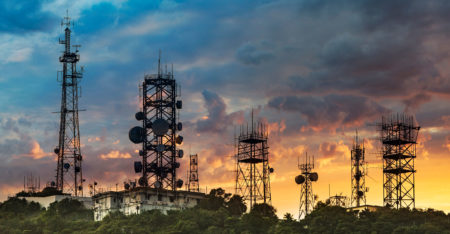
    cell-tower-640

    Fiona McGloin, Smile’s country manager for Uganda and Tanzania, says that at 250MB/day, average use is stronger than expected. YouTube is popular, and the network’s power users tend to have a lot Apple devices or are expatriates streaming TV from their home countries. The latest Apple iPad is capable of using the 800MHz spectrum that Smile has access to. Tablet growth in Uganda is strong.

    Customers — Smile won’t say how many there are — are a mix of companies, individuals and high-income households.

    Bandwidth is sold in bundles, and individuals tend to find themselves using more at first, and then throttling back their consumption. Prices vary from $10 for 500MB to $211 for 500GB and have been designed to reflect existing 3G prices. Selling capacity in this way (which is common across all of the industry) still smacks of rationing, but that will change as prices cascade as inevitably they will.

    The challenge for the legacy mobile operators is how they keep up with the implications of this new bandwidth horizon. The challenge for the insurgent challengers is to prove that they can break out of being eternal corporate service providers and actually capture hundreds of thousands of customers.

    • Russell Southwood is head of Balancing Act Africa

    Add TechCentral as a preferred source on GoogleFollow TechCentral on Google NewsGet breaking news on WhatsApp


    Fiona McGloin Russell Southwood Smile Smile Telecommunications Smile Telecoms
    WhatsApp YouTube
    Share. Facebook Twitter LinkedIn WhatsApp Telegram Email Copy Link
    Previous ArticleVodacom, MTN put profits before people
    Next Article Altech wins R1,2bn Gauteng broadband tender

    Related Posts

    Sub-Saharan data centre roll-out slows as smaller players falter

    Sub-Saharan data centre roll-out slows as smaller players falter

    28 April 2026

    TC|Daily | Russell Southwood on the African telecoms revolution

    14 November 2022

    African telecoms at a crossroads: what needs to happen next

    16 August 2019
    Company News
    Why fintechs need an insurance partner they can trust - Hollard Insurance

    Why fintechs need an insurance partner they can trust

    8 October 2026
    Reusable KYC means the end of 'please upload your ID' - Contactable

    Reusable KYC means the end of ‘please upload your ID’

    8 October 2026
    Eliminating the 'toggle tax': how CRM integration changes customer experience - Martie de Beer

    Eliminating the ‘toggle tax’: how CRM integration changes customer experience

    8 October 2026
    Opinion
    When a machine can choose, who does it become? Fanie van Rooyen

    When a machine can choose, who does it become?

    9 October 2026
    Let South Africans jailbreak their way to digital sovereignty - Dirk de Vos

    Let South Africans jailbreak their way to digital sovereignty

    5 October 2026
    South Africa's next energy crisis is in the accounts department - Craig Holmes

    South Africa’s next energy crisis is in the accounts department

    29 September 2026

    Subscribe to Updates

    Get the best South African technology news and analysis delivered to your e-mail inbox every morning.

    Latest Posts
    Capitec is setting traps for scammers' mule accounts - Andrew Baker

    Capitec is setting traps for scammers’ mule accounts

    12 October 2026
    Free cybercrime helpline goes live in South Africa - Anna Collard

    Free cybercrime helpline goes live in South Africa

    12 October 2026
    Sars to pay Microsoft and IBM R2.75-billion in sole-source deals

    Sars to pay Microsoft and IBM R2.75-billion in sole-source deals

    12 October 2026
    Microsoft president says milk faces more regulation than AI - President Cyril Ramaphosa with Microsoft president and vice chairman Brad Smith

    Microsoft president says milk faces more regulation than AI

    12 October 2026
    © 2009 - 2026 NewsCentral Media
    Built and maintained by Chronon
    • Cookie policy (ZA)
    • TechCentral – privacy and Popia

    Type above and press Enter to search. Press Esc to cancel.

    Manage consent

    TechCentral uses cookies to enhance its offerings. Consenting to these technologies allows us to serve you better. Not consenting or withdrawing consent may adversely affect certain features and functions of the website.

    Functional Always active
    The technical storage or access is strictly necessary for the legitimate purpose of enabling the use of a specific service explicitly requested by the subscriber or user, or for the sole purpose of carrying out the transmission of a communication over an electronic communications network.
    Preferences
    The technical storage or access is necessary for the legitimate purpose of storing preferences that are not requested by the subscriber or user.
    Statistics
    The technical storage or access that is used exclusively for statistical purposes. The technical storage or access that is used exclusively for anonymous statistical purposes. Without a subpoena, voluntary compliance on the part of your Internet Service Provider, or additional records from a third party, information stored or retrieved for this purpose alone cannot usually be used to identify you.
    Marketing
    The technical storage or access is required to create user profiles to send advertising, or to track the user on a website or across several websites for similar marketing purposes.
    • Manage options
    • Manage services
    • Manage {vendor_count} vendors
    • Read more about these purposes
    View preferences
    • {title}
    • {title}
    • {title}
    🇿🇦 Sign up to the TechCentral newsletter