Close Menu
TechCentralTechCentral

    Subscribe to the newsletter

    Get the best South African technology news and analysis delivered to your e-mail inbox every morning.

    Facebook X (Twitter) YouTube LinkedIn
    WhatsApp Facebook X (Twitter) LinkedIn YouTube
    TechCentralTechCentral
    • News
      Pepkor builds R21-billion fintech giant - and plans to list it - Pieter Erasmus

      Pepkor builds R21-billion fintech giant – and plans to list it

      22 July 2026
      Samsung Fold8 series unveiled as folding phone war looms

      Samsung Fold8 series unveiled as folding phone war looms

      22 July 2026
      Everything you wanted to know about EVs but were afraid to ask

      Everything you wanted to know about EVs but were afraid to ask

      22 July 2026
      Bitcoin at $65 000: stalled, or simply early?

      Bitcoin at $65 000: stalled, or simply early?

      22 July 2026
      Smart ID renewals go mobile - Absa CEO Kenny Fihla with home affairs minister Leon Schreiber

      Smart ID renewals go mobile

      22 July 2026
    • World
      Meta AI will now tell parents if their teen is in crisis

      Meta AI will now tell parents if their teen is in crisis

      17 July 2026
      IBM shares crash 25% as AI upends software spending - Arvind Krishna

      IBM shares crash 25% as AI upends software spending

      15 July 2026
      Jony Ive's first OpenAI device: an AI smart speaker - Jony Ive and Sam Altman

      Jony Ive’s first OpenAI device: an AI smart speaker

      15 July 2026
      Stripe, Advent in talks to buy PayPal for $53-billion

      Stripe, Advent in talks to buy PayPal for $53-billion

      15 July 2026
      Memory crisis sends smartphone market into steep decline

      Memory crisis sends smartphone market into steep decline

      13 July 2026
    • In-depth
      The plan to stop AI from breaking the world - Google DeepMind CEO Demis Hassabis. Image: John Sears

      The plan to stop AI from breaking the world

      16 July 2026
      The internet has a Strait of Hormuz problem

      The internet has a Strait of Hormuz problem

      15 July 2026
      AI boom sparks rally, frenzy and fear

      AI boom sparks rally, frenzy and fear

      11 June 2026
      Every plug-in hybrid on sale in South Africa, ranked by price - Lamborghini Temerario

      Every plug-in hybrid on sale in South Africa, ranked by price

      7 June 2026
      What Wi-Fi 8 will mean for wireless networks

      What Wi-Fi 8 will mean for wireless networks

      1 June 2026
    • TCS
      The rands-and-cents case for electric trucks - William Kelly Watts & Wheels with Wills

      The rands-and-cents case for electric trucks

      20 July 2026
      Watts & Wheels S1E7: 'Ferrari's EV breaks the internet'

      Watts & Wheels S1E7: ‘Ferrari’s EV breaks the internet’

      8 July 2026
      TCS+ | How Tracker is turning vehicle data into business strategy - Silvia Schollenberger

      TCS+ | How Tracker is turning vehicle data into business strategy

      1 July 2026
      TCS+ | IBM Bob: an AI-powered 'development partner' for the enterprise - David Spurway

      TCS+ | IBM Bob: an AI-powered development partner for the enterprise

      30 June 2026
      Watts & Wheels S1E6: 'A flawless Alfa and a bakkie that divides'

      Watts & Wheels S1E6: ‘A flawless Alfa and a bakkie that divides’

      17 June 2026
    • Opinion
      Selling vapour is corporate suicide in slow motion - Jannie van Zyl

      Selling vapour is corporate suicide in slow motion

      16 July 2026
      Brazil's online gambling crackdown is a lesson for South Africa

      How Amazon outmanoeuvred Starlink in South Africa

      15 July 2026
      The Popia problem with agentic AI - Herman Haasbroek

      The Popia problem with agentic AI

      14 July 2026
      The author, Fanie van Rooyen

      South Africa can still catch the AI wave – here’s how

      7 July 2026
      The author, Fanie van Rooyen

      The AI utopia South Africa can’t afford

      1 July 2026
    • Company Hubs
      • 1Stream
      • Africa Data Centres
      • AfriGIS
      • Altron Digital Business
      • Altron Document Solutions
      • Altron Group
      • Arctic Wolf
      • Ascent Technology
      • AvertITD
      • BBD
      • Braintree
      • CallMiner
      • CambriLearn
      • CM Telecom
      • Contactable
      • CYBER1 Solutions
      • Digicloud Africa
      • Digimune
      • Domains.co.za
      • ESET
      • Euphoria Telecom
      • HOSTAFRICA
      • Incredible Business
      • iONLINE
      • IQbusiness
      • Iris Network Systems
      • Kaspersky
      • LSD Open
      • Mitel
      • NEC XON
      • Netstar
      • Network Platforms
      • Next DLP
      • Ovations
      • Paracon
      • Paratus
      • Q-KON
      • SevenC
      • SkyWire
      • Solid8 Technologies
      • Telit Cinterion
      • Telviva
      • Tenable
      • Vertiv
      • Videri Digital
      • Vodacom Business
      • Vox
      • Wipro
      • Workday
      • XLink
    • Sections
      • AI and machine learning
      • Banking
      • Broadcasting and Media
      • Cloud services
      • Contact centres and CX
      • Cryptocurrencies
      • Education and skills
      • Electronics and hardware
      • Energy and sustainability
      • Enterprise software
      • Financial services
      • HealthTech
      • Information security
      • Internet and connectivity
      • Internet of Things
      • Investment
      • IT services
      • Lifestyle
      • Policy and regulation
      • Public sector
      • Retail and e-commerce
      • Satellite communications
      • Science
      • SMEs and start-ups
      • Social media
      • Talent and leadership
      • Telecoms
      • Watts & Wheels
    • Events
    • Advertise
    TechCentralTechCentral
    Home » Opinion » Russell Southwood » Cameroon shows Africa how not to do it

    Cameroon shows Africa how not to do it

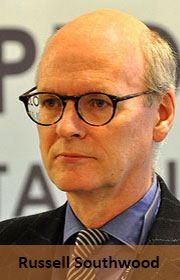
    By Russell Southwood22 January 2014
    Twitter LinkedIn Facebook WhatsApp Email Telegram Copy Link
    News Alerts
    WhatsApp

    Russell-Southwood-180Cameroon’s government is hanging on to its monopoly state telecommunications provider, Camtel, and the result is that the country now has some of the highest international and national wholesale fibre rates on the continent. The country refused World Bank funding because it would have meant creating a separate wholesale consortium offering competitive prices.

    The country’s power utility, AES Sonel, has long harboured an ambition to enter the national fibre wholesale market. Evidence from many countries on the continent is that this would lead to lower prices. Now the regulator, ART — which is not known for its independence — and the Cameroon government are trying to prevent it from getting a licence. In these circumstances, it is hard to take seriously any government rhetoric about wanting to become an information society, one that embraces e-government.

    Let’s take a closer look at the situation. AES Sonel has laid more than 700km of fibre because, as most power utilities do, it wants to be able to manage and control its power network using fibre links. The network was started in 2011 and has 96 strands. Globally, in competitive markets, it is accepted that rather than simply laying just enough for this task, additional capacity be included at very little additional cost. AES Sonel then applied for a licence to become an independent provider of wholesale fibre.

    A source at the country’s posts and telecoms ministry told me that government asked AES Sonel to focus more on electricity and donate its surplus fibre-optic facilities to the state. It felt that telecoms should remain in the hands of telecoms operators and that this particular function should remain a monopoly of the state.

    Camtel’s monopoly in this area was covered by decree 005/MPT of 18 May 2001. This concession by decree was renewed every two years until 2007, so there is currently no law protecting its monopoly except “the government says so”. In 2009, MTN Cameroon attempted to find out whether the monopoly could be made to disappear in practice by starting to roll out an 81km link in Douala, the largest city in the West African nation.

    But regulator ART closed this project down with the threat of heavy fines. In June 2013, it issued a warning to Creolink, an Internet service provider, and to AES Sonel to stop offering wholesale fibre to the telecoms market.

    Image: Nicolas Raymond (CC BY 2.0)
    Image: Nicolas Raymond (CC BY 2.0)

    In November 2013, AES sold the business outright to the UK-based investment fund Actis. Before Christmas, AES Sonel had another go at getting a wholesale fibre licence. In the current discussion, AES Sonel has taken several posts and telecoms ministry officials to Brazil to show them a network they already run as a wholesale operator. It could as easily have taken them to any number of African countries where this kind of third-party carrier competition is already working well.

    In lock-step, the regulator and government seem to be arguing that AES Sonel should not have built the fibre in the first place and, should it persists with the licence application, the inevitable consequence will be a big fine. In other words, they’re saying the company should back off, a form of state-sponsored bullying that undermines the notion of independent regulatory frameworks.

    There is no law or decree covering Camtel’s wholesale monopoly — it includes the international cable landing station, but that’s another story — so opening up wholesale competition would both improve Camtel’s less-than-perfect service and lead to prices dropping sharply. The government wants AES Sonel to hand over its fibre capacity to Camtel to maintain the monopoly. Paul Biya, Cameroon’s president, should wake up and do the right thing for the country’s citizens.

    • Russell Southwood is head of Balancing Act Africa

    Follow TechCentral on Google News Add TechCentral as your preferred source on Google


    AES Sonel Camtel Creolink Paul Biya Russell Southwood
    WhatsApp YouTube
    Share. Facebook Twitter LinkedIn WhatsApp Telegram Email Copy Link
    Previous ArticleSA must tackle net neutrality
    Next Article E-tolls operational after Sanral incident

    Related Posts

    Sub-Saharan data centre roll-out slows as smaller players falter

    Sub-Saharan data centre roll-out slows as smaller players falter

    28 April 2026

    TC|Daily | Russell Southwood on the African telecoms revolution

    14 November 2022

    African telecoms at a crossroads: what needs to happen next

    16 August 2019
    Company News
    Samsung's new Galaxy Z series: foldables, perfected

    Samsung’s new Galaxy Z series: foldables, perfected

    22 July 2026
    Is your cloud PBX a hacker's back door? Centracom

    Is your cloud PBX a hacker’s back door?

    22 July 2026

    Africa’s biggest entrepreneurship gathering heads for Cape Town

    22 July 2026
    Opinion
    Selling vapour is corporate suicide in slow motion - Jannie van Zyl

    Selling vapour is corporate suicide in slow motion

    16 July 2026
    Brazil's online gambling crackdown is a lesson for South Africa

    How Amazon outmanoeuvred Starlink in South Africa

    15 July 2026
    The Popia problem with agentic AI - Herman Haasbroek

    The Popia problem with agentic AI

    14 July 2026

    Subscribe to Updates

    Get the best South African technology news and analysis delivered to your e-mail inbox every morning.

    Latest Posts
    Pepkor builds R21-billion fintech giant - and plans to list it - Pieter Erasmus

    Pepkor builds R21-billion fintech giant – and plans to list it

    22 July 2026
    Samsung Fold8 series unveiled as folding phone war looms

    Samsung Fold8 series unveiled as folding phone war looms

    22 July 2026
    Everything you wanted to know about EVs but were afraid to ask

    Everything you wanted to know about EVs but were afraid to ask

    22 July 2026
    Bitcoin at $65 000: stalled, or simply early?

    Bitcoin at $65 000: stalled, or simply early?

    22 July 2026
    © 2009 - 2026 NewsCentral Media
    Built and maintained by Chronon
    • Cookie policy (ZA)
    • TechCentral – privacy and Popia

    Type above and press Enter to search. Press Esc to cancel.

    Manage consent

    TechCentral uses cookies to enhance its offerings. Consenting to these technologies allows us to serve you better. Not consenting or withdrawing consent may adversely affect certain features and functions of the website.

    Functional Always active
    The technical storage or access is strictly necessary for the legitimate purpose of enabling the use of a specific service explicitly requested by the subscriber or user, or for the sole purpose of carrying out the transmission of a communication over an electronic communications network.
    Preferences
    The technical storage or access is necessary for the legitimate purpose of storing preferences that are not requested by the subscriber or user.
    Statistics
    The technical storage or access that is used exclusively for statistical purposes. The technical storage or access that is used exclusively for anonymous statistical purposes. Without a subpoena, voluntary compliance on the part of your Internet Service Provider, or additional records from a third party, information stored or retrieved for this purpose alone cannot usually be used to identify you.
    Marketing
    The technical storage or access is required to create user profiles to send advertising, or to track the user on a website or across several websites for similar marketing purposes.
    • Manage options
    • Manage services
    • Manage {vendor_count} vendors
    • Read more about these purposes
    View preferences
    • {title}
    • {title}
    • {title}