Close Menu
TechCentralTechCentral

    Subscribe to the newsletter

    Get the best South African technology news and analysis delivered to your e-mail inbox every morning.

    Facebook X (Twitter) YouTube LinkedIn
    WhatsApp Facebook X (Twitter) LinkedIn YouTube
    TechCentralTechCentral
    • News
      Luno cutting a fifth of its workforce - South Africa not spared

      Luno cutting a fifth of its workforce – South Africa not spared

      28 July 2026
      The tech master plan for the Cape Winelands Airport

      The tech master plan for the Cape Winelands Airport

      28 July 2026
      Canal+ concedes MultiChoice turnaround is not won - Maxime Saada

      Canal+ concedes MultiChoice turnaround is not won

      28 July 2026
      Canal+ bought out Showmax minority shareholder before killing it

      Canal+ bought out Showmax minority shareholder before killing it

      28 July 2026
      DStv's subscriber count has gone dark

      DStv’s subscriber count has gone dark

      28 July 2026
    • World
      Meta AI will now tell parents if their teen is in crisis

      Meta AI will now tell parents if their teen is in crisis

      17 July 2026
      IBM shares crash 25% as AI upends software spending - Arvind Krishna

      IBM shares crash 25% as AI upends software spending

      15 July 2026
      Jony Ive's first OpenAI device: an AI smart speaker - Jony Ive and Sam Altman

      Jony Ive’s first OpenAI device: an AI smart speaker

      15 July 2026
      Stripe, Advent in talks to buy PayPal for $53-billion

      Stripe, Advent in talks to buy PayPal for $53-billion

      15 July 2026
      Memory crisis sends smartphone market into steep decline

      Memory crisis sends smartphone market into steep decline

      13 July 2026
    • In-depth
      The plan to stop AI from breaking the world - Google DeepMind CEO Demis Hassabis. Image: John Sears

      The plan to stop AI from breaking the world

      16 July 2026
      The internet has a Strait of Hormuz problem

      The internet has a Strait of Hormuz problem

      15 July 2026
      AI boom sparks rally, frenzy and fear

      AI boom sparks rally, frenzy and fear

      11 June 2026
      Every plug-in hybrid on sale in South Africa, ranked by price - Lamborghini Temerario

      Every plug-in hybrid on sale in South Africa, ranked by price

      7 June 2026
      What Wi-Fi 8 will mean for wireless networks

      What Wi-Fi 8 will mean for wireless networks

      1 June 2026
    • TCS
      TCS+ | A smarter approach to cloud for South African businesses - Joel Chacko and Jonathan Oaker

      TCS+ | A smarter approach to cloud for South African businesses

      28 July 2026
      TCS | How Optasia lends billions to people banks can't see - Salvador Anglada

      TCS | How Optasia lends billions to people banks can’t see

      23 July 2026
      The rands-and-cents case for electric trucks - William Kelly Watts & Wheels with Wills

      The rands-and-cents case for electric trucks

      20 July 2026
      Watts & Wheels S1E7: 'Ferrari's EV breaks the internet'

      Watts & Wheels S1E7: ‘Ferrari’s EV breaks the internet’

      8 July 2026
      TCS | Pick n Pay's Enrico Ferigolli on Penny, the AI that shops for you

      TCS | Pick n Pay’s Enrico Ferigolli on Penny, the AI that shops for you

      2 July 2026
    • Opinion
      Selling vapour is corporate suicide in slow motion - Jannie van Zyl

      Selling vapour is corporate suicide in slow motion

      16 July 2026
      Brazil's online gambling crackdown is a lesson for South Africa

      How Amazon outmanoeuvred Starlink in South Africa

      15 July 2026
      The Popia problem with agentic AI - Herman Haasbroek

      The Popia problem with agentic AI

      14 July 2026
      The author, Fanie van Rooyen

      South Africa can still catch the AI wave – here’s how

      7 July 2026
      The author, Fanie van Rooyen

      The AI utopia South Africa can’t afford

      1 July 2026
    • Company Hubs
      • 1Stream
      • Africa Data Centres
      • AfriGIS
      • Altron Digital Business
      • Altron Document Solutions
      • Altron Group
      • Arctic Wolf
      • Ascent Technology
      • AvertITD
      • BBD
      • Braintree
      • CallMiner
      • CambriLearn
      • CM Telecom
      • Contactable
      • CYBER1 Solutions
      • Digicloud Africa
      • Digimune
      • Domains.co.za
      • ESET
      • Euphoria Telecom
      • HOSTAFRICA
      • Incredible Business
      • iONLINE
      • IQbusiness
      • Iris Network Systems
      • Kaspersky
      • LSD Open
      • Mitel
      • NEC XON
      • Netstar
      • Network Platforms
      • Next DLP
      • Ovations
      • Paracon
      • Paratus
      • Q-KON
      • SevenC
      • SkyWire
      • Solid8 Technologies
      • Telit Cinterion
      • Telviva
      • Tenable
      • Vertiv
      • Videri Digital
      • Vodacom Business
      • Vox
      • Wipro
      • Workday
      • XLink
    • Sections
      • AI and machine learning
      • Banking
      • Broadcasting and Media
      • Cloud services
      • Contact centres and CX
      • Cryptocurrencies
      • Education and skills
      • Electronics and hardware
      • Energy and sustainability
      • Enterprise software
      • Financial services
      • HealthTech
      • Information security
      • Internet and connectivity
      • Internet of Things
      • Investment
      • IT services
      • Lifestyle
      • Policy and regulation
      • Public sector
      • Retail and e-commerce
      • Satellite communications
      • Science
      • SMEs and start-ups
      • Social media
      • Talent and leadership
      • Telecoms
      • Watts & Wheels
    • Events
    • Advertise
    TechCentralTechCentral
    Home » Top » Bean counters to fuel demand for electric cars

    Bean counters to fuel demand for electric cars

    By Editor4 August 2014
    Twitter LinkedIn Facebook WhatsApp Email Telegram Copy Link
    News Alerts
    WhatsApp
    Nissan-Leaf-640
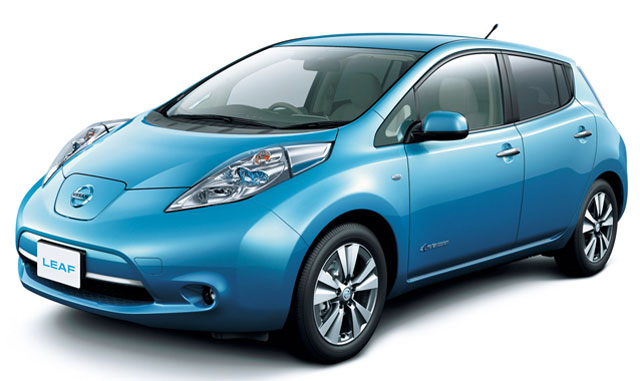
    The Nissan Leaf

    If press coverage is any measure, it appears electric vehicles (EVs) have finally arrived. Tesla’s Model S was named Automobile Magazine’s Car of the Year, the Nissan Leaf is topping the EV sales ranks and the industry is abuzz with anticipated sales impact of BMW’s super-light i3.

    Yet for all the hype, EVs remain more common in glossy magazines than in peoples’ driveways. In Western Europe, plug-in EVs made up less than 0,5% of total passenger car sales by May this year. It’s not hard to see why: at around £22 000 for the more affordable Nissan Leaf — prices in South Africa start at R446 000 — and minimal resale market, it’s tough to see who beyond the early adopters are likely to take the gamble.

    The answer is: forget California or Tokyo, think the company accountant of your local delivery firm. It is in fact the business owner, fleet manager and procurement officers who are beginning to take a hard look at the benefits offered by EVs and are likely to be the driving force to mainstream adoption.

    To understand why, it’s important to recognise that EVs are not a like-for-like replacement for your standard car with an internal combustion engine. Petrol and diesel-fuelled vehicles benefit from a lower up-front cost, better range and established refuelling points; EVs offer cheaper running costs, zero tail-pipe emissions, low noise and the ability to charge where ever there is a power supply.

    In fact, EV technology has long been used in regulated sectors such as indoor material handling (forklift, pallet trucks, powered stackers) or early morning milk deliveries, where regulations prohibit emissions or noise. Fuel prices, tax and incentives for low-carbon transport, improvements in technology and the greater availability of electric vehicles are now making commercial procurement managers and transport operators think seriously about going electric.

    For keen-eyed observers, a quiet transformation can be seen across the transport, logistics and commercial sectors. There are around a thousand hybrid or fully electric buses funded through the Green Bus Fund on UK roads, with nearly a quarter in the capital. There are “green” EV taxi services from places as diverse as London and St Austell, Norwich and Edinburgh. Major delivery firms DHL, Fedex, TNT and UPS all have electric vehicles complementing their fleet, with UPS alone boasting 380 hybrid trucks. Notable public sector fleets have trialled pure electric cars including 30 EVs for West Midland’s police, while commercial firms such as British Gas, keen to promote its charging services, aims to switch 10% of its vehicles to pure electric by 2015.

    Some of this change is simply a response to government incentives. EVs receive exemptions on both road tax and company car tax, low-carbon vehicles are waived the London congestion charge and public sector fleets can benefit from recently announced subsidies for ultra-low emission vehicles.

    But these initiatives, welcome as they may be, are vulnerable to changes in government thinking. Growth from below, driven by genuine demand for the benefits of EVs, will eventually be necessary.

    So what are these benefits? A recent project in Warwickshire, supported by Coventry University, introduced EVs to rural businesses — farmers, delivery services, and so on — and surveyed the participants. Early results reveal the following findings:

    Cost savings: Each business saved between £700 and £1 500 per year per vehicle, depending on usage. The top end of these estimates reflects reports from taxi firms, elsewhere in the country, that had adopted EVs to reduce costs.

    Suitability: The businesses operated limited and predictable routes, making it easier to schedule in the recharging times to specific times and locations, thus reducing range anxiety. The ability of businesses to automate the charging of vehicles on their premises or at home was seen as a positive.

    Environmental and marketing benefits: Participants saw reducing emissions as important, but also recognised the marketing potential of zero-emission particularly where it connected to their brand image or it distinguished them among their customers. This may be particularly important where corporate clients concerned about carbon emissions for regulatory or social responsibility reasons place stipulations about emissions in contracts.

    Keeping up with technology: After a home, a car is likely to be the second biggest purchase the average person makes, so investing in new technology in a state of flux is a big risk. No one wants the Betamax of cars clogging up their driveway. Fleet managers with multiple cars can trial EVs for specific purposes and widen adoption only as the business case is made. Keeping up with technology means the business does not need to make any sudden changes later down the line that may be disruptive.
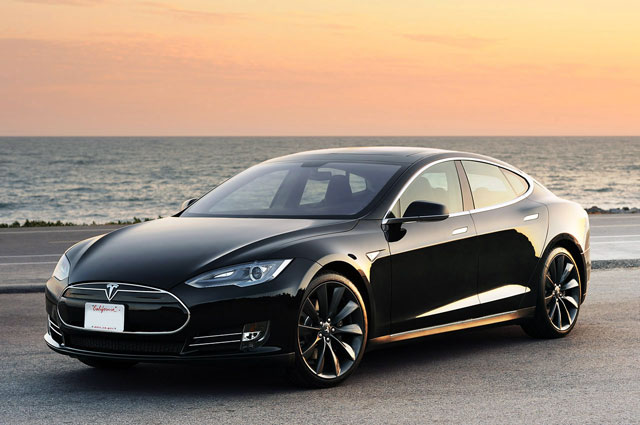
    The Tesla Model S
    The Tesla Model S

    This also has a range of important implications for the broader consumer market: Exposure to EVs at work is likely to allow individuals to assess the strengths and limitations of the new vehicles without risking their own money. This is particularly true for owners of small businesses where individuals are likely to acquire a direct insight into the balance between lifetime and upfront costs of vehicles. With more electric vehicles on the roads, their novelty will fade; eventually, EVs will seem as normal as petrol-powered cars or diesel trucks.

    The most important and still unknown impact will be on the resale market. Consumers are unlikely to invest in high-value assets without some assurance that the vehicle can be resold and without a precipitous level of depreciation. With so few electric vehicles on the road, the second-hand market is highly volatile. In the US, Teslas are worth more used than new, as demand for new models outstrips supply and a small number of buyers distort the market. But among other models there is evidence of precipitous reductions, reflecting the uncertain fluidity of the nascent market.

    As more vehicles from corporate fleets become available, demand for a resale market will increase, creating a benchmark for asset valuation. However, prices are likely to remain volatile while the technology continues to change.

    So, while electric car manufacturers are likely to remain in the headlines, it may be the spreadsheets of the accountants in company back offices that will see electric vehicles taking over our roads.

    • Richard Brooks is research officer for business, environment and society at Coventry University
    • This article was originally published on The Conversation

    Follow TechCentral on Google News Add TechCentral as your preferred source on Google


    BMW Nissan Nissan Leaf Richard Brooks Tesla Tesla Model S
    WhatsApp YouTube
    Share. Facebook Twitter LinkedIn WhatsApp Telegram Email Copy Link
    Previous ArticleHundreds of schools scrap matric maths
    Next Article Amazon e-books dispute turns ugly

    Related Posts

    From care homes to production lines, the robots are coming

    From care homes to production lines, the robots are coming

    21 July 2026
    Watts & Wheels S1E7: 'Ferrari's EV breaks the internet'

    Watts & Wheels S1E7: ‘Ferrari’s EV breaks the internet’

    8 July 2026
    New Chinese future for historic Rosslyn plant - Chery

    New Chinese future for historic Rosslyn plant

    6 July 2026
    Company News
    Neill Nortje appointed as country manager of Paratus Zambia

    Neill Nortje appointed as country manager of Paratus Zambia

    28 July 2026
    iONLINE launches eSim for IoT to keep device fleets connected anywhere

    iONLINE launches eSim for IoT to keep device fleets connected anywhere

    28 July 2026
    Cybercriminals are hacking trust

    Cybercriminals are hacking trust

    27 July 2026
    Opinion
    Selling vapour is corporate suicide in slow motion - Jannie van Zyl

    Selling vapour is corporate suicide in slow motion

    16 July 2026
    Brazil's online gambling crackdown is a lesson for South Africa

    How Amazon outmanoeuvred Starlink in South Africa

    15 July 2026
    The Popia problem with agentic AI - Herman Haasbroek

    The Popia problem with agentic AI

    14 July 2026

    Subscribe to Updates

    Get the best South African technology news and analysis delivered to your e-mail inbox every morning.

    Latest Posts
    Luno cutting a fifth of its workforce - South Africa not spared

    Luno cutting a fifth of its workforce – South Africa not spared

    28 July 2026
    The tech master plan for the Cape Winelands Airport

    The tech master plan for the Cape Winelands Airport

    28 July 2026
    TCS+ | A smarter approach to cloud for South African businesses - Joel Chacko and Jonathan Oaker

    TCS+ | A smarter approach to cloud for South African businesses

    28 July 2026
    Neill Nortje appointed as country manager of Paratus Zambia

    Neill Nortje appointed as country manager of Paratus Zambia

    28 July 2026
    © 2009 - 2026 NewsCentral Media
    Built and maintained by Chronon
    • Cookie policy (ZA)
    • TechCentral – privacy and Popia

    Type above and press Enter to search. Press Esc to cancel.

    Manage consent

    TechCentral uses cookies to enhance its offerings. Consenting to these technologies allows us to serve you better. Not consenting or withdrawing consent may adversely affect certain features and functions of the website.

    Functional Always active
    The technical storage or access is strictly necessary for the legitimate purpose of enabling the use of a specific service explicitly requested by the subscriber or user, or for the sole purpose of carrying out the transmission of a communication over an electronic communications network.
    Preferences
    The technical storage or access is necessary for the legitimate purpose of storing preferences that are not requested by the subscriber or user.
    Statistics
    The technical storage or access that is used exclusively for statistical purposes. The technical storage or access that is used exclusively for anonymous statistical purposes. Without a subpoena, voluntary compliance on the part of your Internet Service Provider, or additional records from a third party, information stored or retrieved for this purpose alone cannot usually be used to identify you.
    Marketing
    The technical storage or access is required to create user profiles to send advertising, or to track the user on a website or across several websites for similar marketing purposes.
    • Manage options
    • Manage services
    • Manage {vendor_count} vendors
    • Read more about these purposes
    View preferences
    • {title}
    • {title}
    • {title}