Apple’s iPad mini reviewed

Do a smaller form factor, better design and cheaper price make up for the iPad mini’s last-generation specifications and display? Review by Delano Stockhoff.

iPad-mini-640-1

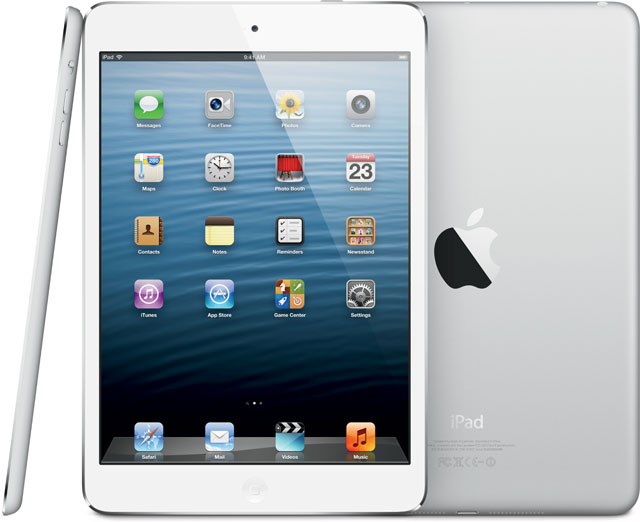
At a glance, Apple’s iPad mini is simply a smaller, cheaper iPad 2. But to think of the iPad mini as some kind of secondary player to the bigger version is a mistake because this isn’t really a step down from its bigger cousin. In many ways, it’s an improvement on the 9,7-inch slate.

The design of the mini is stunning. It takes a lot of its inspiration from the iPhone 5: they both share an anodised aluminium backing as well as a chamfered mirror edge that runs around the border of the device. Overall, build quality and look of the mini is top notch, cuts are seamless, and everything is well crafted. Even though it’s ultra thin and light, it still feels really solid in your hands.

You can’t help but feel you get a more intimate experience when using the iPad mini. The size is still big enough for the normal tablet experience but it’s much more portable, making it great for reading, Web browsing and consuming media.

Because of the smaller size, you get a smaller bezel around the edges. Some reviewers have said it feels a little awkward holding onto the device with their thumbs resting over the screen, but I had no problem doing so and, besides, the iOS operating system has been updated for unwanted touches.
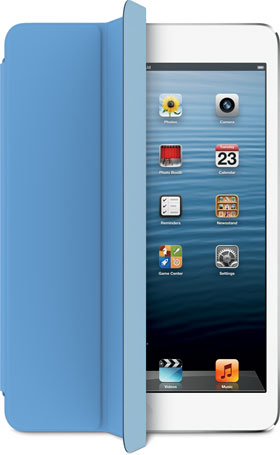
iPad-mini-640-2Overall, though, iOS is identical, so if you’ve used an iPad you’ll know exactly what you’re getting here. And the app selection is by far the iPad’s and, by extension, the iPad mini’s greatest strength.

Underneath the hood in the iPad mini is a dual-core, 1GHz A5 chip paired with a discrete 512MB of RAM. Models come in the usual 16GB, 32GB and 64GB capacities with Wi-Fi and Wi-Fi/cellular options.

Performance on the mini is similar to what we have seen on the iPad 3. Everything is snappy and boot-ups are quick. Battery life is outstanding, easily exceeding the advertised 10 hours. Apps open up nearly instantly, Web browsing is smooth, and graphic-intensive games run at a good frame rate.

Realistically, you can expect a two-year lifespan out of the iPad mini before you’ll feel the need to upgrade, which isn’t bad news at all.

All of the standard iPad buttons and switches are here, with the inclusion of a good-sounding set of stereo speakers (something big iPad’s don’t yet have), along with the new Lightning port. There’s also a 5-megapixel camera around the back that shoots crisp photos with great colour and depth. Video recording at 1080p is similar to the quality of the photos; however, you’ll have a tough time keeping the image stable. It could easily replace a midrange point-and-shoot camera if it was smaller. The front-facing FaceTime 720p camera is handy for video chatting — but beyond that it has limited use.

Much fuss has been made about the 7,9-inch display on the iPad mini. The 1 024×768-pixel resolution makes for a pixel density of 163ppi, which seems underwhelming next to devices like the Nexus 7 (216ppi) or the latest-generation iPad (264ppi). So how does it look? Well, in general terms, not bad at all. Apple is using the same treatment here as it does on the iPhone 5, which makes for a screen that seems to sit just a tiny bit beneath glass. Colours are vibrant, blacks are strong, and games, photos, and videos look great.

That’s only half the story, however. There’s no question that to the naked eye this screen does look lower in resolution than its nearest competition. Pixels are noticeable, especially in Web pages, books, and when viewing e-mail — and that can be distracting sometimes. It’s hard not to notice given the “wow” factor of a Retina display. I don’t think the lower resolution is a deal-breaker, but it is a compromise you need to be aware of.

To wrap up, then, the iPad mini is one of the best tablets on the market. It stands head and shoulders above the competitors in terms of design, the calibre of its components and its build-quality. It’s most certainly worth its R3 399 entry price.

Yes, the screen is a disappointment. But it’s far from terrible. Holding out for a possible Retina display next year might not be a bad idea if you have the luxury of waiting.

Share this article

  • http://twitter.com/danie10 Danie van der Merwe

    I would like to have seen more comparison with the Nexus 7 which does have a higher resolution… what then really makes the iPad mini stand out head and shoulders above the Nexus 7? Speed maybe?

  • http://twitter.com/delanostockhoff Delano Stockhoff

    What makes the iPad mini stand head and shoulders above the Nexus 7 is the amount of optimised apps. All the Nexus 7 really has at the end of the day are phone apps that scale up for the bigger screen. As you can see in the picture below, this makes for a big difference. Your all round experience with an optimised app is far greater than an app made for a 4.5″ screen on a 7″ screen.You also get a greater array of apps.

    Yes, the pixel density may be higher on the Nexus 7 but – not enough to be noticeable.

    Build quality on the iPad mini is of a much higher calibre and starting at R3399 it is actually cheaper than what the Nexus 7 lands here for. Not to mention your general consumer doesn’t want to tweak their device, they just want a complete, quality experience.

  • http://twitter.com/danie10 Danie van der Merwe

    The whole point of Android apps is scalability from a developer’s point of view so the same app on a phone, will look different on a tablet as additional features are shown (it is not just plain scaled up as tablet functionality becomes available). The difference between the app stores is that Apple shows tablet specific apps whilst Google has some apps that scale to tablet with extra features, and others that are dedicated HD or tablet. I would agree that there are some really nice apps on iOS (like BBQ that I loved) that are not on Android, but the same can be said in reverse now. Both app stores have about 700,000 apps available now which should run on both devices. My daughters iPad 10″ has to still run scaled up iPhone apps as those apps don’t have tablet equivalents at all (games she plays).

    Nexus 7 has a “better” display and is screamingly fast at a much cheaper price. I don’t have a Nexus 7 admittedly, but certainly on the two Samsung tablets that I have the build quality is very solid and sleak (can’t say the same for the Asus I had before).

    So just from a gaming perspective I’d say the Nexus 7 stands out head and shoulders above the iPad mini (also easily accepting a USB mouse and gamepad).

  • Guest

    Your point about the Nexus 7 being better at gaming is unfounded, yes the processor is 0.2 GHz faster but the GPU on the iPad mini (ie. what counts) is better – here is a video if you don’t believe me (http://www.youtube.com/watch?v=nHrfPsYn0xA)

  • Scott Pleasants

    This was a good article. I chose the iPad Mini over the Nexus 7 for several reasons. First, the iPad Mini is a solid product both build-wise, application support, and customer service. What turned me away from the Nexus 7 was the fact that it was made by Asus. I had been a fan of Asus up till about a year ago. I had purchased a laptop from them and it died within 4 months. While under warranty, their support was horrible and demonstrated a lack of quality control and customer service. If I were to get an android device, I would look at Samsung.

    I am in IT leadership and need a device to work…thus I chose the iPad Mini. The screen is beautiful and the apps are second to none. It is worth the extra money.

  • http://twitter.com/delanostockhoff Delano Stockhoff

    This is a review of the iPad mini, not an article on how the Nexus 7 is better. I do not believe you have used an iPad mini, neither do I believe any of these comment stand their ground.

Why TechCentral?

We know that as a prospective advertiser, you are spoilt for choice. Our job is to demonstrate why TechCentral delivers the best return for your advertising spend.

TechCentral is South Africa’s online technology news leader. We don’t say that lightly. We believe we produce the country’s best and most insightful online tech news aimed at industry professionals and those interested in the fast-changing world of technology.

We provide news, reviews and comment, without fear or favour, that is of direct relevance to our fast-expanding audience. Proportionately, we provide the largest local audience of all technology-focused online publishers.

We do not constantly regurgitate press releases to draw in search engine traffic — we believe websites that do so are doing their readers and advertisers a disservice. Nor do we sell “editorial features”, offer advertising “press offices” or rely on online bulletin-board forums of questionable value to advertisers to bolster our traffic.

TechCentral, which is edited and written by award-winning South African journalists, cares about delivering top-quality content to draw in the business and consumer readers that are of most interest to technology advertisers.

We’d like the opportunity to demonstrate the value of directing a portion of your advertising budget to TechCentral, whether your company is in the technology field or not. Numerous opportunities exist for companies interested in reaching our audience of key decision-makers in South Africa’s dynamic information and communications technology sector. We offer packages that will deliver among the best returns on investment available in the online technology news space.

For more information about advertising opportunities, and how your organisation can benefit by publicising itself on TechCentral, please call us on 011-792-0449 during office hours. Or send us an e-mail and ask for our latest rate card and brochure.