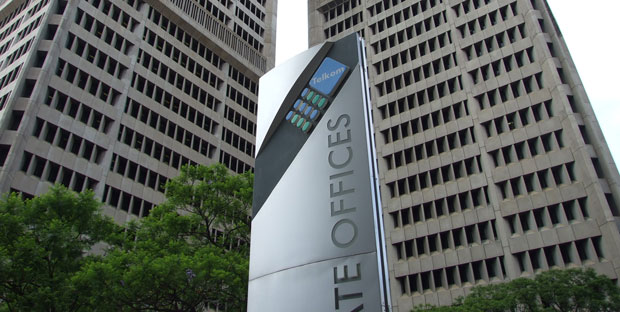
If newspaper reports this week are to believed, Telkom’s mobile arm, branded in the consumer market as 8ta, may be soon be merged with third mobile operator Cell C. But analysts caution it’s too early to get carried away.
With cabinet yet to consider communications minister Dina Pule’s suggestions regarding Telkom’s future strategy, with crucial bands of radio frequency spectrum yet to be allocated, and with government’s national broadband plan still vague, Cell C may be better off holding back for now.
BMI-TechKnowledge MD Denis Smit says the idea of the two companies merging is not a new one. A tie-up could make sense, especially in light of the trend to fixed-mobile convergence. But Smit warns that Telkom has other concerns that will need addressing before a merger is worth considering.
Nevertheless, Smit says that in theory there would be benefits from the companies working together, particularly because Telkom has access to spectrum that Cell C would be delighted to get its hands on.
Although Telkom has said that it hasn’t received a formal approach from Cell C, Smit says there’s “no doubt” that discussions of some sort are taking place.
Telkom selling 8ta outright appears an unlikely option. Mobile has to be an important component of Telkom’s strategic planning, Smit says. “Telkom without a mobile future is beyond contemplation. Fixed-line operators without mobile operators are at a significant disadvantage, hence the billions spent on 8ta.”
Despite this spend, Telkom has gained little traction with 8ta. Cell C, on the other hand, appears to be winning market share, with the operator adding “hundreds of thousands” of new customers on a net basis in September.
Smit says that although Telkom’s access to spectrum could be an incentive for Cell C, there’s also the question of whether government is going to opt for an open-access wholesale model for next-generation broadband or whether spectrum will be allocated to operators directly.
“[Pule] has indicated that spectrum announcements are coming in November, and this is a highly fluid environment,” Smit says. “Whatever decision is reached is going to have long-term implications.”

Speaking at a breakfast event hosted by the SA Communications Forum (SACF) on Monday, Pule suggested that spectrum could be allocated as early as next month. This would, however, exclude spectrum in the highly desirable 800MHz band, which will only be made available after SA has made the transition to digital broadcasting in 2015.
“Cell C and 8ta is a sideshow,” says Smit. “There are bigger issues at stake here.”
Khulekani Dlamini, head of research at Afena Capital, says one of the problems with 8ta is that it hasn’t appeared to be particularly focused since its launch. There is a risk, he says, that 8ta could remain a small player for a long time and trying to change that could prove very costly to Telkom shareholders. This, he believes, makes a deal with Cell C a compelling proposition.
“It’s analogous to developing a greenfield mine versus buying one. If you can buy a mine that already has a shaft sunk, the geological work has been done, the feasibility and environmental studies are done, and you are likely to be able to move quicker than if you start from scratch. Merging with Cell C makes sense from that perspective. It would allow Telkom to leapfrog the growing pains and Cell C would come with experienced people accustomed to running that sort of business.”
Arguably, part of Telkom’s challenge with 8ta has been that it doesn’t have experience as a mobile operator, only as a fixed-line operator.
Dlamini says Cell C CEO Alan Knott-Craig worked in the fixed-line market before Vodacom and could “unlock synergies” better than most executives because he understands both worlds.
“Much like a Sentech or an iBurst, Telkom has lots of nice spectrum in the right bands that could be very useful for next-generation broadband,” Dlamini says. “But I wonder how easy it would be for the two to work together with Telkom owning its own towers and Cell C having sold its towers [to American Tower Corp].”
He argues that Cell C getting access to Telkom’s spectrum could prove to be a big competitive advantage, particularly in Knott-Craig’s hands. — (c) 2012 NewsCentral Media